
Last updated September 23, 2026
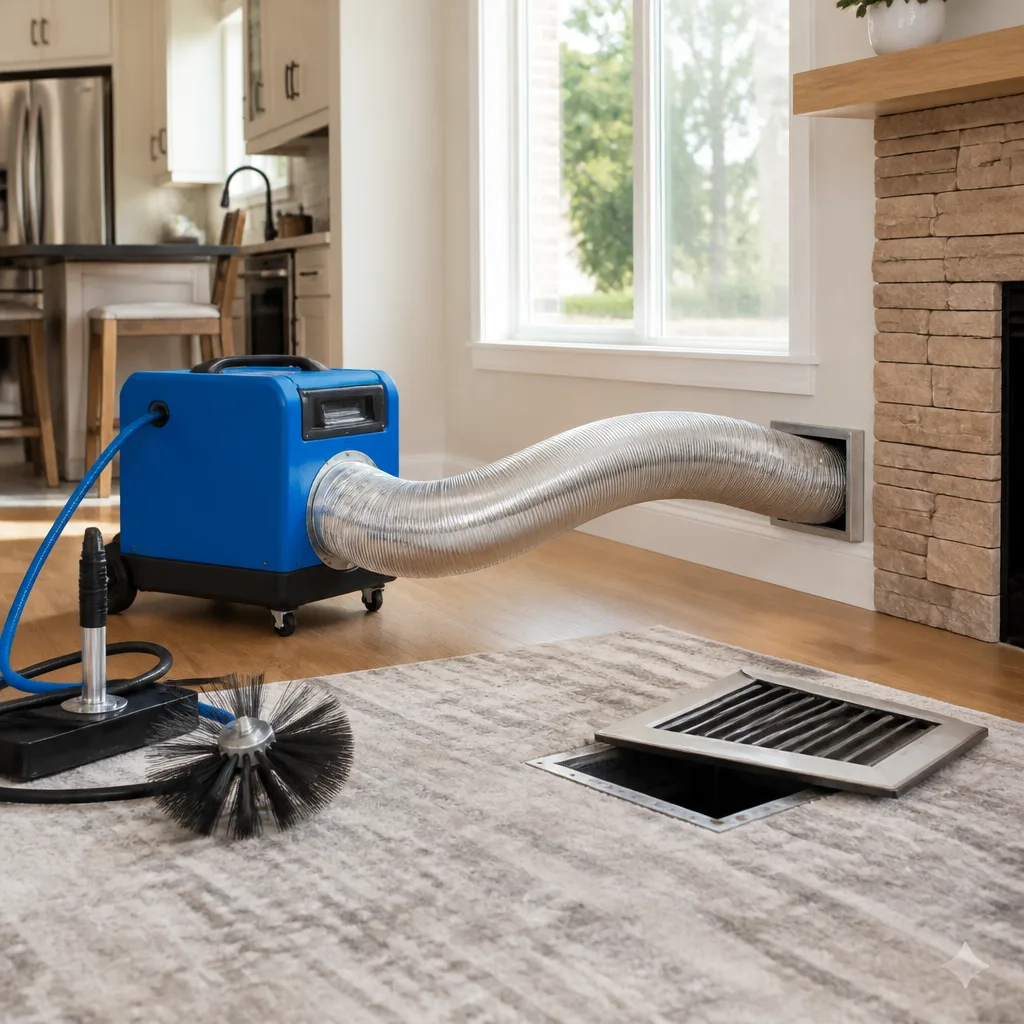
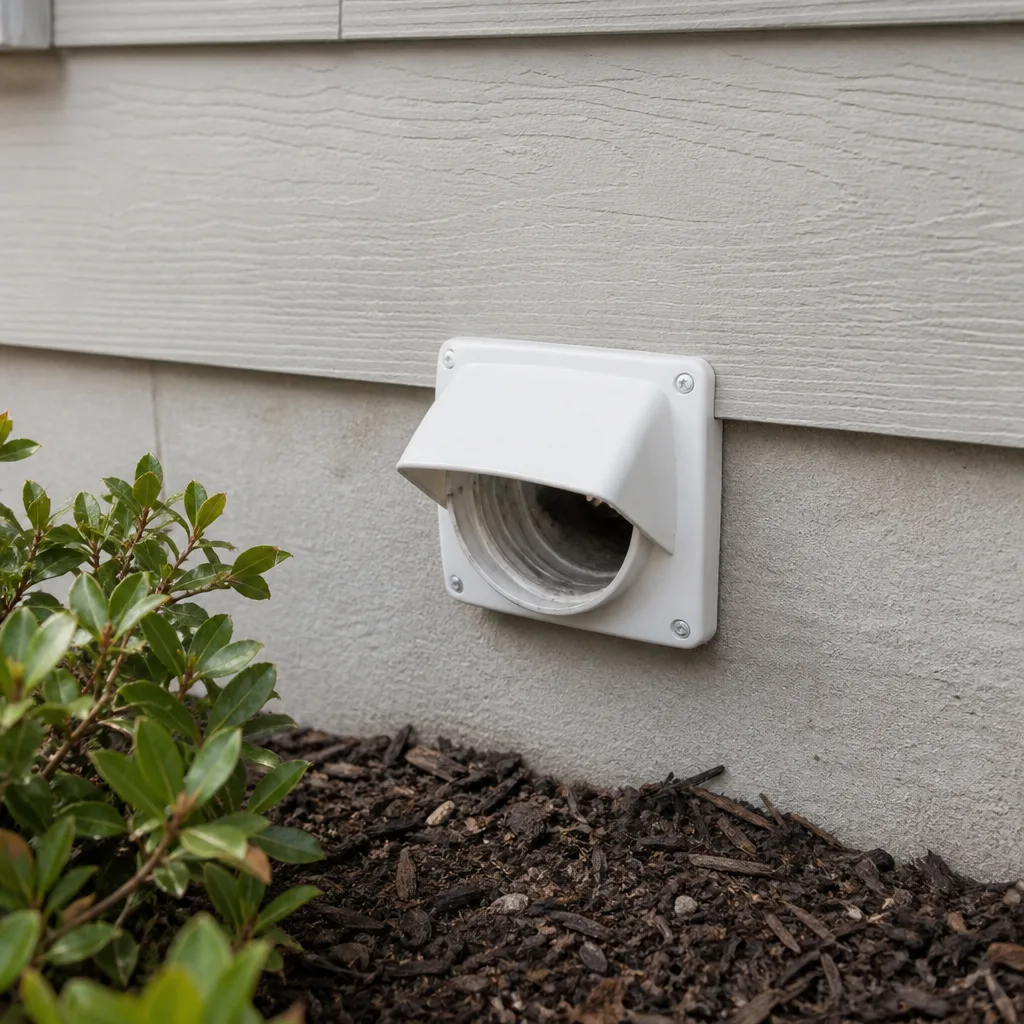
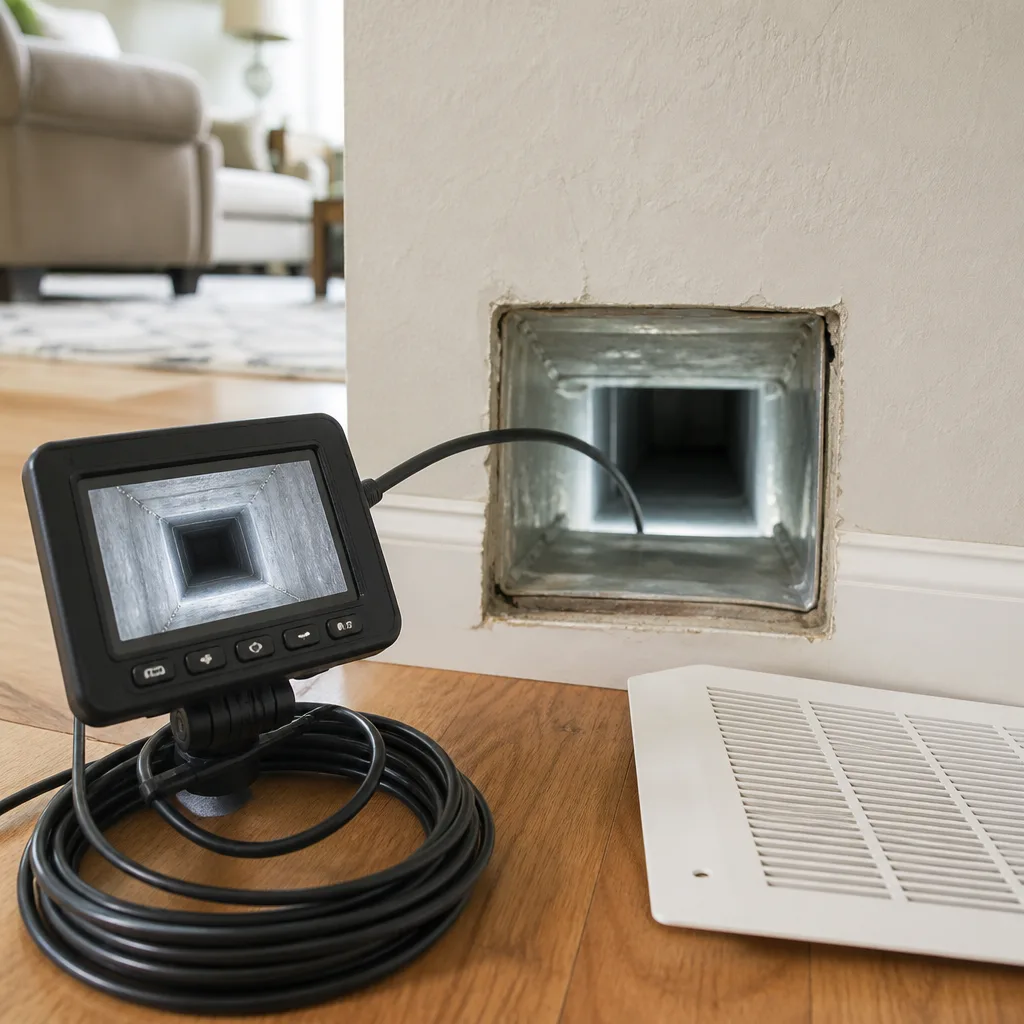
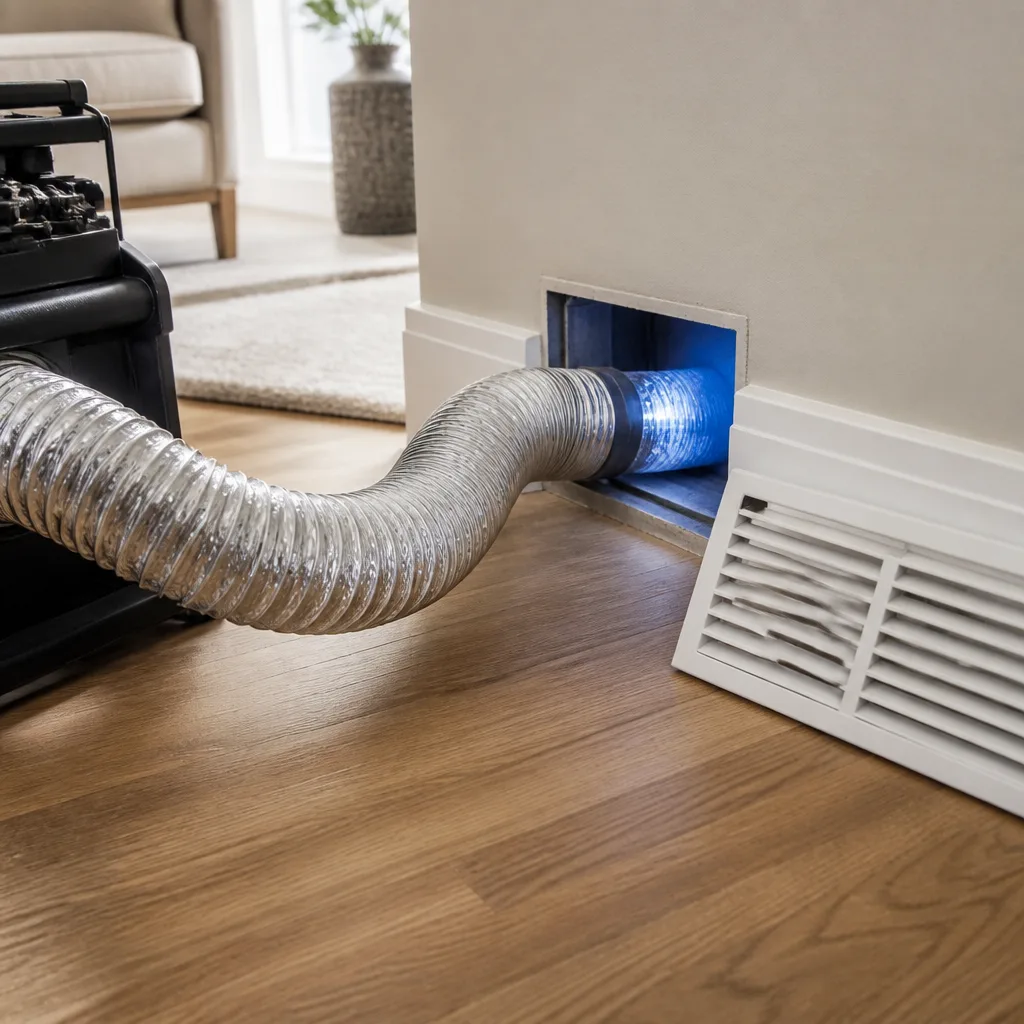
Whole-system duct and dryer vent check with before-and-after photos - you see exactly what came out of your vents
That "$99 whole-house special" is a bait ad - the real number appears once they are in your hallway, or the "clean" is a shop-vac at the register. We photograph the inside of your ducts before and after instead.
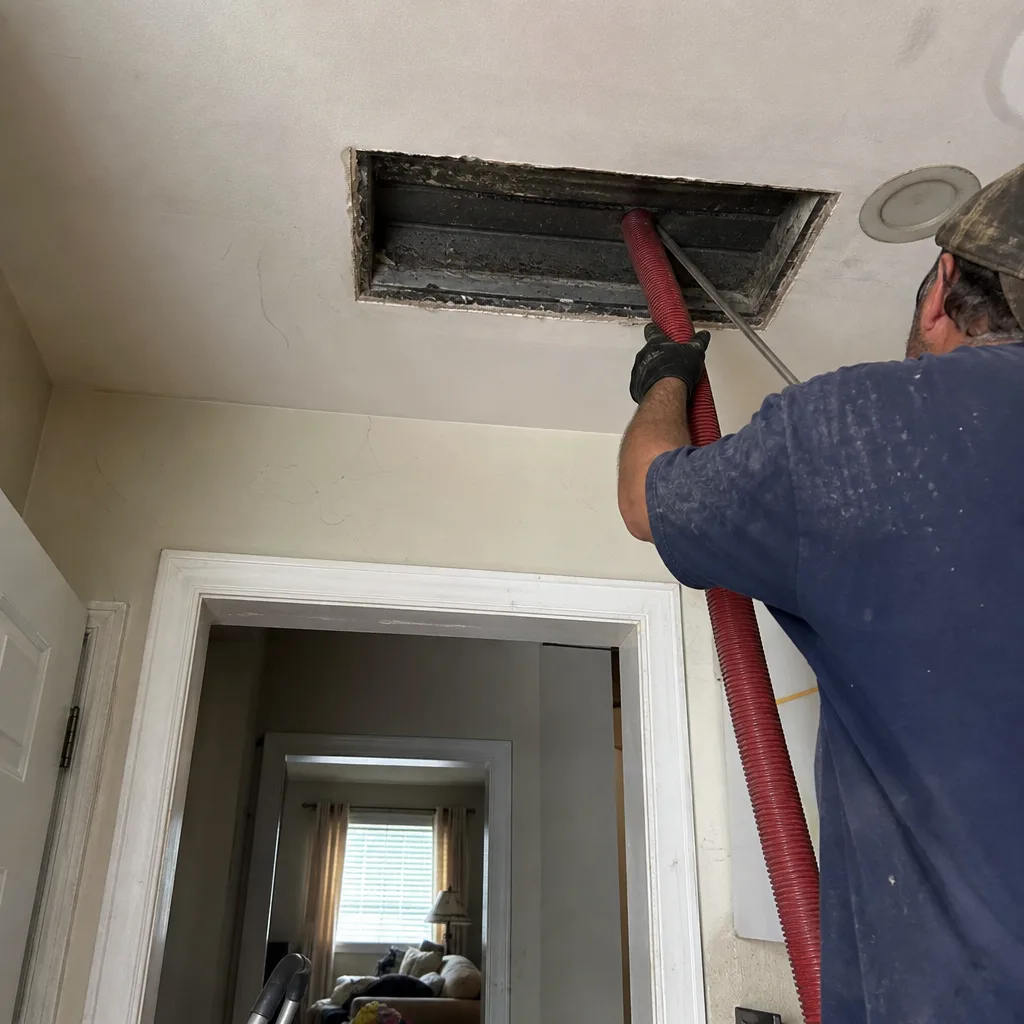 Before
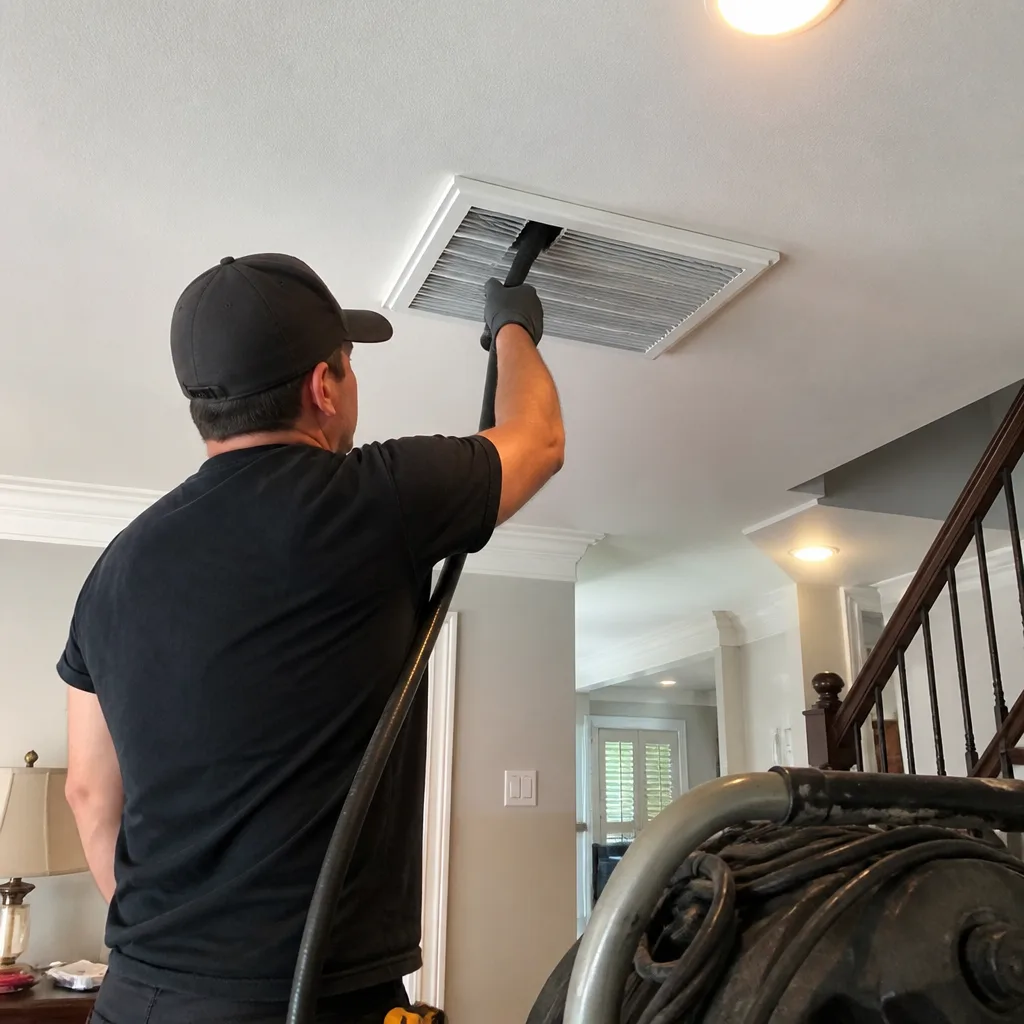 After
After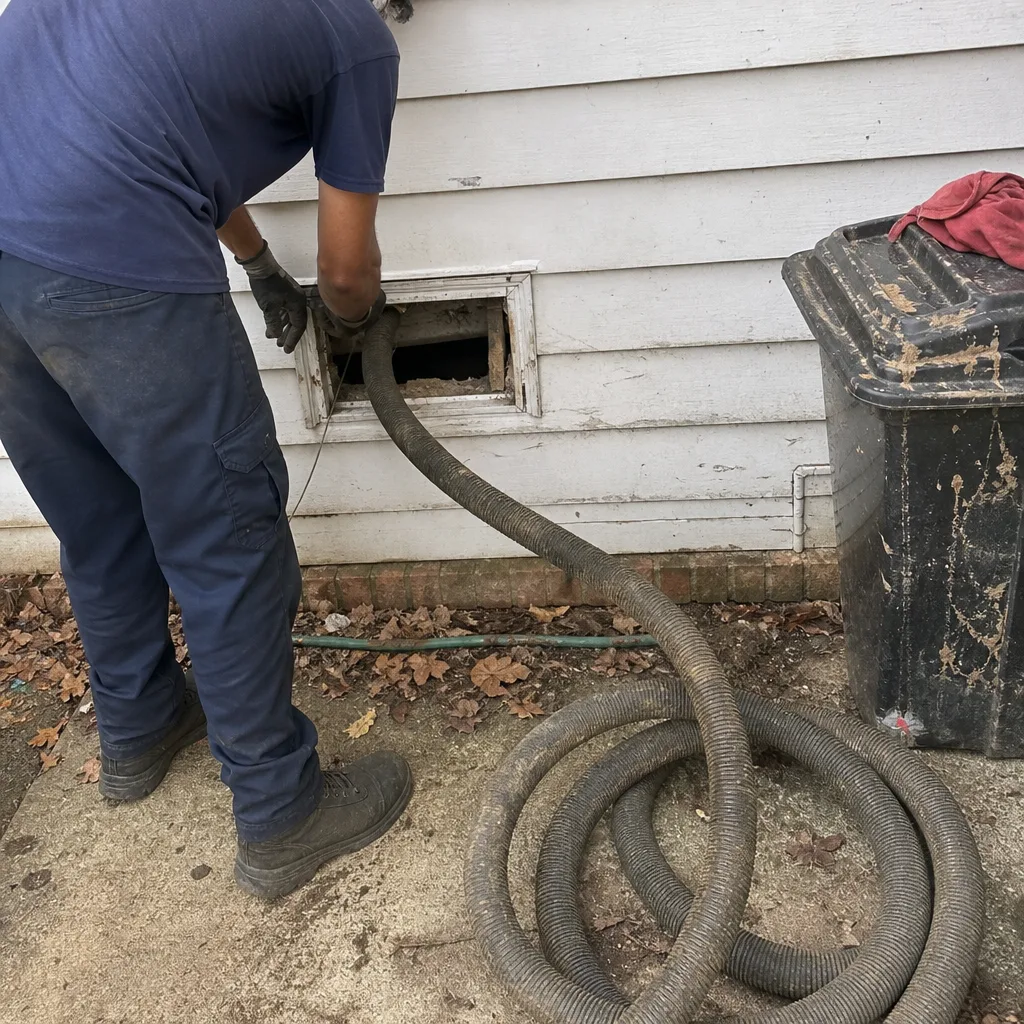 Before
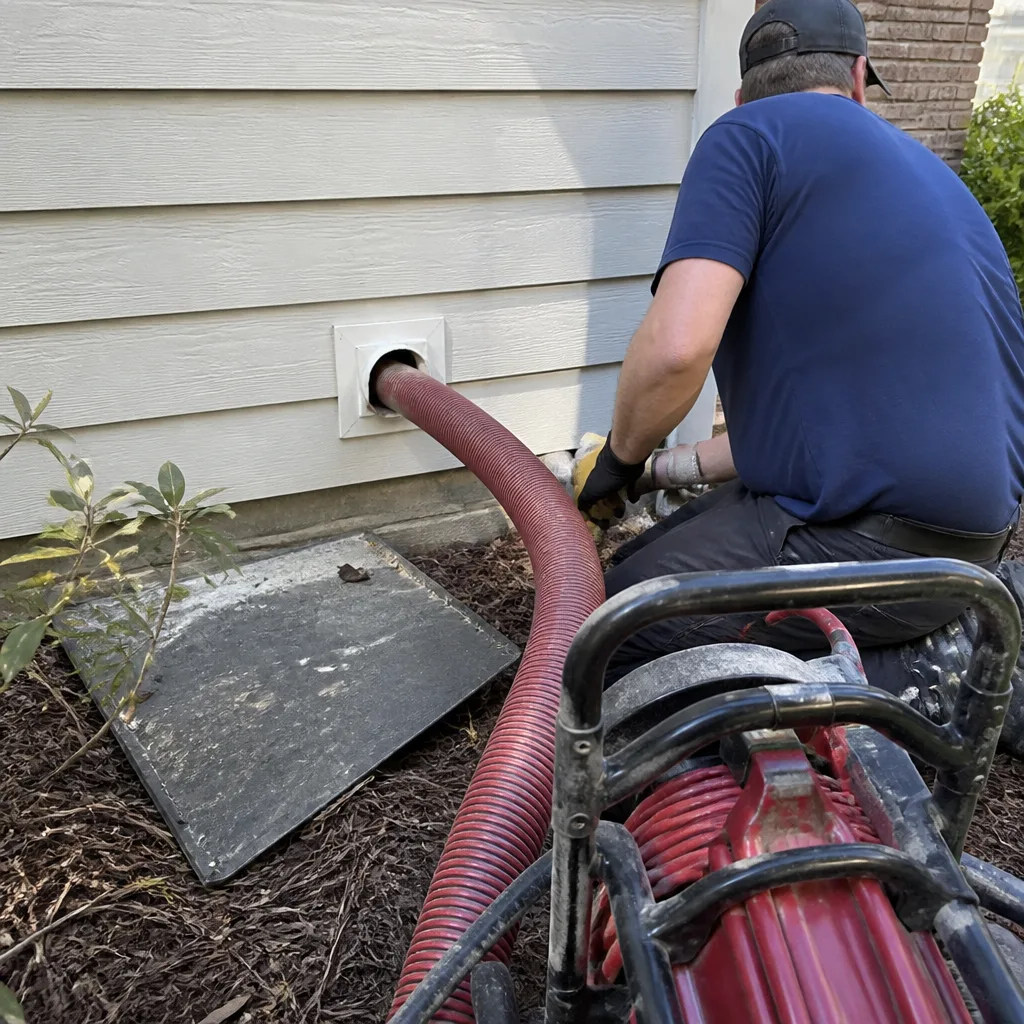 After
After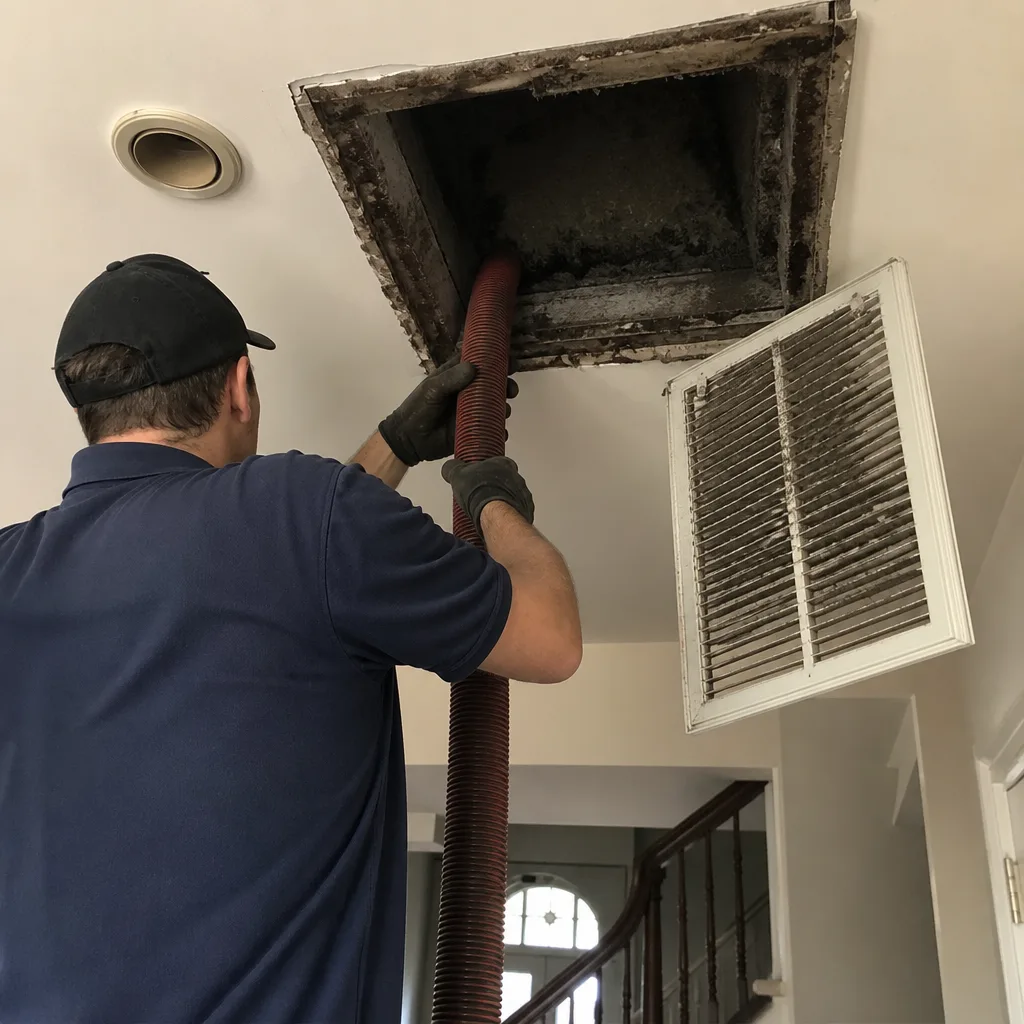 Before
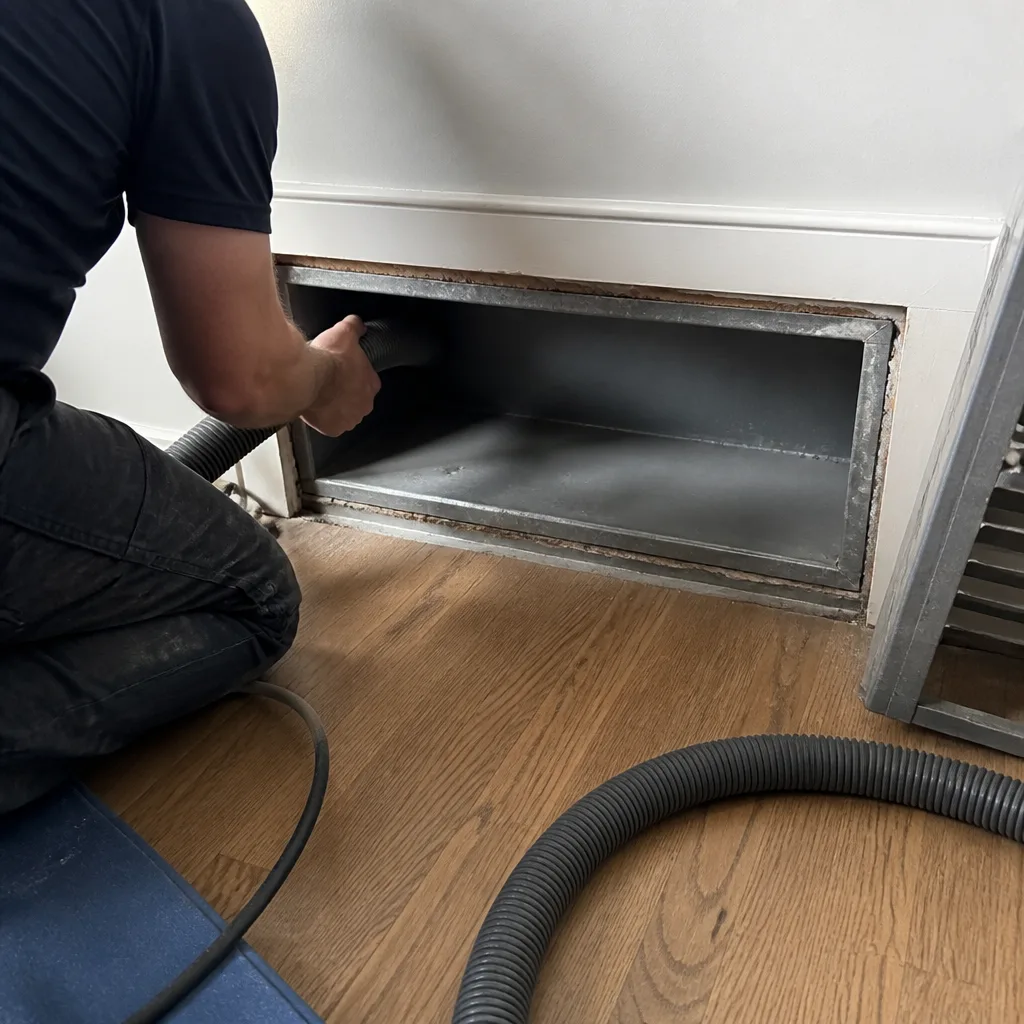 After
AfterSeasonal Air Duct Cleaning Care for Alpharetta: Year-Round Homeowner’s Guide
Alpharetta recorded 28 days above 90°F in summer 2023. During that stretch, unconditioned attic duct surfaces routinely hit temperatures where flex duct inner liner adhesive degrades. We’ve pulled collapsed runs in Windward and Avalon neighborhoods where the glue simply let go after repeated heat cycles. Seasonal duct care here isn’t about cleanliness in the abstract; it’s about structural integrity at temperature extremes. This guide maps Alpharetta’s four distinct duct-stress events to the specific inspection and maintenance actions that prevent them. You’ll learn what to look for each month, why 1990s flex duct fails differently than post-2005 hard pipe, and when a flashlight check is enough versus when you need a crew with a negative-pressure extraction system and a camera.
Quick Answer
Seasonal air duct cleaning care in Alpharetta means matching maintenance to four climate-driven stress events: spring pollen loading at returns (March-April), summer condensation inside flex runs (June-August), fall leaf debris at outdoor intakes (October), and winter static pressure spikes (January). Homeowners should perform 15-minute visual inspections monthly and schedule professional cleaning with photo documentation before peak summer and winter demand. A whole-system cleaning in Alpharetta typically ranges from $450 to $850 for average homes, with pricing varying by system size and accessibility.
Table of Contents
- Spring Pollen Loading: What March-April Does to Your Returns
- Summer Humidity and Condensation Damage in Flex Duct
- Fall Leaf Debris and Exterior Intake Blockage
- Winter Static Pressure and Sealed-Home Strain
- Month-by-Month 15-Minute Inspection Checklist
- Alpharetta Housing Stock: 1990s Flex vs. Post-2005 Hard Pipe
- Pre-Season System Readiness and Energy Cost Spikes
- Common Mistakes to Avoid
- When to Call a Professional
- Frequently Asked Questions
 Before
 After
AfterSpring Pollen Loading: What March-April Does to Your Returns
Metro Atlanta’s tree pollen season typically peaks between late March and mid-April, with counts exceeding 4,000 grains per cubic meter on the worst days. In Alpharetta’s established neighborhoods - Crabapple, Downtown Alpharetta, and the older sections of Windward - mature oaks and pines produce the bulk of this load. Your return air grilles act as the entry point, and the pollen that makes it past your filter doesn’t simply disappear.
Here’s what happens inside the ductwork. Pollen particles range from 20 to 50 microns, small enough to pass through standard 1-inch fiberglass filters with some frequency. Once airborne in the return plenum (the large central chamber that collects air before it reaches the air handler), these particles mix with household dust and skin cells. The resulting mat tends to accumulate at the first elbow or reduction in the duct run, where air velocity drops. We’ve photographed 2-inch deposits in Alpharetta homes where the homeowner had changed the filter religiously but never looked past the grille.
The specific risk in spring is not allergy symptoms alone. Wet pollen mats hold moisture. When your air conditioner cycles on in late April or early May, the cold metal surface of the evaporator coil and the adjacent ductwork creates a condensation point. Pollen + moisture + cellulose from dust = microbial growth substrate. By June, you’re smelling it.
What to check in spring:
- Remove return grilles and photograph the first 12 inches of duct with your phone flashlight held at an angle - shadows reveal buildup that direct light hides
- Hold your filter up to a window; if light doesn’t pass evenly through the media, it was overloaded before the change date
- Look for pollen staining on the ceiling around ceiling returns - this indicates air bypass, meaning the grille seal is leaking and pulling attic air
- Check the condensate drain pan beneath your air handler for unusual debris; pollen that reaches the coil washes down and accumulates there
For homes in Alpharetta’s pollen-heavy corridors near the Big Creek Greenway or along Rucker Road’s tree canopy, we typically recommend a return-side cleaning in late April, before the moisture cycle begins. Air Duct Cleaning in Alpharetta through CleanRun includes full return plenum access and photo documentation of each run.
Summer Humidity and Condensation Damage in Flex Duct
Georgia’s summer dew point averages above 70°F from June through August. In Alpharetta’s unconditioned attics, where roof deck temperatures can reach 140°F, this creates a specific failure mode that homeowners rarely detect until the damage is structural.
Flex duct - the insulated flexible tubing common in residential construction - consists of an inner plastic liner, a fiberglass insulation layer, and an outer vapor barrier jacket. The inner liner is held to the wire helix with adhesive. When attic air is hot and humid, and the duct carries 55°F conditioned air, the temperature differential drives moisture toward the cold surface. If the duct’s insulation is compressed at a bend, or if the inner liner has separated slightly at a joint, that moisture reaches the adhesive layer. Over successive summers, the adhesive plasticizes and loses bond. The wire helix relaxes. The duct collapses or develops a sag that traps condensate.
We’ve replaced collapsed flex runs in Alpharetta’s 1990s-era homes where the original ductwork had simply turned to a flattened oval. The homeowner’s complaint was “poor airflow to the back bedroom.” The cause was a 12-foot section of duct that had no structural integrity left.
Condensation staining at a register face - the visible ceiling or wall vent - is a specific diagnostic. If you see brownish discoloration, water spots, or paint bubbling around a supply register in July or August, you’re not looking at a roof leak. You’re looking at sustained condensation inside the duct, likely at a sag or low point upstream, that has saturated the insulation and wicked to the register boot. This is a structural warning. The insulation’s R-value is compromised, and the metal register boot is rusting.
Summer-specific inspection points:
- Run your system for 20 minutes on a humid afternoon, then touch the ceiling around supply registers - any cold spot indicates missing or wet insulation at the boot
- Listen for a “rushing” or whistling sound at registers; collapsed flex duct increases velocity and creates turbulence noise
- Check your condensate drain line for flow during operation; a clogged line raises humidity in the air handler cabinet and adjacent ductwork
- Photograph any register staining and note the date - progression over a single summer indicates active condensation, not a historical leak
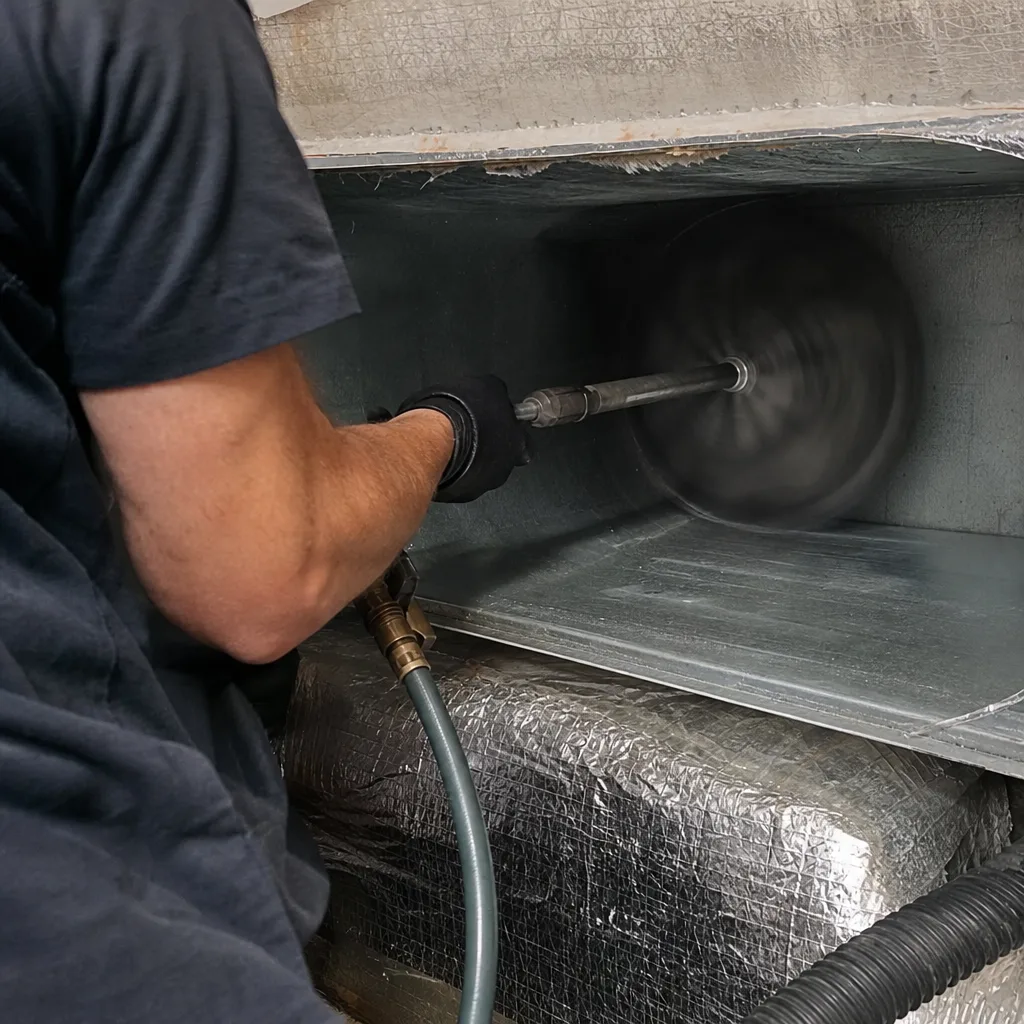
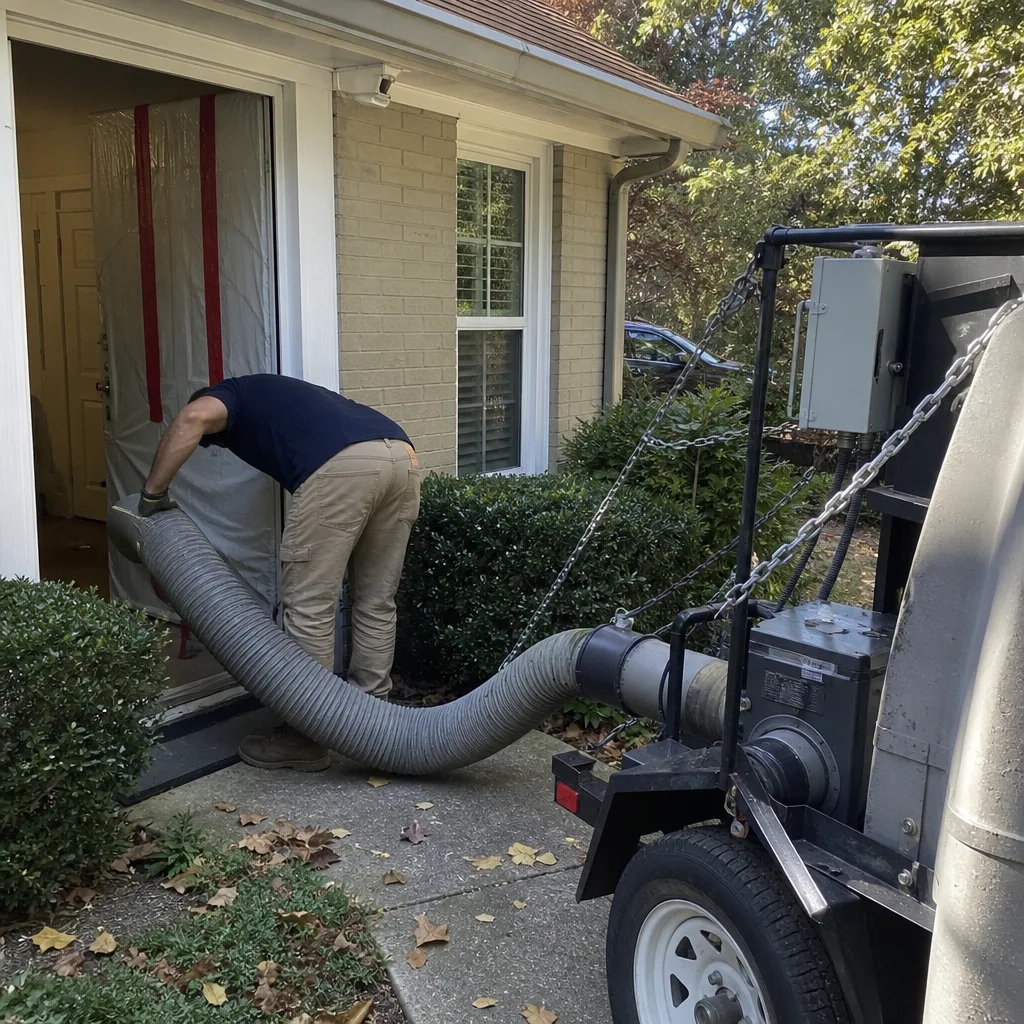
Professional cleaning in summer should include negative-pressure extraction with a system powerful enough to pull debris from collapsed or partially obstructed runs. Our crews use Rotobrush and Nikro equipment, with camera verification before and after. The photo record shows whether the duct structure is intact enough to clean or whether repair is the prerequisite.
Fall Leaf Debris and Exterior Intake Blockage
Alpharetta’s fall leaf drop peaks in late October, with red maples, water oaks, and sweetgums contributing the bulk of debris. For homes with fresh air intakes, combustion air ducts, or heat pump outdoor units positioned beneath canopy trees, this season presents a distinct infiltration risk.
Exterior air intakes - required by code for makeup air in tighter homes - draw directly from outside. When leaves accumulate at the intake hood, they decompose into fine particulate that passes through insect screens and enters the duct system. We’ve found leaf mold and decayed organic matter in the intake ducts of Alpharetta homes near the Chattahoochee River corridor, where humidity accelerates decomposition.
The more common issue is indirect: leaves that block the outdoor coil of a heat pump or the combustion air inlet of a furnace restrict airflow, causing the system to run longer and pull harder on the return side. This increased negative pressure (suction) in the ductwork finds any leak in the building envelope and pulls attic or crawl space air into the system. Fall is when we see the highest rate of rodent and insect debris entry in Alpharetta, not because animals are more active, but because the system is working harder and pulling from more places.
Fall inspection checklist:
- Clear leaves from within 18 inches of any exterior hood, louver, or intake grille - use a broom, not a blower, which forces debris into the opening
- Remove intake hood covers and check the screen for tears or gaps; a 1/4-inch gap admits mice
- Run the system and check for negative pressure at the fireplace damper or bathroom exhaust fans - if these backdraft when the HVAC runs, your return duct has a significant leak
- Photograph the interior of floor-level returns before heating season; summer’s humidity may have left debris adhered that will bake on when heat cycles begin
For homes with significant tree cover in neighborhoods like Nesbit Ferry or the wooded sections of Milton, we recommend a full system inspection in October, with particular attention to intake pathways. HVAC Cleaning in Alpharetta includes coil, blower, and cabinet cleaning that removes the debris load before continuous heating operation begins.
Winter Static Pressure and Sealed-Home Strain
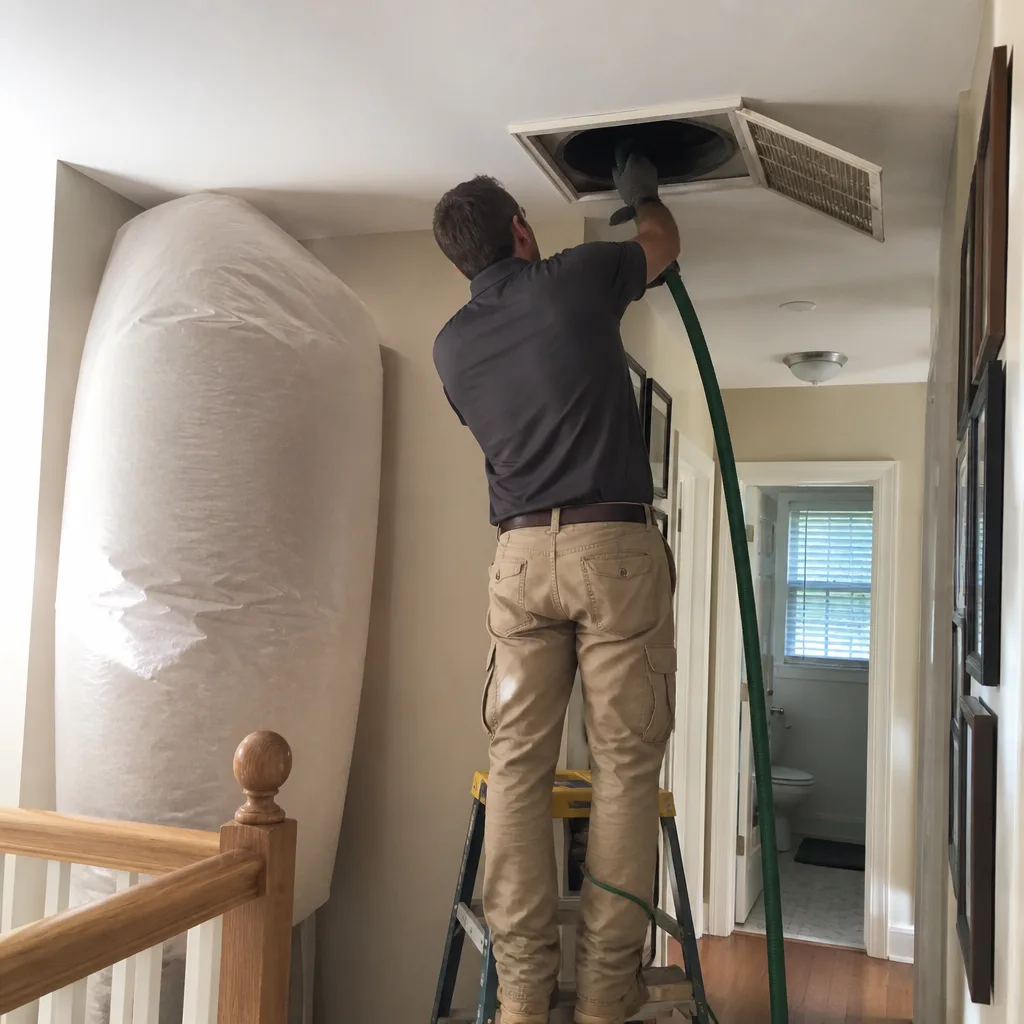
January in Alpharetta brings the tightest building envelope of the year. Windows close. Doors seal. Fireplace dampers shut. The house becomes a closed system, and every cubic foot of air your furnace moves must find a return path.
Static pressure is the resistance the blower works against. In summer, some pressure relief comes from window leakage, door gaps, and natural ventilation. In winter, those paths close. A duct system with existing restrictions - dirty coils, debris-narrowed runs, or partially collapsed flex - sees pressure spikes that manifest in specific ways:
- Filter collapse: the pleats of a high-MERV filter bow inward and may tear, bypassing filtration entirely
- Supply register whistling: air velocity at restricted registers increases to audible levels
- Return grille rattle: the grille frame vibrates against drywall as suction increases
- Blower motor amp draw rise: the motor works harder, shortening service life
The critical winter check is filter condition under load. A filter that appeared adequate in October may collapse under January’s sustained operation. We recommend checking monthly, not quarterly, during heating season in Alpharetta.
Winter also reveals duct leakage that summer masks. In summer, leaky supply ducts in the attic lose cooling into hot attic air - the loss is invisible. In winter, those same leaks blow heated air into a cold attic, creating a temperature differential that can be felt at the ceiling or detected with an infrared thermometer. Walk your attic access on a cold morning with the system running; any warm spot on the ceiling indicates a supply leak above.
The static pressure issue compounds with duct cleanliness. A 1/8-inch debris layer on the evaporator coil - which acts as the heating coil in a heat pump - reduces airflow and raises pressure across the entire system. Pre-winter cleaning, documented with before-and-after photos, verifies that the coil and blower are within manufacturer specifications for airflow.
Month-by-Month 15-Minute Inspection Checklist
These checks require no tools beyond a flashlight and your phone camera. Do them on the first Saturday of each month. The cumulative record of photos becomes your system’s maintenance history - for a complete walkthrough, see our Air Duct Cleaning Maintenance Checklist for Alpharetta Homeowners.
January
- Remove and inspect the furnace filter - look for bowing or tearing at the pleats
- Photograph each supply register from below; note any dust fallout patterns that indicate airflow imbalance
- Check the condensate drain pan and pump for standing water from humidifier operation
February
- Listen to the blower cabinet during startup - grinding or bearing noise indicates wear under winter load
- Inspect bathroom and kitchen exhaust fans for backdraft when the furnace runs
- Photograph the exterior of the furnace or air handler for rust at seams
March
- Install a fresh filter before pollen season accelerates
- Check return grilles for early pollen accumulation
- Verify that outdoor condenser pad is level - freeze-thaw cycles shift pads
April
- Remove and photograph the first 12 inches of each return duct
- Check ceiling around returns for darkening - indicates filter bypass or grille leakage
- Document condensate drain flow as cooling cycles begin
May
- Run cooling and check supply register temperature with a thermometer - should be 14-20°F below return air temperature
- Inspect attic access for cold air leakage during operation
- Photograph any register staining that appeared since winter
June
- Check for condensation on exposed ductwork in basement or crawl space
- Listen for duct noise changes - new whistling or rumbling indicates airflow restriction
- Verify outdoor coil is clear of spring growth and debris
July
- Touch-test ceiling around supply registers for cold spots indicating wet or missing insulation
- Photograph any progression of register staining from May
- Check condensate line for algae blockage - summer humidity promotes growth
August
- Inspect the air handler cabinet for mold or mildew odor - peak humidity month
- Verify thermostat humidity reading stays below 55% during operation
- Document any system cycling changes - short cycling often indicates coil restriction
September
- Install fresh filter before heating transition
- Clear vegetation from around outdoor unit - summer growth encroaches
- Photograph coil condition through service panel if accessible
October
- Clear leaves from intake hoods and outdoor unit
- Inspect intake screens for damage
- Run heating briefly and check for odor - burning dust is normal; musty or chemical odor is not
November
- Verify carbon monoxide detectors are functional - heating season safety baseline
- Check for backdraft at fireplace and exhaust fans with system running
- Photograph filter condition after first month of heating operation
December
- Inspect visible ductwork in attic for gaps at connections - thermal expansion from heating cycles opens seams
- Check for rodent evidence near duct penetrations
- Document any new noise or airflow changes before holiday guests increase system load
Alpharetta Housing Stock: 1990s Flex vs. Post-2005 Hard Pipe
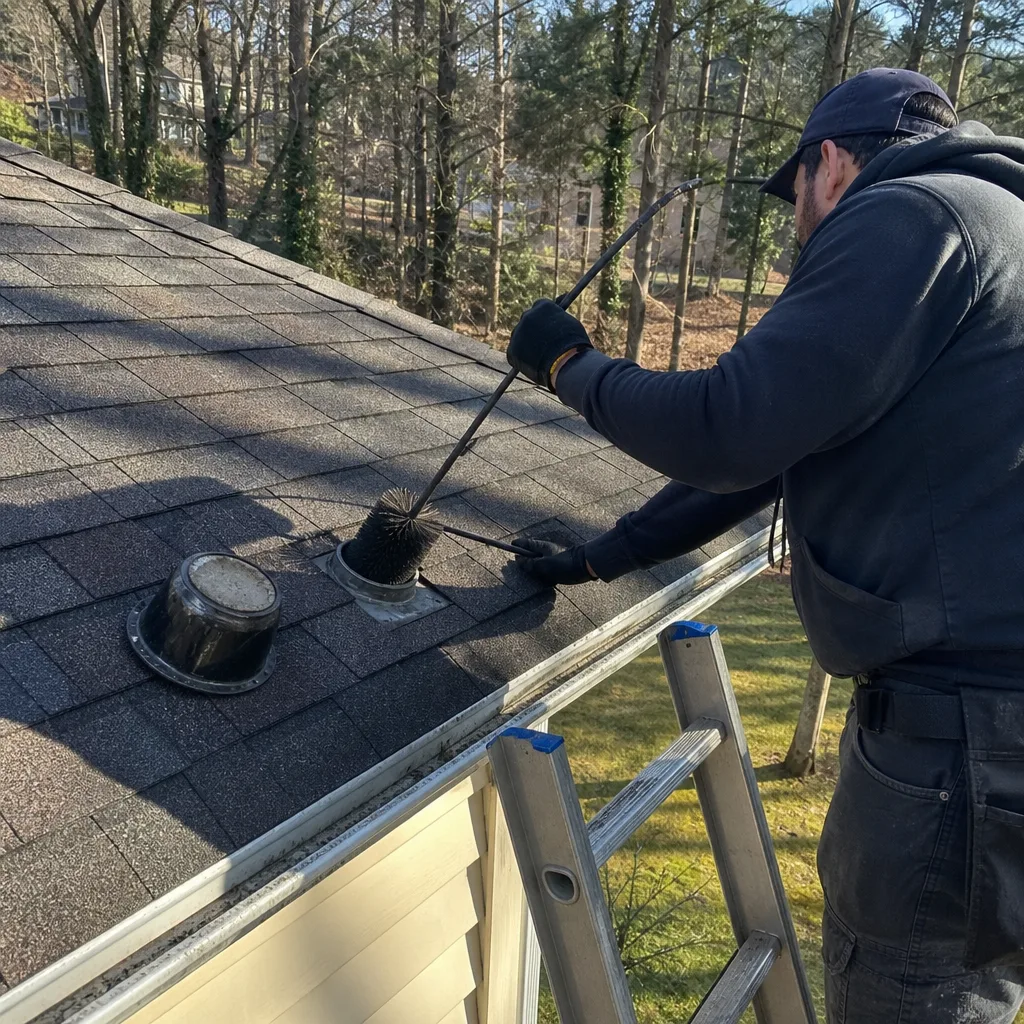
Alpharetta’s development waves created two distinct ductwork populations, and seasonal care differs materially between them.
The 1990s builder-grade flex duct era covers neighborhoods like Windward’s original sections, parts of Nesbit Ferry, and the Crabapple area developments. These systems used 6-inch and 8-inch flex with R-4 or R-6 insulation, secured with plastic zip ties and supported by flimsy strapping. The inner liner is typically gray or black polyethylene, bonded with a pressure-sensitive adhesive that degrades with heat and humidity cycling. In our experience, these systems show three predictable failure patterns by age 20-25:
- Support failure: strapping breaks, duct sags, condensate pools at low points
- Connection separation: zip ties degrade, collars pull free at plenum and register boots
- Insulation compression: original R-value lost where duct rests on framing or other ducts
Seasonal care for 1990s flex means inspecting for sag and separation before each peak season. A flashlight in the attic, photo documentation of support condition, and prompt repair of separated joints prevents the condensation and pressure problems that destroy these systems from the inside.
Post-2005 construction, including Avalon, Downtown Alpharetta’s newer phases, and the Halcyon area, typically uses mastic-sealed hard pipe (sheet metal ductwork) with R-8 flex only for final connections. These systems are more durable but not maintenance-free. The mastic sealant - a thick, paste-like compound applied at joints - can crack with thermal cycling. Hard pipe in unconditioned attics sweats more readily than flex because metal conducts temperature faster. And the tighter construction of these homes means any duct leakage has a more pronounced effect on building pressure and air quality.
For post-2005 systems, seasonal care emphasizes seal integrity and pressure balance. Smoke pencil testing at registers (a simple DIY check with an incense stick or smoke pencil) reveals whether supply and return flows are balanced. Unbalanced pressure in a tight house drives moisture into wall cavities and can activate latent mold.
CleanRun’s crews carry equipment to service both system types. Rotobrush systems handle flex duct without damaging the inner liner. Nikro and Abatement Technologies negative-pressure systems are specified for hard pipe with larger debris loads. The inspection determines the appropriate approach, documented in the written scope before work begins.
Pre-Season System Readiness and Energy Cost Spikes
Georgia Power’s residential rates and Alpharetta’s cooling degree days mean summer electricity bills routinely double winter costs. Dirty ducts compound this spike in two measurable ways.
First, debris on the evaporator coil reduces heat transfer efficiency. The system runs longer to achieve the same temperature drop across the coil. A coil with visible debris - which we photograph on every HVAC Cleaning in Alpharetta job - can increase runtime by 15-20% to maintain setpoint. At Georgia Power’s incremental summer rates, this translates to measurable dollars per month.
Second, duct leakage and restriction force the blower to work against higher static pressure. Blower motor amp draw increases with pressure. In winter, this shows as higher gas and electric consumption. In summer, it adds to the already-heavy compressor load.
Our pre-season readiness protocol, performed for Alpharetta homeowners who schedule in April and October, includes:
- Coil and blower cabinet cleaning with photo documentation
- Static pressure measurement at the air handler - compared to manufacturer specifications
- Temperature drop test across the coil - verifies heat exchange efficiency
- Visual inspection of accessible ductwork for leakage, sag, or damage
- Written report with photo record, delivered before any recommended work is discussed
The Haven Standard Clause 1 pricing applies: the written price for any recommended cleaning or repair is delivered before work begins. No exceptions. The customer has the photo evidence, the pressure readings, and the price - then decides.
For homes in Alpharetta’s higher-end market - the $800K+ new construction near Avalon or the established estates along Kimball Bridge Road - energy efficiency is often a resale consideration. Documented maintenance records with photo evidence support inspection disclosures and protect value.
Common Mistakes to Avoid
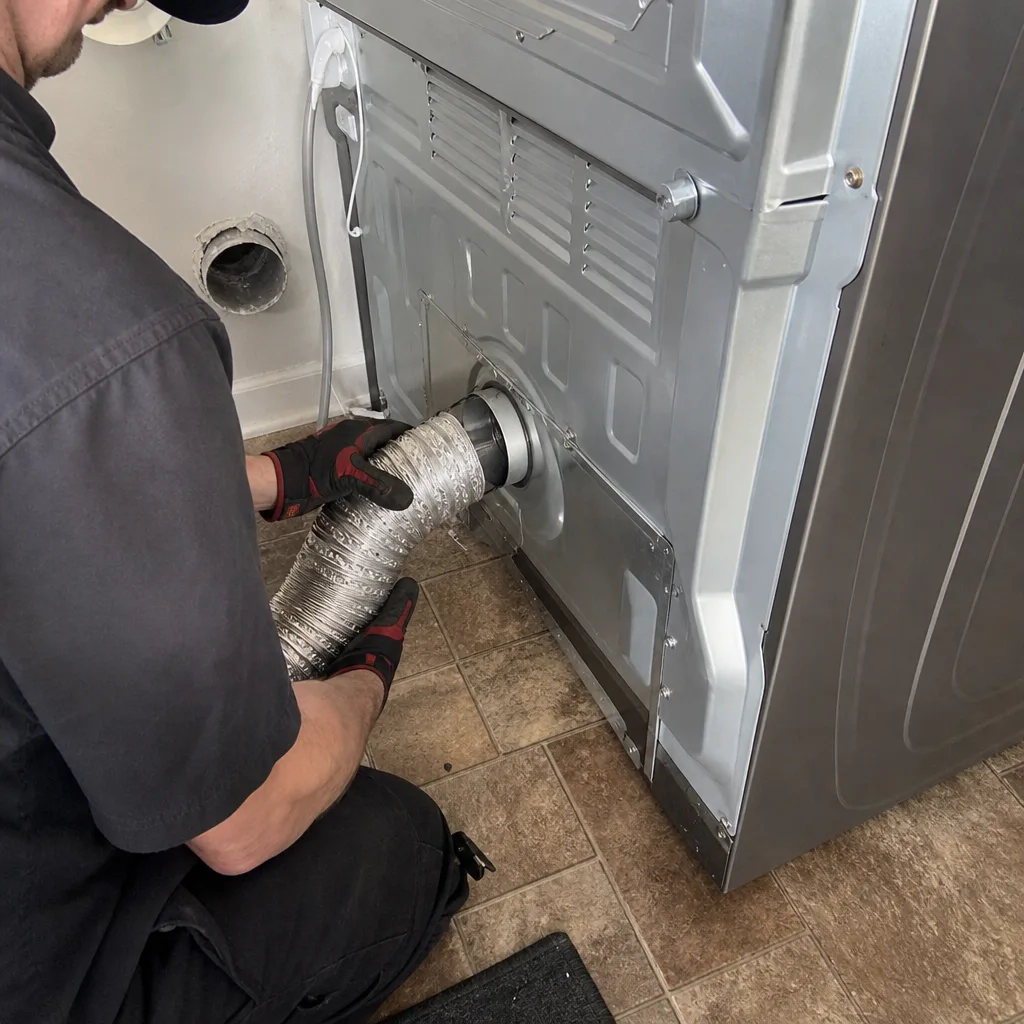
- Changing the filter on a schedule without inspecting it. Alpharetta’s pollen variability means a 90-day filter may collapse in 45 days during a heavy spring. Inspect monthly, replace when loaded.
- Using the highest-MERV filter the hardware store sells. MERV 13+ filters increase static pressure significantly. In 1990s flex duct systems, this accelerates blower motor wear and can collapse ductwork. Match filter to system capacity.
- Ignoring register staining as “just cosmetic.” Brown or yellow discoloration around a supply register indicates sustained moisture in the duct. The insulation is wet, the boot is rusting, and mold risk is elevated. It will not resolve without intervention.
- Cleaning only the ducts without addressing the coil and blower. A clean duct system connected to a dirty coil recontaminates in days. The coil is the source; the ducts are the distribution. Both must be addressed for sustained results.
- Accepting “blow-and-go” cleaning without photo verification. If a contractor cannot show you the inside of your ducts before and after, you have no evidence that the work occurred. CleanRun’s Documented Photo Record on Every Visit, held since 2013, exists because this verification gap is industry-standard.
- Sealing duct leaks with duct tape. Standard cloth-backed duct tape fails within months in attic heat. Proper repair requires mastic or foil-backed tape rated for HVAC applications. We’ve re-repaired countless “fixed” leaks in Alpharetta attics.
- Waiting for symptoms before acting. Musty odor, visible mold, or airflow reduction are late indicators. The damage that causes them - wet insulation, collapsed flex, separated joints - is cheaper to prevent than to repair.
When to Call a Professional
Call a licensed duct cleaning contractor when your monthly inspection reveals register staining that progresses between checks, when you hear new duct noise after a weather extreme, or when your energy bills spike without rate changes. Also call before you buy or sell - documented duct condition supports inspection negotiations.
CleanRun Air Duct Cleaning Alpharetta offers free estimates in Alpharetta. Every estimate includes a written price before work starts, per Haven Standard Clause 1. Our crews are background-checked and uniformed, operating under Haven Standard Clause 3: Verified Crews. We carry professional-grade equipment from Rotobrush, Nikro, Honeywell, and Guardsman - brands you can verify independently. Every job concludes with a Documented Photo Record of every duct run and is backed by the 365-Day Done Right Promise in writing.
Call (678) 679-7540 to schedule. Estimates are free. Second opinions on any written competitor estimate are also free - we’ll put our number next to theirs in writing.
Frequently Asked Questions
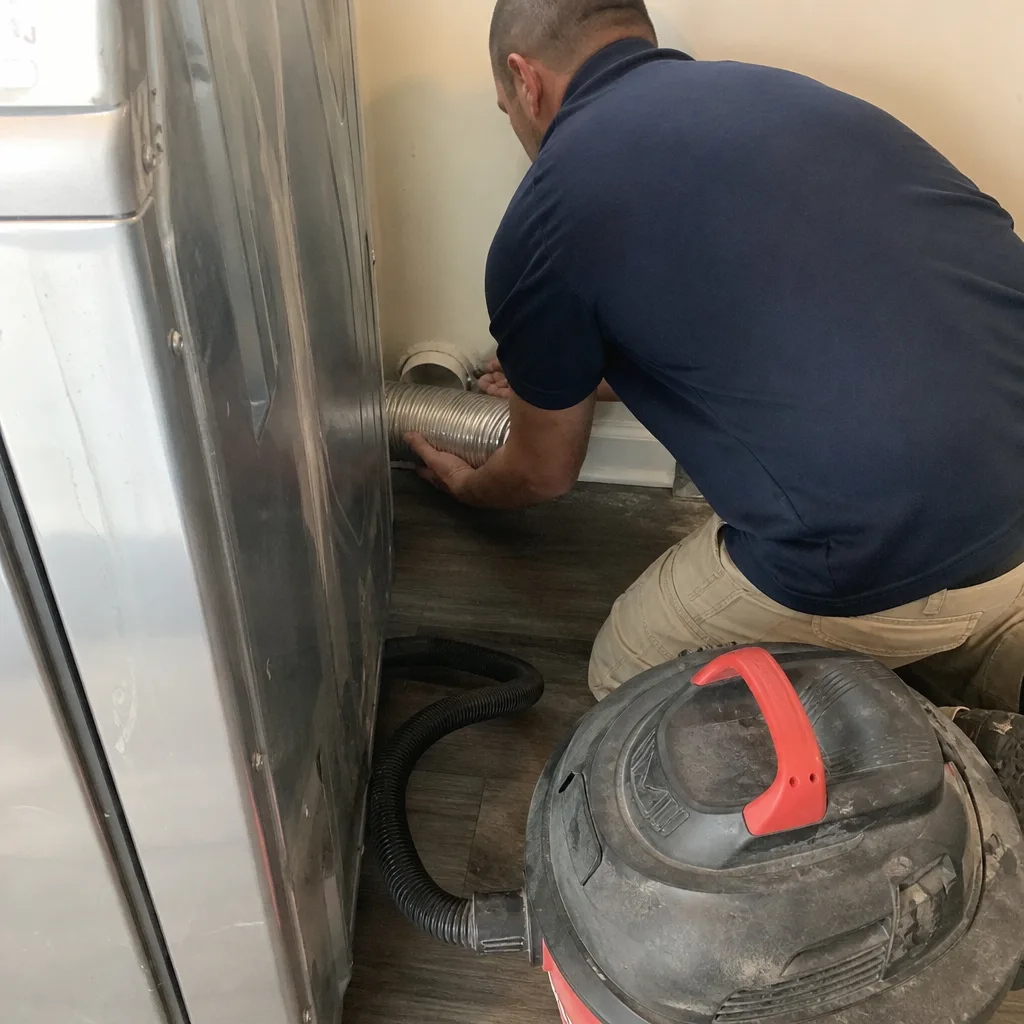
Whole-system air duct cleaning in Alpharetta typically ranges from $450 to $850 for average homes, with pricing varying by system size, accessibility, and whether HVAC component cleaning is included. CleanRun provides a written price before any work starts under Haven Standard Clause 1 - no per-vent add-ons, no coupon bait-and-switch. Call (678) 679-7540 for an exact quote; estimates are free.
Low quotes typically exclude the actual work: they cover a brief vacuum at registers without accessing the plenum or main trunk lines, or they use shop-vacuum equipment without negative-pressure containment. The industry standard for legitimate cleaning requires source-removal equipment, containment, and photo verification. A $199 “whole house special” cannot cover labor, equipment, and documentation at a sustainable level. Ask any contractor for their photo record protocol before comparing prices.
Demand a photo record showing the interior of each duct run before and after. CleanRun has provided this on every job since 2013 - it’s standard, not optional. If a contractor offers only a verbal report or a receipt, you have no verification that the duct interior was accessed. The photo record is your documentation for warranty, resale, and your own peace of mind.
Most Alpharetta homes benefit from professional cleaning every 3 to 5 years, with inspection annually. Homes with heavy tree pollen exposure, multiple pets, recent renovation, or 1990s-era flex duct may need more frequent service. The monthly 15-minute inspection described in this guide tells you whether your system is trending toward need or staying clean. Photo documentation from prior cleaning provides the baseline for comparison.
Homeowners can and should perform the monthly inspections in this guide - removing grilles, photographing interiors, checking filters. Actual cleaning of the plenum and trunk lines requires negative-pressure extraction equipment, containment, and access tools that are not practical for DIY. Attempting to clean ducts without containment risks releasing debris into the living space. For the duct runs beyond the first elbow, professional service is the appropriate choice.
Alpharetta’s specific combination of mature tree canopy, high summer attic temperatures, and tight suburban construction creates the four stress events this guide describes. The pollen load from north Fulton County’s oak-hickory forest is heavier than more urbanized areas. The temperature extremes in unconditioned attics - particularly in Windward and Crabapple’s larger homes with complex rooflines - exceed what flatter, more shaded lots experience. And the rapid price appreciation since 2015 means many homeowners are protecting significant equity through preventive maintenance. The principles are universal; the local intensity is specific.
The Bottom Line
Seasonal duct care in Alpharetta is not a calendar exercise. It’s a response to four distinct climate pressures that produce different failure modes: spring pollen that becomes summer mold substrate, summer humidity that destroys flex duct structure, fall debris that drives envelope leakage, and winter static pressure that reveals system restrictions. Match your maintenance to the actual stress, perform the 15-minute monthly inspections with photo documentation, and schedule professional service with photo-verified results before peak demand. The cost of prevention is predictable. The cost of collapsed ductwork, coil replacement, or remediation is not.
CleanRun Air Duct Cleaning Alpharetta home | Dryer Vent Cleaning in Alpharetta
Written by Tomas Reyes, Owner at CleanRun Air Duct Cleaning Alpharetta, serving Alpharetta since 2013.