
Last updated September 23, 2026
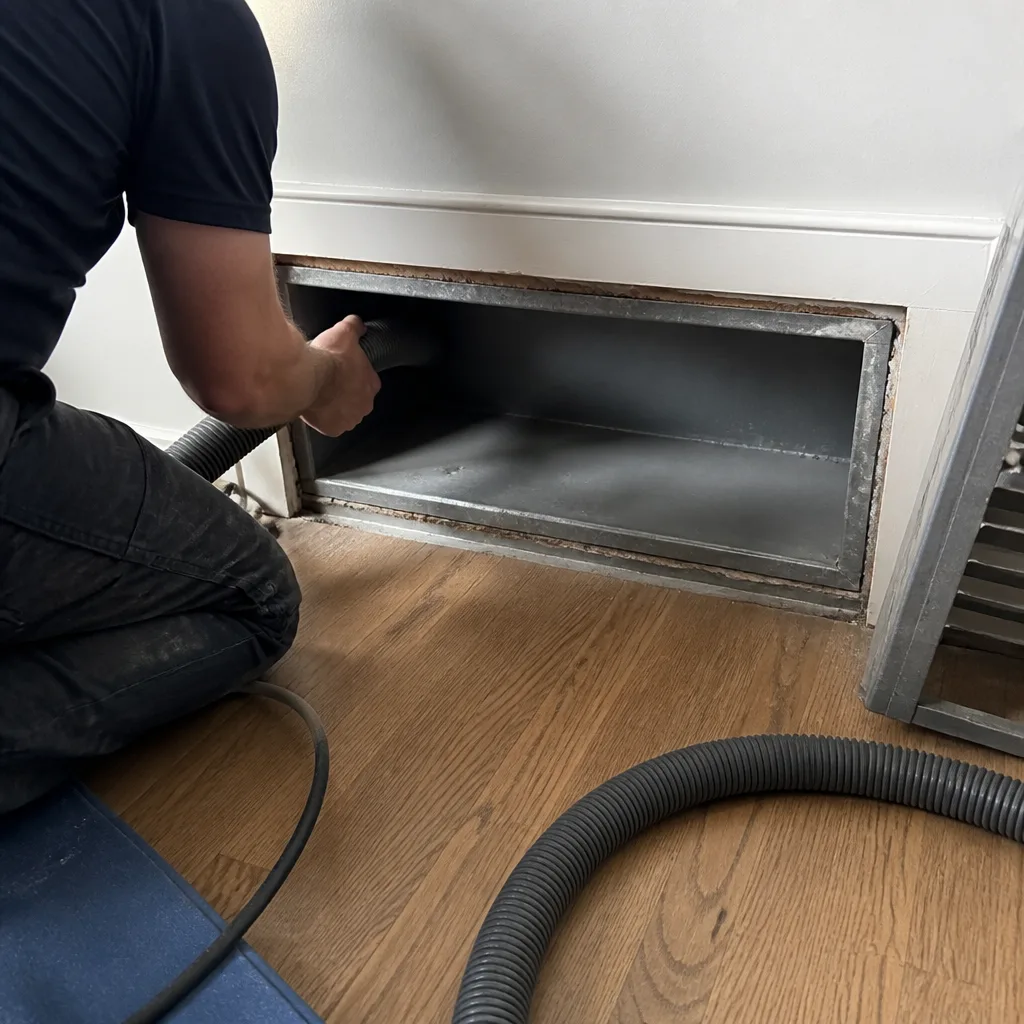
Whole-system duct and dryer vent check with before-and-after photos - you see exactly what came out of your vents
That "$99 whole-house special" is a bait ad - the real number appears once they are in your hallway, or the "clean" is a shop-vac at the register. We photograph the inside of your ducts before and after instead.
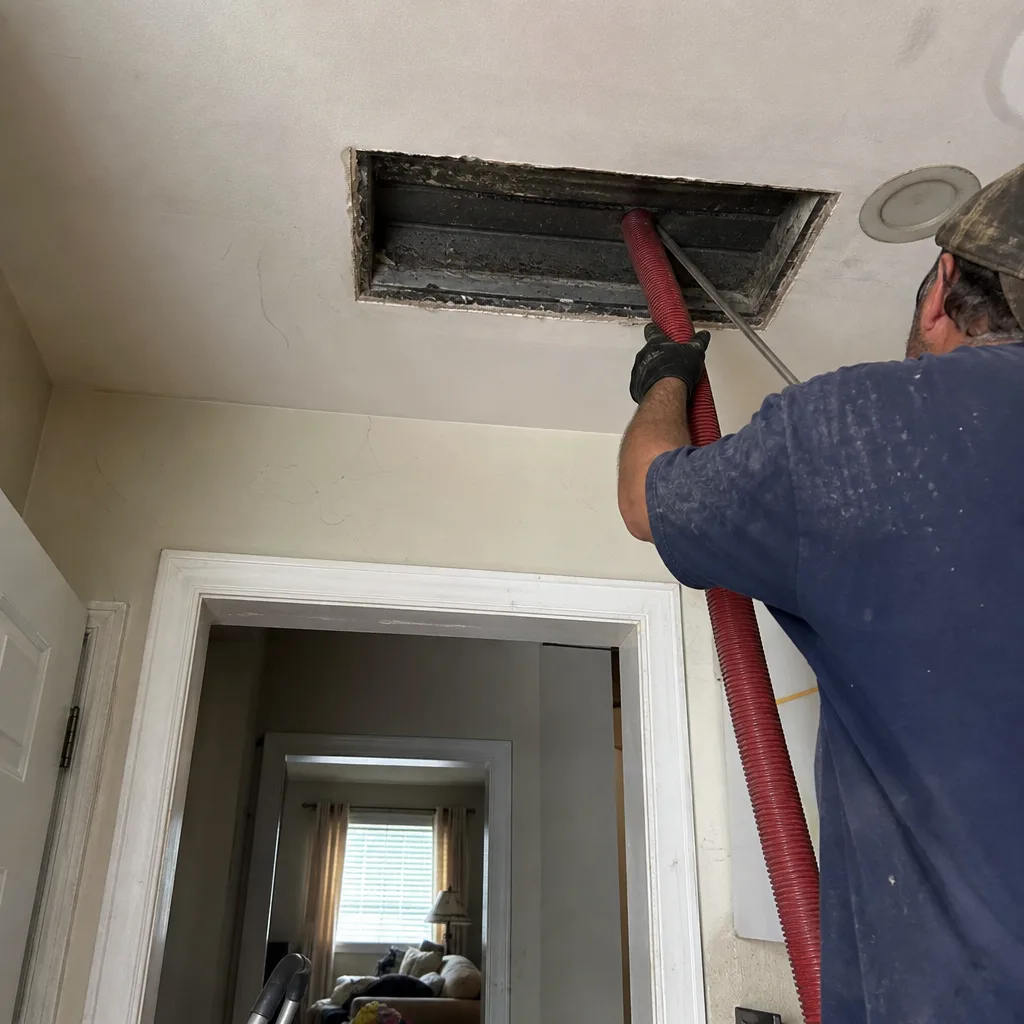 Before
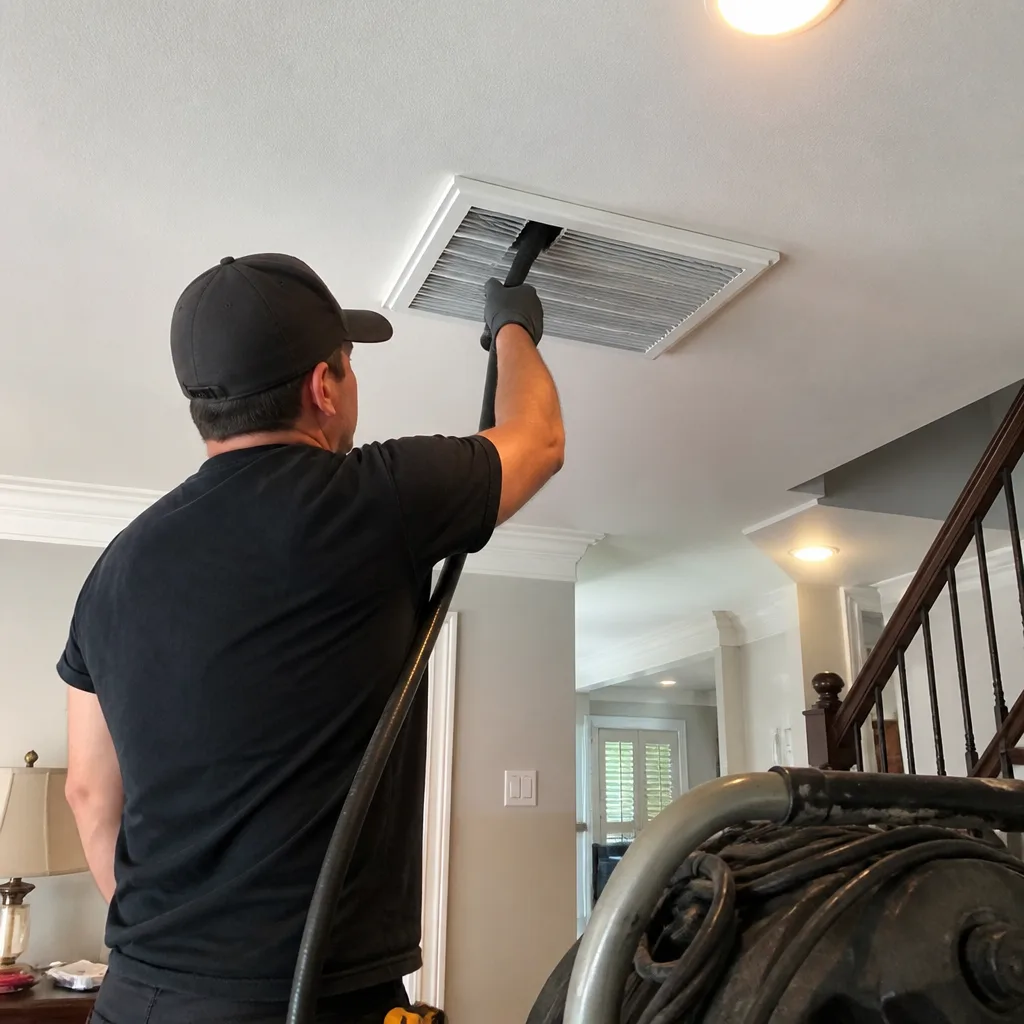 After
After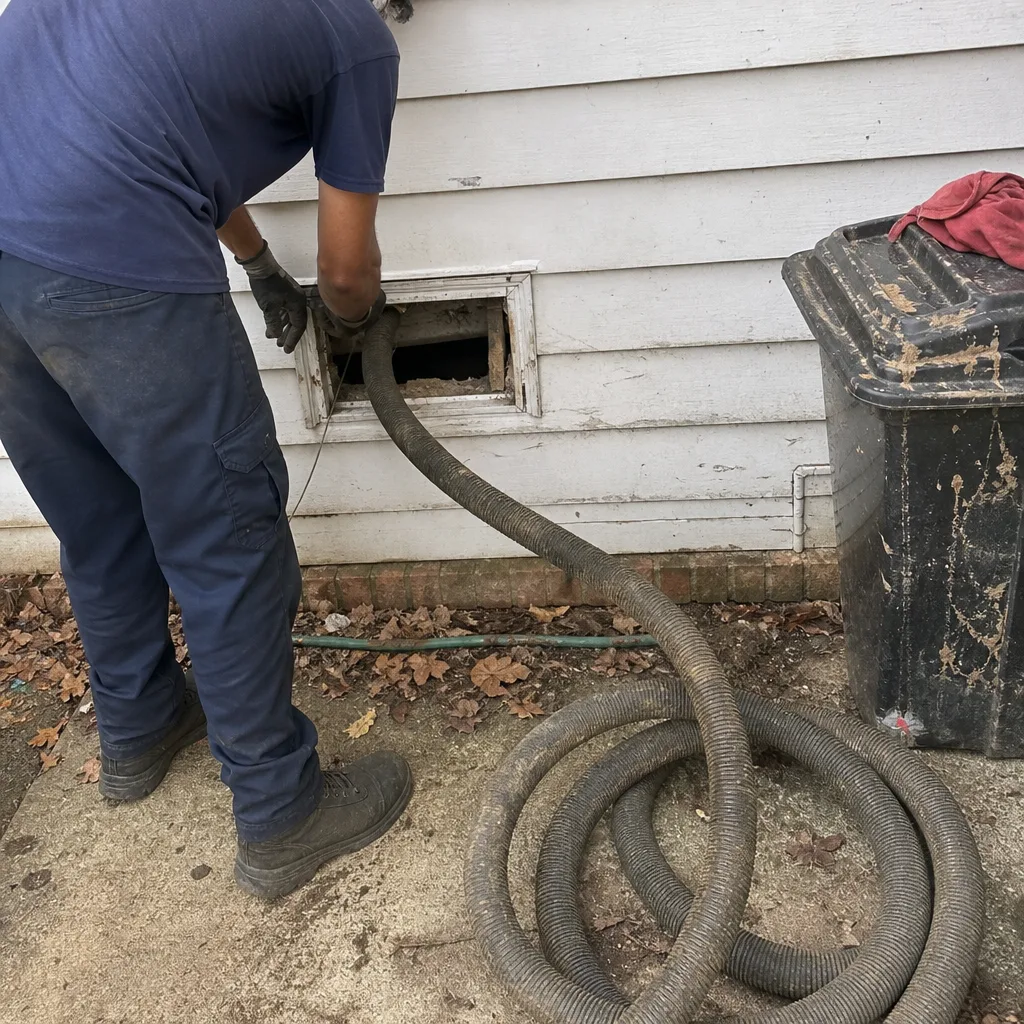 Before
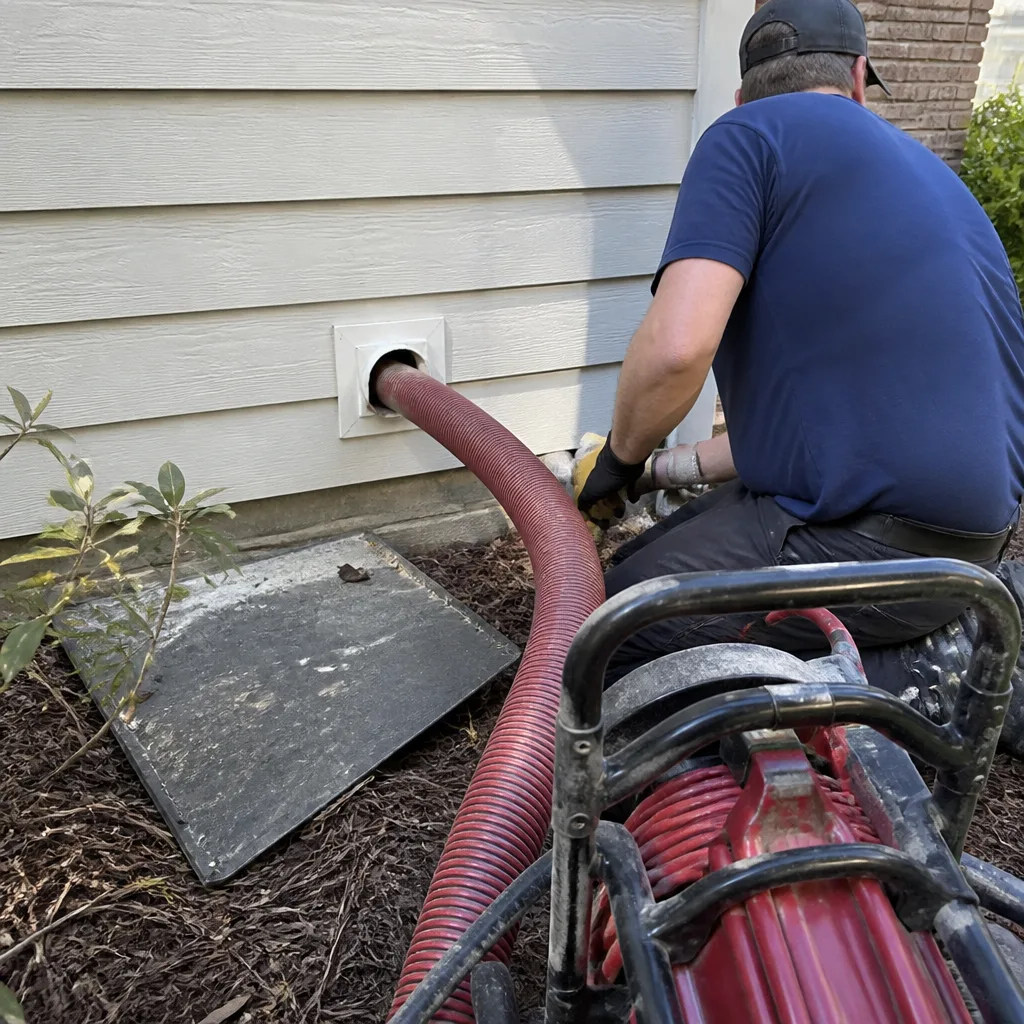 After
After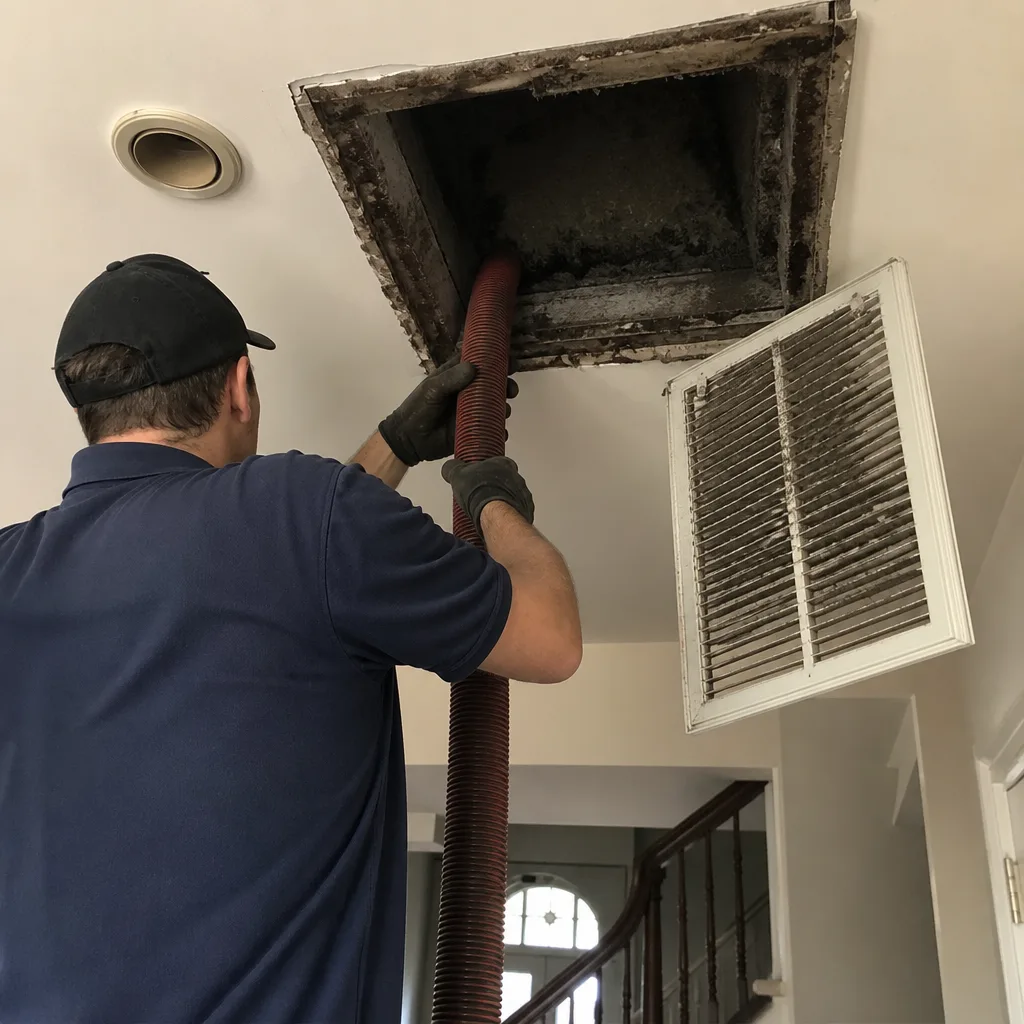 Before
 After
AfterDIY vs Professional Air Duct Cleaning: The Alpharetta Homeowner’s Decision Guide
A homeowner in Alpharetta with a 6-horsepower shop vac and a dryer vent brush can clean approximately 18 inches of duct from each register opening. The debris load sitting 4 feet back in the trunk line, and everything past the air handler, stays exactly where it is. That’s not a failure of effort; it’s a physics limitation of the equipment.
This guide compares what each approach actually cleans and what it leaves behind, measured by equipment capability and outcome, not by how much money you save or how hard you work. You’ll learn the mechanical limits of consumer-grade tools, the specific conditions where DIY is adequate, the conditions where it creates new problems, and what our Air Duct Cleaning services in Alpharetta actually deliver for the price.
Quick Answer
DIY air duct cleaning removes loose surface debris from the first 12 to 18 inches of each register run in an Alpharetta home, using a shop vac or brush kit with roughly 100 to 200 CFM of suction. Professional cleaning with truck-mounted negative-pressure extraction reaches the full duct system, including trunk lines and plenum, removing accumulated debris from the entire airflow path. The choice depends on whether you need register-level tidiness or system-level debris removal.
Table of Contents
- What DIY Equipment Actually Reaches
- What Professional Equipment Does Differently
- When DIY Is Genuinely Adequate
- When DIY Creates New Problems
- Cost Versus Outcome in Alpharetta
- The Documentation Gap
- Common Mistakes to Avoid
- When to Call a Professional
- Frequently Asked Questions
- The Bottom Line
 Before
 After
AfterWhat DIY Equipment Actually Reaches
Consumer-grade equipment for duct cleaning falls into three categories: shop vacuums with extension hoses, rotary brush kits that attach to cordless drills, and compressed-air whips or skipper balls that feed through flexible lines. Each has a hard mechanical ceiling that determines what debris it can move and how far that debris travels.
A standard shop vacuum, even a 6-horsepower unit from a hardware store in Alpharetta, produces roughly 100 to 200 CFM of airflow at the hose end. For context, a truck-mounted negative-pressure extraction system runs 4,000 to 6,000 CFM through a 10-inch suction hose. The shop vac can pull loose dust and hair from the boot, the sheet-metal box just behind your wall or floor register. It cannot generate enough static pressure to lift compacted debris from the horizontal trunk line running through your crawl space or attic, or to pull material uphill from basement runs to the main return.
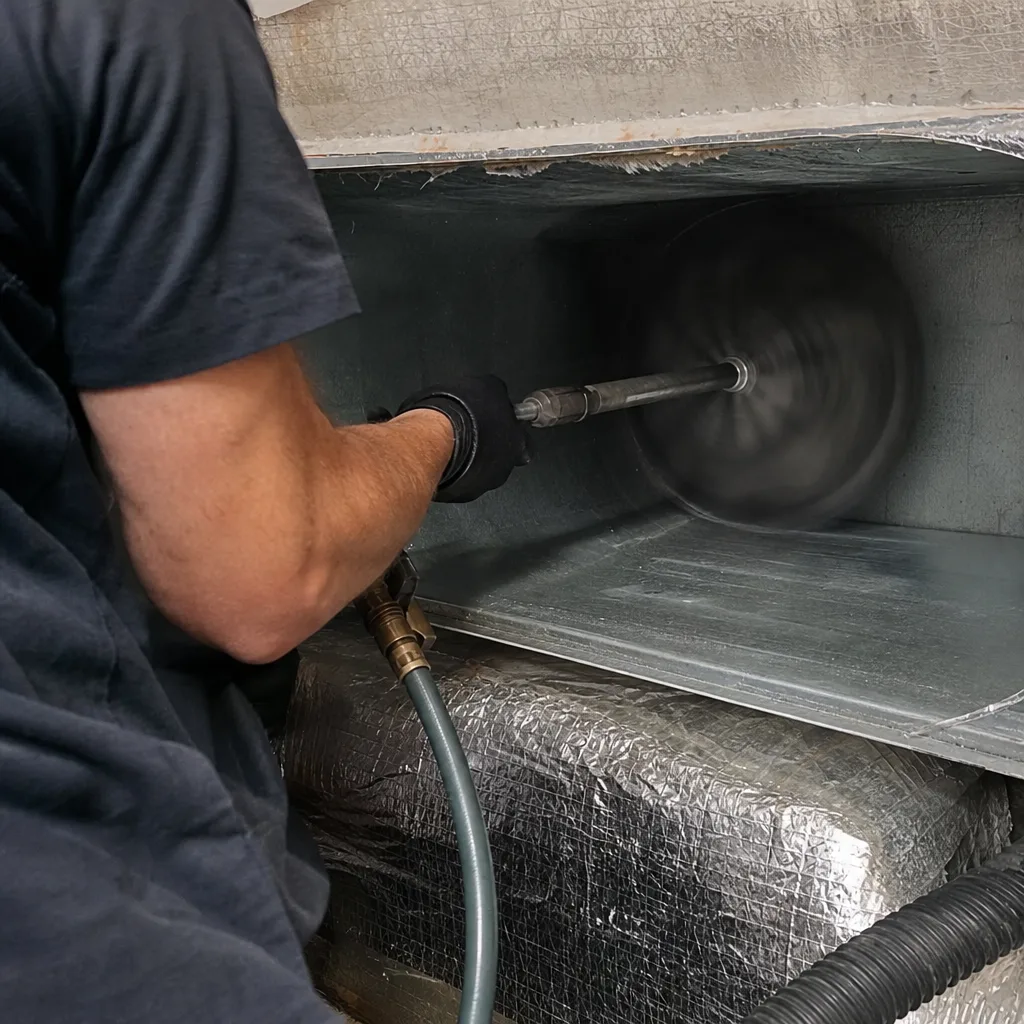
Rotary brush kits, the kind with a 15-foot flexible shaft and nylon bristles, extend reach but introduce their own limits. The brush spins at drill speed and knocks debris loose. Without sufficient suction at that exact point, the debris falls to the bottom of the duct. In a horizontal run, it sits there. In a vertical run, it may cascade to the next elbow. The brush also cannot navigate tight-radius elbows common in Alpharetta homes built between 2015 and 2020, where builders often used 90-degree pressed fittings to save space in conditioned attics.
Compressed-air tools, including whips with multiple tentacles and skipper balls that bounce through the line, require a compressor delivering at least 175 PSI at the tool head. Most homeowner compressors rate 150 PSI at the tank and lose pressure through 50 feet of line. More critically, these tools are designed to be used with concurrent negative-pressure extraction. Without a collector at the other end, they blow debris into the duct system, where it redistributes to other runs or settles on the evaporator coil.
The practical reach of all three DIY methods combined: approximately 18 inches from each register opening, plus whatever you can access by removing the register boot itself. Everything past the first elbow remains untouched.
What Professional Equipment Does Differently
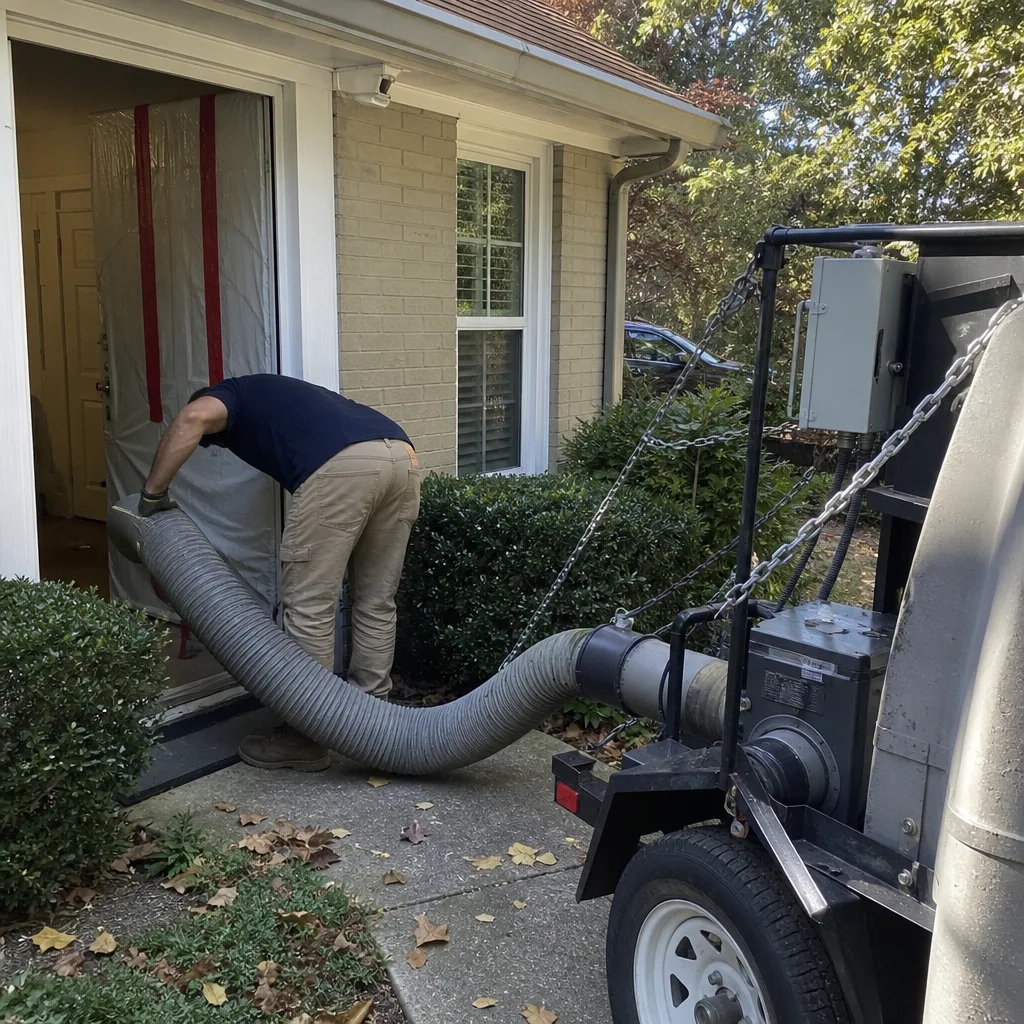
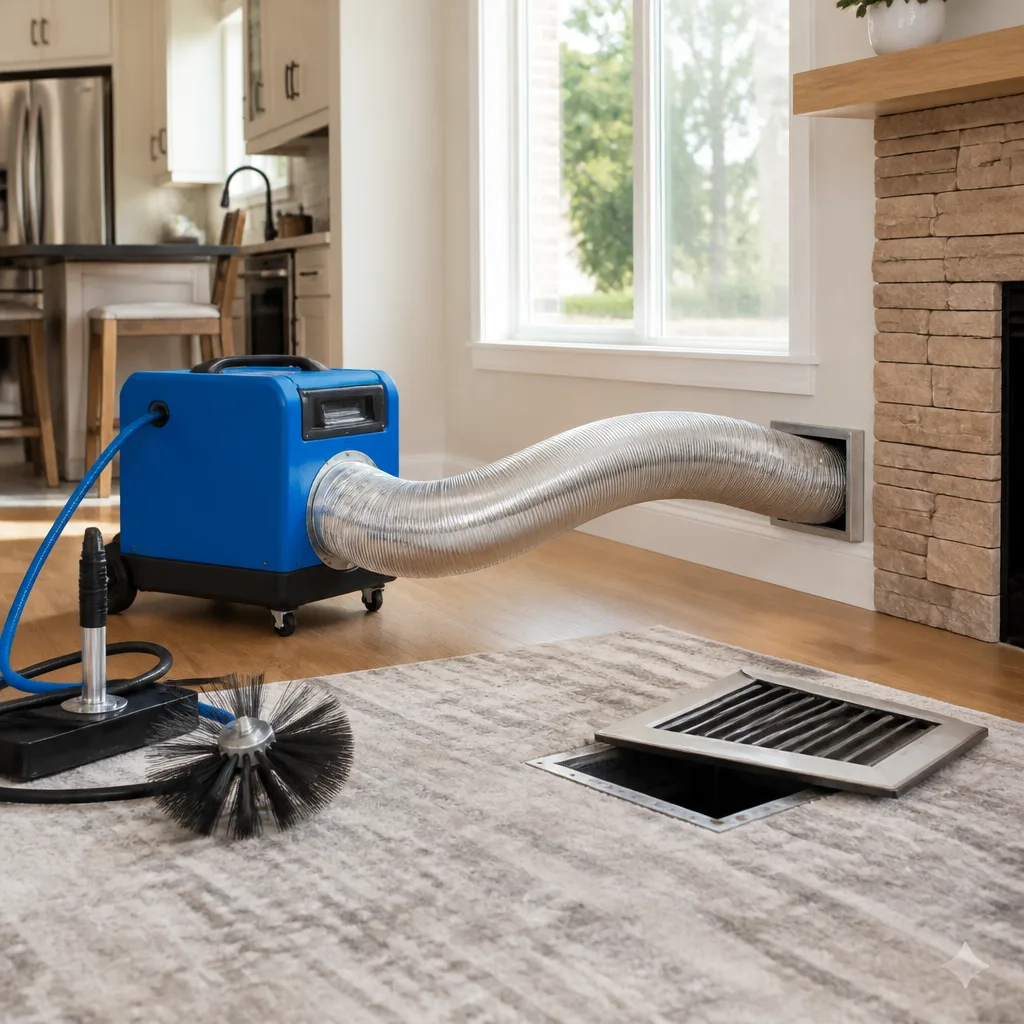
Professional duct cleaning in Alpharetta operates on a different physical principle. Truck-mounted or portable negative-pressure systems from Abatement Technologies and Nikro create a vacuum throughout the entire duct network, not just at the point of contact. This changes what happens to debris at every stage of removal.
Here’s how the process works on a typical Alpharetta home with a split-system heat pump in the attic:
- The technician seals all registers except one, creating a controlled airflow path through the system.
- A high-velocity suction hose, typically 8 to 10 inches in diameter, connects to the main trunk line or air handler plenum, the large central chamber that distributes air to all duct runs.
- The negative-pressure machine runs at 4,000+ CFM, pulling air through every sealed branch line toward the collection point.
- At each register, the technician inserts an agitation tool, a rotary brush or compressed-air whip, that knocks debris loose while the system vacuum captures it immediately at the source.
- The process repeats for supply and return sides separately, with the air handler isolated to protect its components.
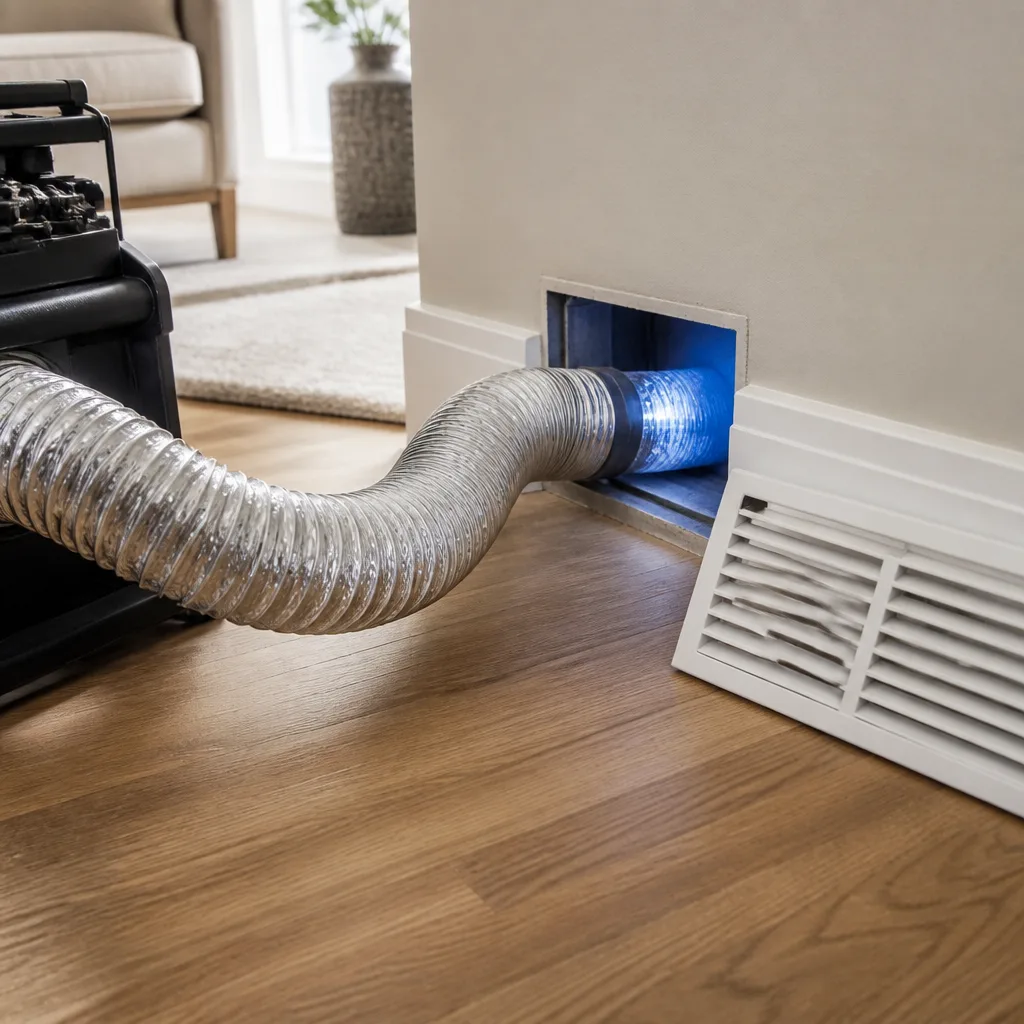
The critical difference is concurrent extraction. Debris is not knocked loose and left to settle. It is dislodged and simultaneously transported through the suction hose to a HEPA-filtered collection unit. This requires equipment that most homeowners will not purchase, store, or maintain: a machine weighing 400+ pounds, powered by a dedicated generator or PTO-driven compressor, with filtration rated to 99.97% at 0.3 microns.
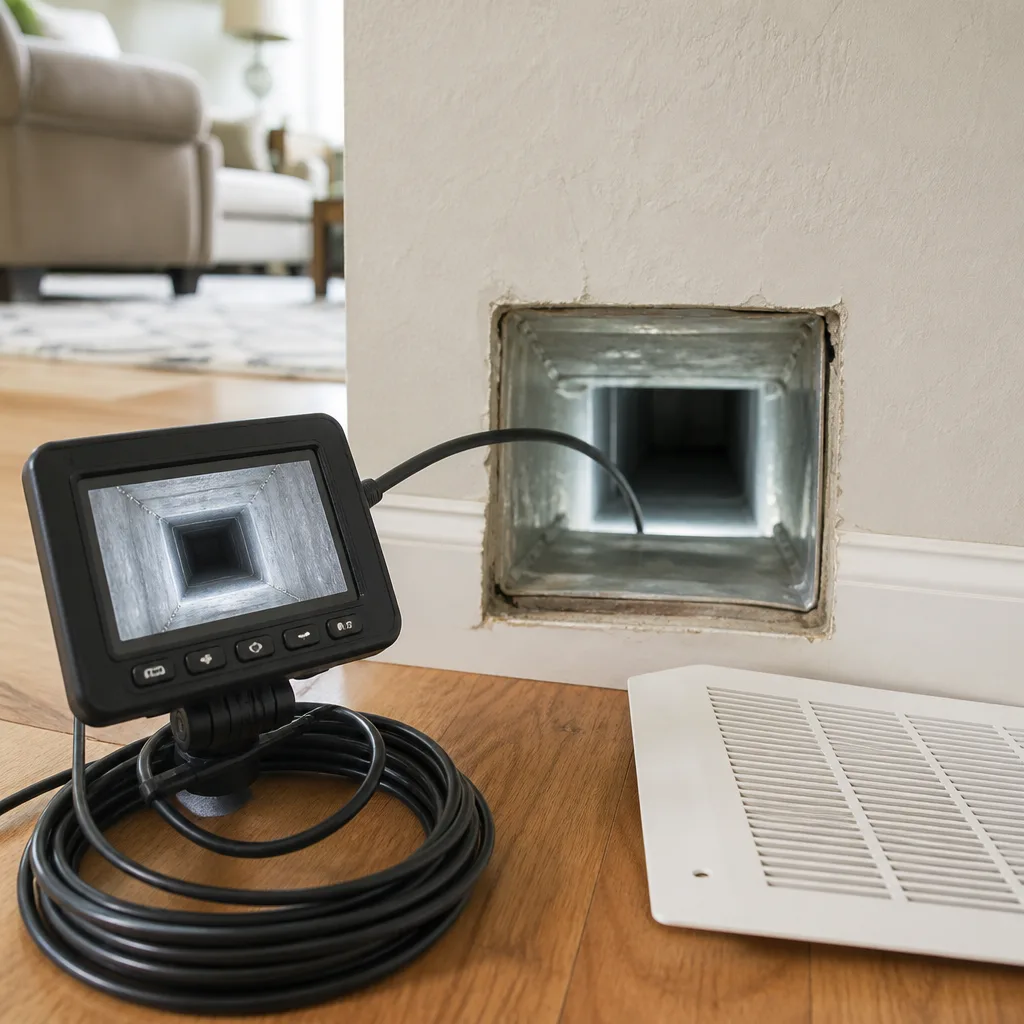
Professional-grade tools also include inspection cameras that travel the full length of each duct run. At CleanRun, we photograph the interior of every run before and after, part of the Documented Photo Record included on every visit. A homeowner using DIY methods has no visual confirmation of what was or was not removed. The register looks cleaner. The trunk line remains unknown.
Equipment brands matter because they indicate capability. We use Rotobrush for targeted agitation in residential runs, Nikro and Abatement Technologies for negative-pressure extraction, and Honeywell and Aprilaire media for filtration verification. Guardsman-treated surfaces where applicable. These are tools a homeowner can research independently before agreeing to any scope of work.
When DIY Is Genuinely Adequate
There are specific conditions where consumer-grade equipment delivers adequate results. Recognizing them saves money and avoids paying for professional scope you do not need.
New construction with minimal accumulation. A home built in 2023 or 2024 in Alpharetta’s Windward or Avalon area, occupied for 12 to 18 months, typically has light construction dust in the supply boots and minimal debris in the trunk lines. If the builder ran the HVAC during construction without filtration, the registers may have drywall dust and wood particulate. A shop vac with a brush attachment can remove this surface material effectively. The ducts are not yet dirty enough to require system-level extraction.
Single accessible register near a debris source. We see this in Alpharetta townhomes where one return register sits directly below a laundry area or pet feeding station. Hair and lint accumulate in the boot and first few feet of duct. A homeowner can remove the register, vacuum the boot, and use a dryer vent brush to clear the short horizontal run. The rest of the system does not need disturbance.
Pre-professional prep that reduces billable time. Some homeowners prepare for our visit by removing and washing all register covers, vacuuming the boots, and clearing attic or crawl space access paths. This does not replace professional cleaning, but it reduces the time our technicians spend on non-cleaning tasks. Under Haven Standard Clause 1, the written price reflects scope, not hours, so preparation does not change the quoted amount. It does allow more of the scheduled time to focus on trunk lines and plenum work.
Maintenance between professional cleanings. If your system was professionally cleaned 18 months ago and you want to extend the interval, DIY register maintenance can slow reaccumulation. This is not cleaning in the technical sense. It is debris management at the point of entry.
When DIY Creates New Problems
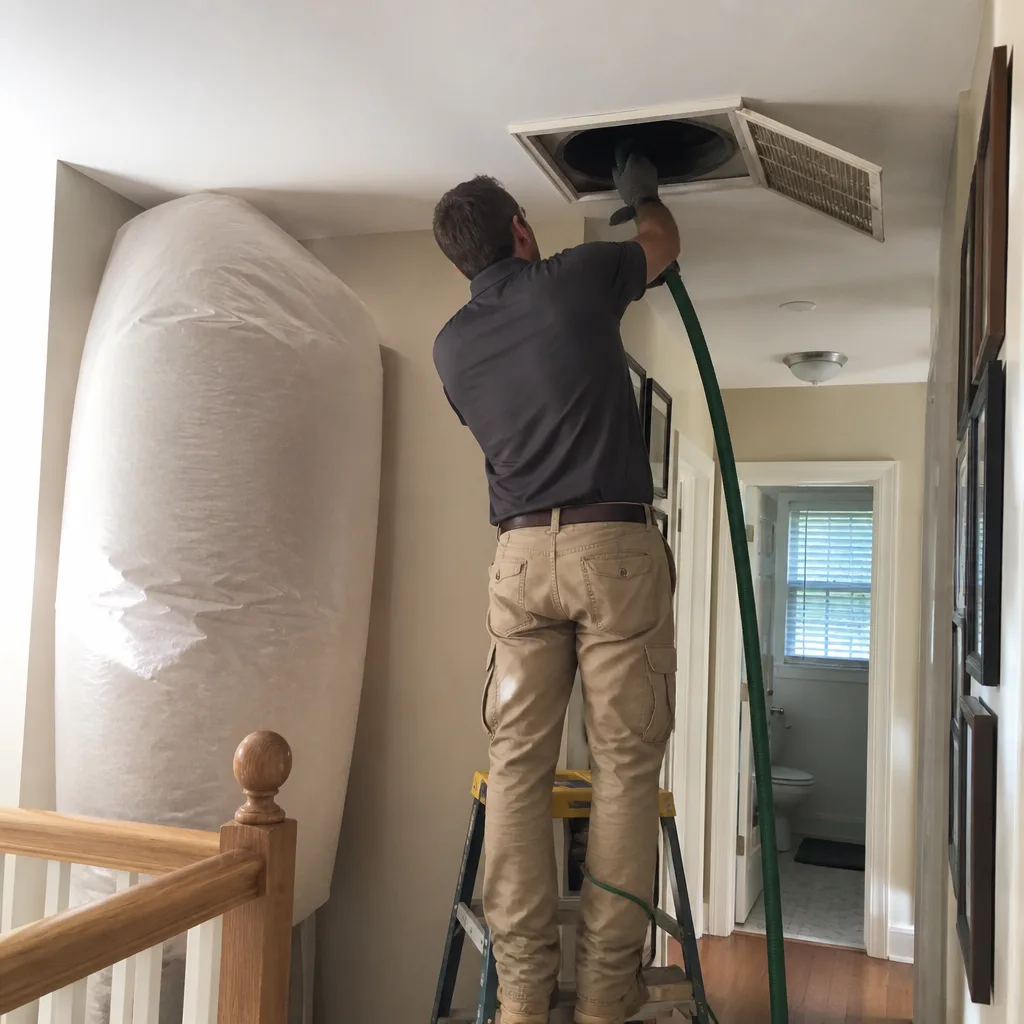
The same tools that are adequate in limited conditions become liabilities in others. We have documented the following issues in Alpharetta homes where DIY attempts preceded our service call.
Disturbing debris past vacuum reach. A rotary brush pushed 6 feet into a duct run knocks loose a decade of accumulated material. Without extraction at that point, the debris falls to low spots in the line. When the HVAC cycles on, it becomes airborne and distributes through the system. We have arrived to find filters blackened within 48 hours of a homeowner’s DIY attempt, the debris that was previously static now circulating.
Puncturing flex duct liner. Alpharetta homes from the 1990s and early 2000s, common in neighborhoods like Nesbit Ferry and Crabapple, often have flexible duct with a mylar or fiberglass liner. A stiff rotary brush, or even an overly aggressive shop vac crevice tool, can tear this liner. The homeowner sees no damage from the register side. The tear creates an air leak into the attic or crawl space, reducing system efficiency and introducing unconditioned air. We find these tears during camera inspection and mark them for repair.
Re-seating registers without air-leak check. When a register cover is removed and replaced, the foam gasket compresses or shifts. A gap of even 1/16 inch around the perimeter leaks conditioned air into the wall cavity. In Alpharetta’s cooling-dominant climate, this means paid-for cold air escaping into the attic every summer. Professional service includes register resealing; DIY rarely does.
Dislodging insulation from duct interior. Some older metal ducts have internal fiberglass lining for sound attenuation. Aggressive brushing strips this lining, releasing fiberglass particles into the airflow and exposing bare metal that resonates with blower noise. The homeowner intended to clean. They damaged the duct structure.
Ignoring the evaporator coil and blower. The dirtiest components of many Alpharetta systems are not the ducts but the air handler. A wet coil with microbial growth, a blower wheel caked with debris, these are not accessible with consumer tools and are often not visible to the homeowner. Cleaning ducts without addressing the source of contamination is incomplete. Our HVAC Cleaning in Alpharetta service addresses this as a separate scope, but it is part of the same system evaluation.
Cost Versus Outcome in Alpharetta
The honest comparison requires separating supply cost from result scope. Here is what each approach costs and what it delivers for a typical 2,500-square-foot Alpharetta home with 12 to 15 registers and a single air handler.
DIY Approach
| Item | Cost | Result Scope |
|---|---|---|
| Shop vacuum with hose extensions | $150-$400 | Register boots, 12-18 inches into each run |
| Rotary brush kit (drill attachment) | $50-$120 | Loose debris in straight runs up to 15 feet |
| Compressed-air whip kit + compressor rental | $80-$200 | Agitation without extraction; debris redistribution risk |
| Replacement filters (post-cleaning) | $15-$40 | Captures airborne debris from disturbance |
| Time investment | 4-8 hours | Physical labor, setup, cleanup, tool return |
| Total DIY | $295-$760 | Surface debris at register level; trunk lines and plenum untouched |
Professional Approach
| Item | Cost | Result Scope |
|---|---|---|
| Whole-system air duct cleaning | $450-$850 | All supply and return runs, trunk lines, plenum, boots |
| Documented Photo Record | Included | Before/after images of every run, delivered to customer |
| Written scope and price | Delivered pre-work | Haven Standard Clause 1: no surprises |
| 365-Day Done Right Promise | Included | Written guarantee of workmanship |
| Time investment | None (crew handles all) | Typical service: 3-5 hours on site |
| Total Professional | $450-$850 | Complete system; documented; guaranteed |
The price ranges reflect Alpharetta’s market specifically. Homes in the Manor Country Club area with complex zoned systems run higher. Single-story ranch homes in older neighborhoods with straightforward duct layouts run lower. The professional price includes what the DIY price cannot buy: negative-pressure extraction capacity, camera verification, and accountability if the result is not right.
Under Haven Standard Clause 1, CleanRun delivers a written price before any work starts. No exceptions. The price you approve is the price on the invoice. This is not a marketing claim. It is the operating standard we have held since 2013.
The Documentation Gap
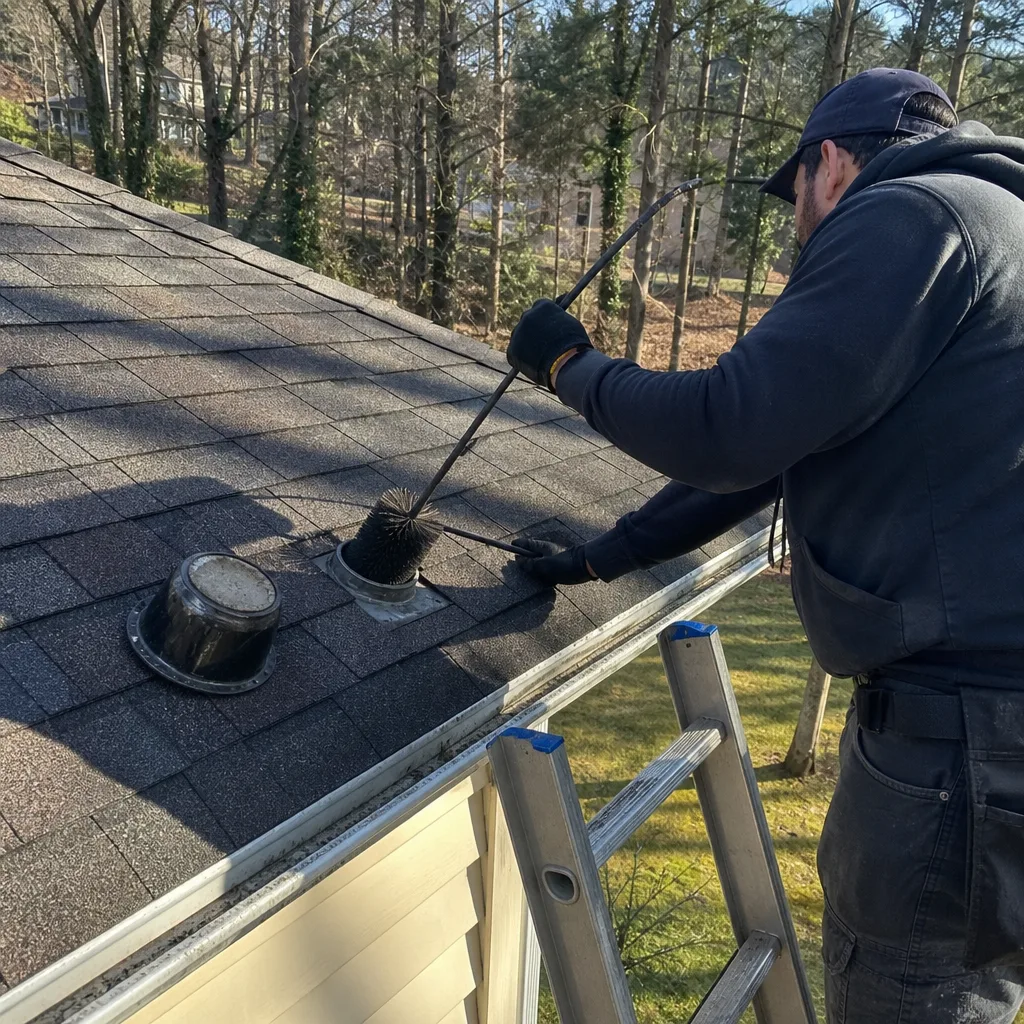
There is a difference between believing your ducts are clean and knowing it. DIY methods leave a documentation gap that matters for three reasons.
No baseline for future comparison. Without images of what the ducts looked like before and after, you have no reference for whether debris is accumulating faster or slower over time. Professional service creates a dated record. When we return in three or five years, we compare to the previous photo set. This is how we identify systemic issues: a return trunk with recurring moisture staining, a supply boot with construction debris that should have cleared by now, a flex duct with sagging that traps material.
No verification that the problem was debris. Homeowners call for duct cleaning because of dust, odors, or allergy symptoms. Sometimes the cause is not debris but a structural issue: a disconnected duct in the attic, a missing end cap on a supply boot, a filter bypass gap around the rack. A camera inspection during professional service identifies these problems. A shop vac does not. We have arrived at homes in Alpharetta where the homeowner had cleaned registers twice, and the real issue was a 12-inch gap in the return trunk pulling attic air through fiberglass insulation.
No accountability for outcome. If DIY cleaning does not resolve the symptom, there is no recourse. The filters were changed, the registers vacuumed, the brush run as far as it would go. When symptoms persist, the homeowner starts over with a different guess. Professional service includes the 365-Day Done Right Promise: if the work is not right, we make it right. This is backed in writing on every job, not stated in marketing copy and forgotten.
The Documented Photo Record is a standard deliverable, not an upgrade. Every customer receives images of every duct run, before and after, as part of the job record. This practice has been in place since our first job in 2013, across 52,000+ homes served.
Common Mistakes to Avoid
- Using a standard vacuum without HEPA filtration. A shop vac exhausts fine particulate through its blower. In an enclosed Alpharetta basement or utility closet, this recirculates what you just removed. Professional equipment uses HEPA filtration rated to 99.97% at 0.3 microns, with sealed collection containers.
- Running the HVAC during or immediately after DIY cleaning. The blower will pull any disturbed debris through the system before it settles. Turn the system off at the thermostat and leave it off for several hours after.
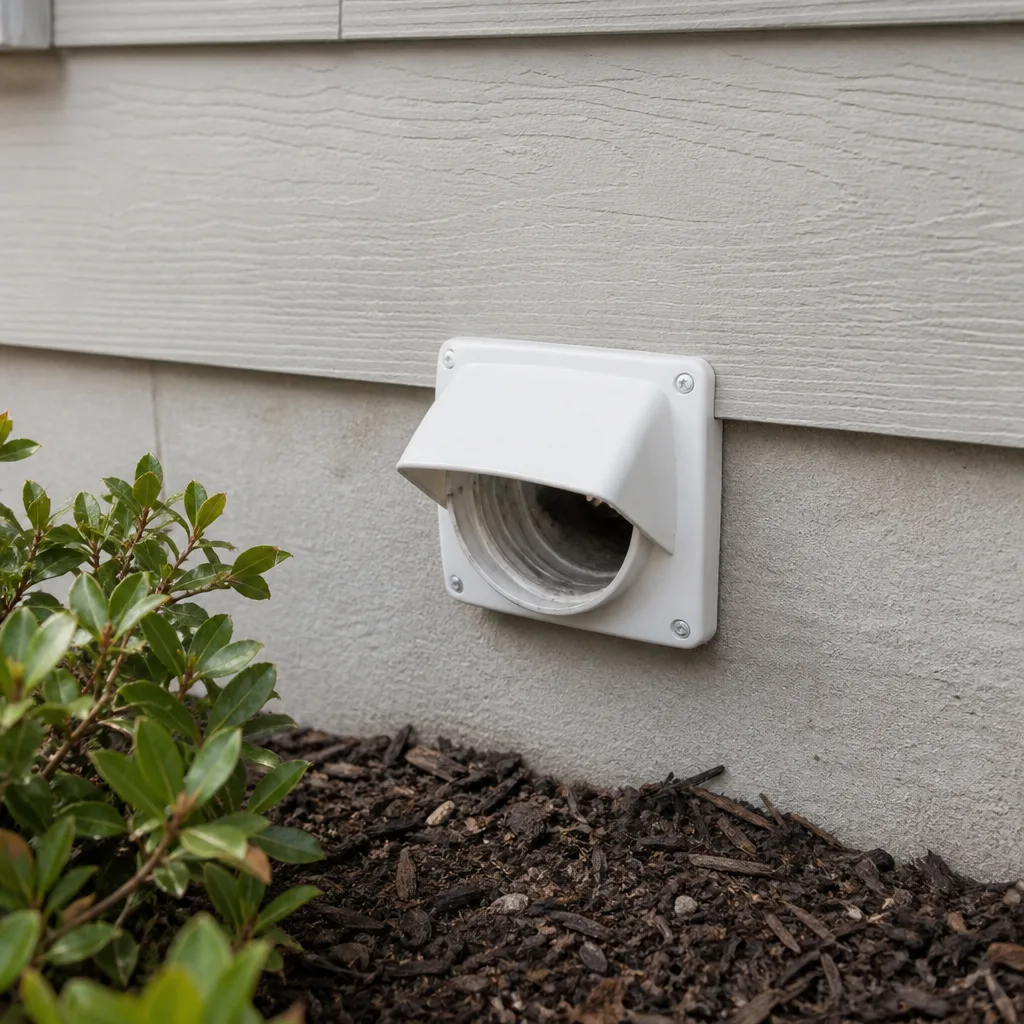
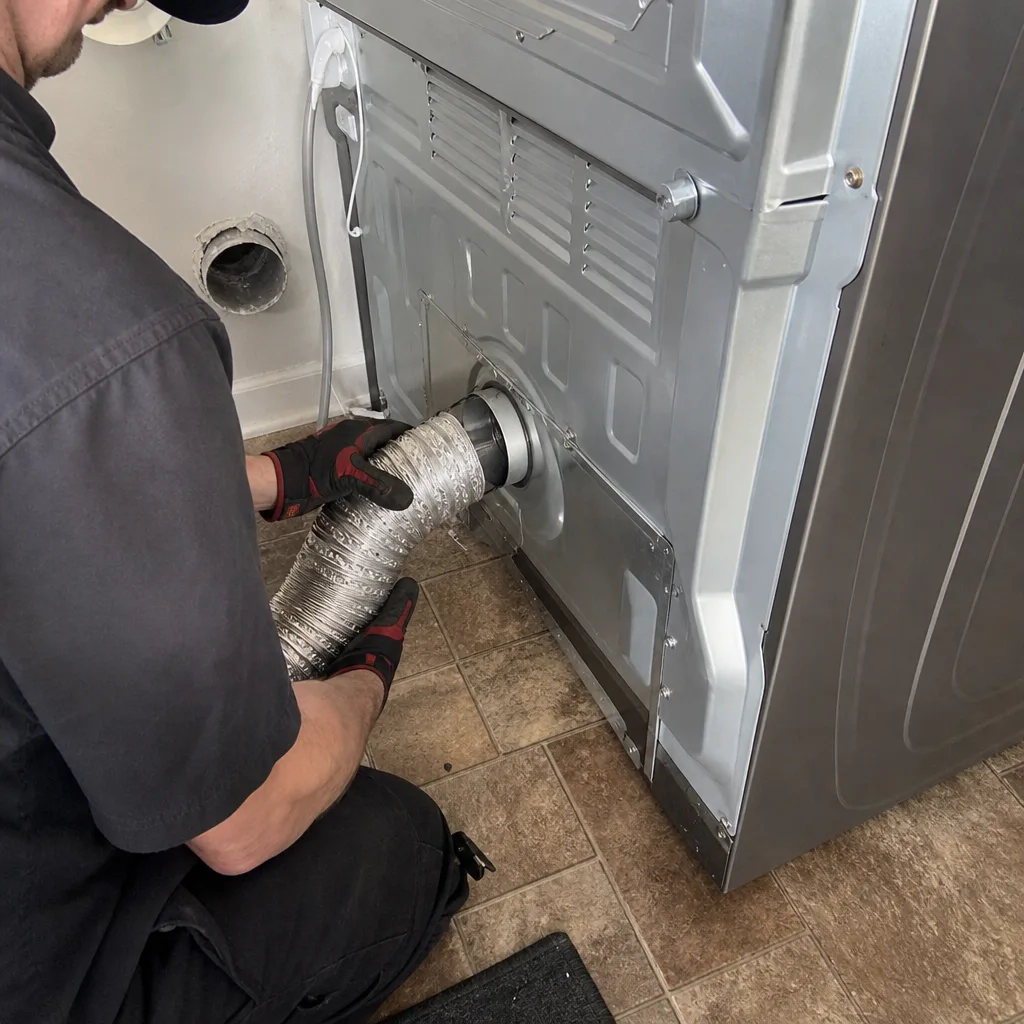
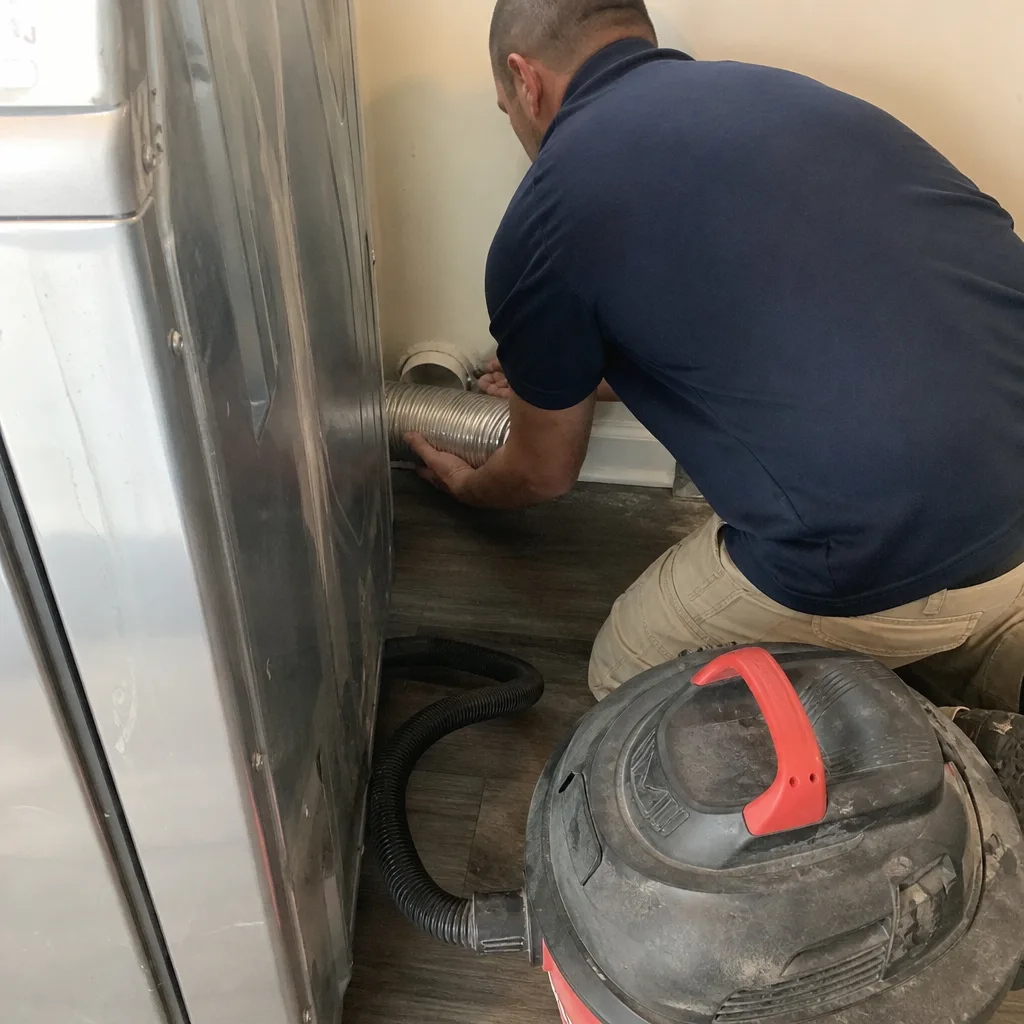
- Neglecting the dryer vent. Many Alpharetta homeowners conflate duct cleaning with dryer vent cleaning. The dryer vent is a separate system with its own fire risk. Lint accumulation restricts airflow, overheats the element, and ignites. Our Dryer Vent Cleaning in Alpharetta service addresses this as a distinct scope, and it is not covered by register-level DIY work.
- Assuming all ducts are metal and brush-safe. Flex duct, common in Alpharetta homes built 1995-2010, has a spiral wire frame and soft liner. A stiff brush catches the wire, kinks the duct, or tears the liner. Always verify duct type before inserting tools.
- Ignoring mold or moisture signs. Musty odor, visible discoloration on registers, or condensation on duct exterior in humid months may indicate active microbial growth. Disturbing mold without containment spreads spores. This requires professional assessment, not deeper brushing.
- Quoting per-vent prices from coupon ads as a benchmark. The $79 whole-house offers in Alpharetta mailers typically cover 5 registers and upsell aggressively. They do not represent the cost of actual whole-system cleaning. Use honest whole-system ranges for comparison.
- Cleaning ducts without checking the filter rack. A filter installed backwards, a missing filter, or a 1-inch filter in a 4-inch rack bypasses filtration entirely. The cleanest ducts will recontaminate immediately if the filter system is wrong.
When to Call a Professional
Call a professional when the scope exceeds reach, when the condition exceeds surface debris, or when the risk of creating a new problem exceeds the cost of solving the original one. For guidance on selecting the right provider, see How to Hire a Air Duct Cleaning Contractor in Alpharetta: A Step-by-Step Guide. Specifically: if your home is more than 10 years old and has never had professional cleaning; if you have flex duct, zoned systems, or ductwork in a conditioned attic; if you have allergy symptoms, musty odors, or visible mold; if a previous DIY attempt did not resolve the issue; or if you are preparing to sell and want documented condition of the HVAC system.
CleanRun Air Duct Cleaning Alpharetta offers free estimates in Alpharetta. We will inspect your system, show you what the camera sees, and deliver a written price before any work starts. Call (678) 679-7540 to schedule.
Frequently Asked Questions
Whole-system air duct cleaning for a typical Alpharetta home ranges from $450 to $850, depending on system size, duct type, and accessibility. A single-story home with 10 to 12 registers and metal ductwork in a ventilated crawl space runs toward the lower end. A larger home with zoned systems, flex duct in a conditioned attic, or complex trunk line configuration runs higher. CleanRun delivers a written price before any work starts under Haven Standard Clause 1; call (678) 679-7540 for an exact quote on your home.
The $79 to $149 offers typically cover a limited number of registers and use portable vacuums without negative-pressure extraction, or they function as entry points for aggressive upselling once the technician is in the home. True whole-system cleaning with truck-mounted or high-CFM portable extraction, camera inspection, and documented results requires equipment and time that cost more than coupon rates support. Ask any provider: what CFM does your vacuum produce, and will I receive before/after photos of every duct run? The answer reveals the actual scope.
Request a documented photo record showing the interior of each duct run before and after cleaning. At CleanRun, this is standard on every job, delivered to the customer as part of the job record. If a provider cannot or will not show you the inside of your ducts, you are paying for an unverified claim. The photo record also establishes a baseline for future comparison.
Most Alpharetta homes benefit from professional cleaning every 3 to 5 years. Homes with pets, recent construction, or residents with respiratory sensitivities may need more frequent service. Newer homes in Windward or Avalon with tight construction and continuous filtration may extend to 5 to 7 years. The interval should be determined by camera inspection, not calendar alone. We have cleaned 15-year-old systems with minimal accumulation and 3-year-old systems with significant debris due to construction or filter neglect.
You can remove loose surface debris from register boots and the first 12 to 18 inches of each duct run with a shop vac and brush attachments. You cannot reach trunk lines, plenum chambers, or debris past the first elbow without professional negative-pressure equipment. For some homeowners, this surface cleaning is adequate maintenance between professional services. For others, it creates a false sense of completion while the majority of the system remains uncleaned.
Yes. Alpharetta’s humid subtropical climate means cooling runs 6 to 8 months annually, with high outdoor humidity entering the return side during shoulder seasons. Condensation in ductwork, particularly in unconditioned attics and crawl spaces, can support microbial growth on dust and debris substrates. Pollen loads in spring, particularly pine and oak, also accumulate in filters and bypass debris. These factors do not necessarily shorten the cleaning interval for every home, but they do mean that moisture and biological material are more relevant concerns here than in drier climates.
The Bottom Line
The DIY versus professional question is not about effort or cost in isolation. It is about matching the equipment to the scope of the actual problem. Consumer tools clean the first 18 inches. Professional equipment cleans the full system. For newer homes with light accumulation, or for targeted maintenance between services, DIY has a legitimate role. For whole-system debris removal, structural inspection, and documented accountability, professional service is the only approach that delivers what the homeowner is actually paying for. Explore more guides & resources to make informed decisions about your home’s air quality.
Since 2013, CleanRun has served 52,000+ homes with a written price before every job and a Documented Photo Record after. The 365-Day Done Right Promise means the work is accountable long after the truck leaves. If you are deciding what your Alpharetta home needs, start with what you can see, and what you cannot.
Call (678) 679-7540 for a free estimate. We’ll show you what the camera sees, deliver a written price under Haven Standard Clause 1, and let the documentation speak.
Written by Tomas Reyes, Owner at CleanRun Air Duct Cleaning Alpharetta, serving Alpharetta since 2013.