
Last updated September 23, 2026
Whole-system duct and dryer vent check with before-and-after photos - you see exactly what came out of your vents
That "$99 whole-house special" is a bait ad - the real number appears once they are in your hallway, or the "clean" is a shop-vac at the register. We photograph the inside of your ducts before and after instead.
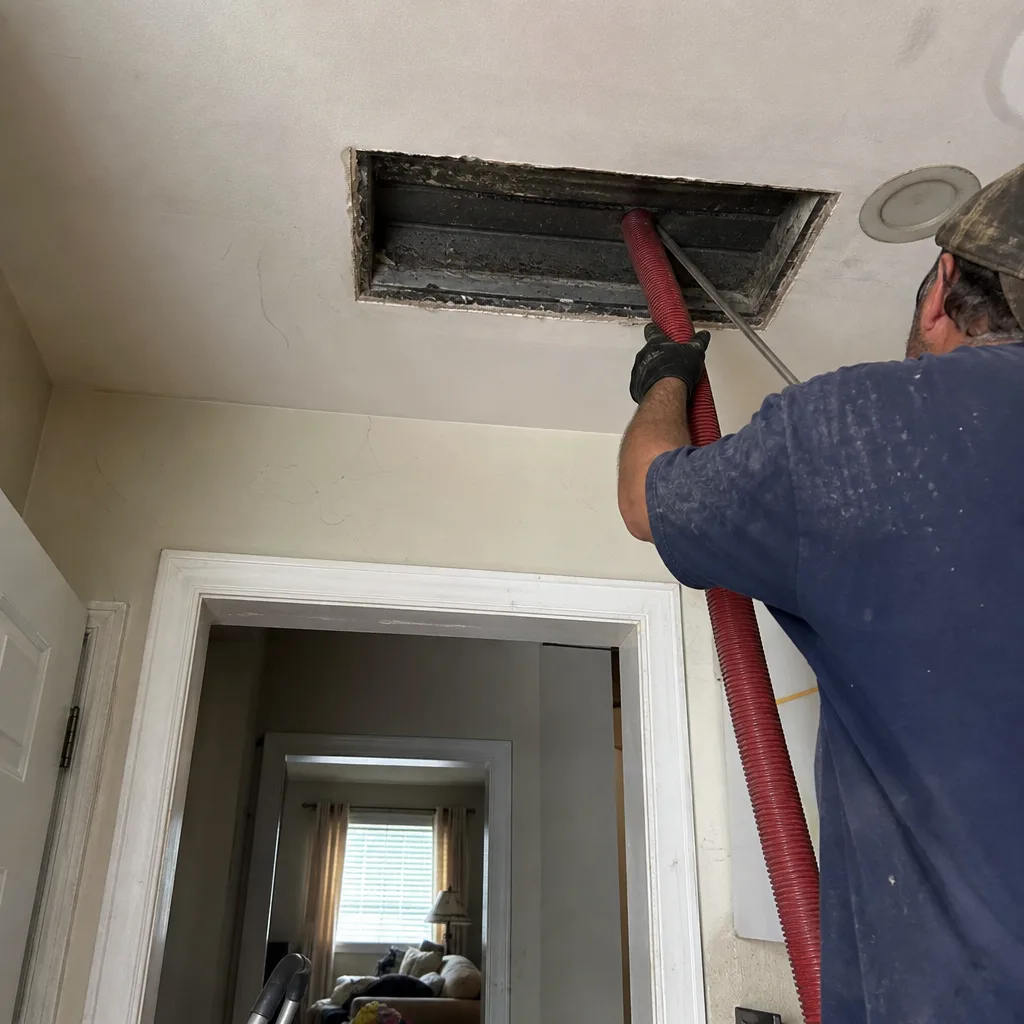 Before
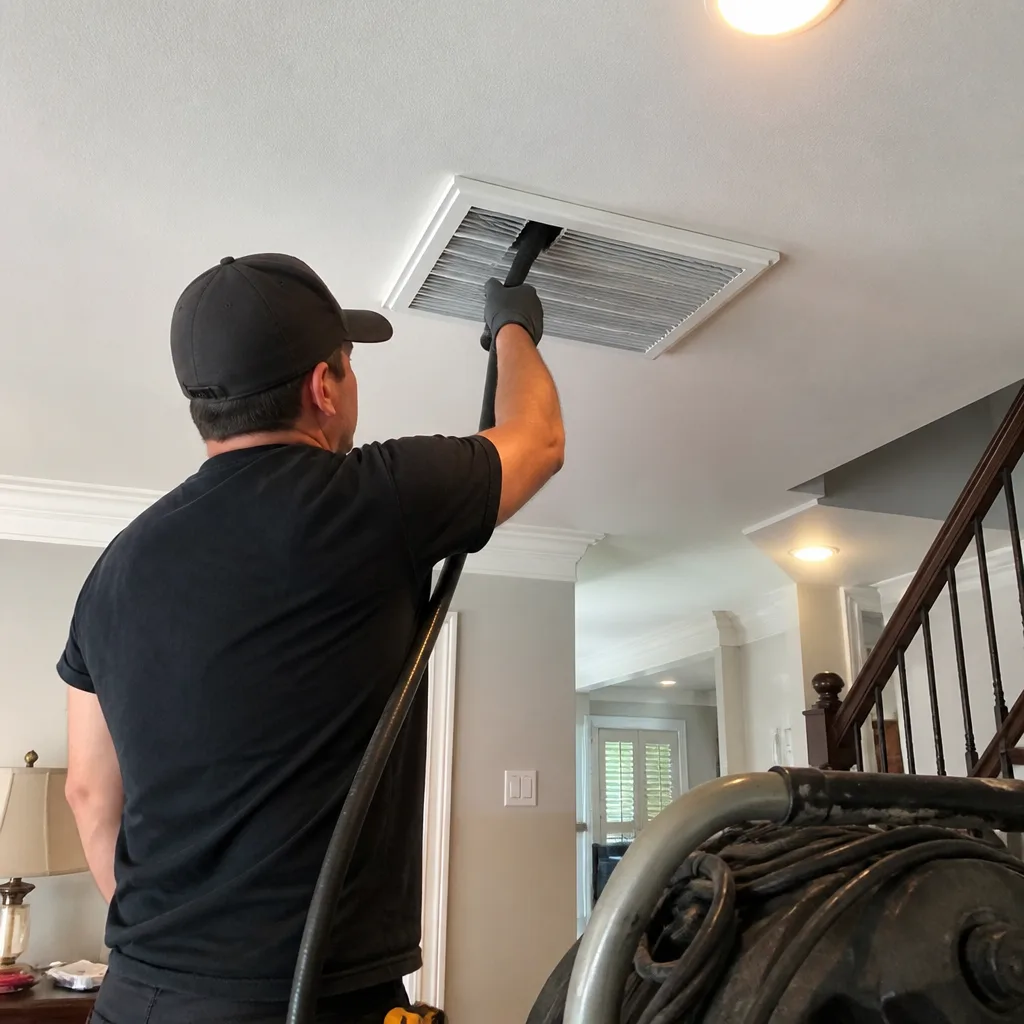 After
After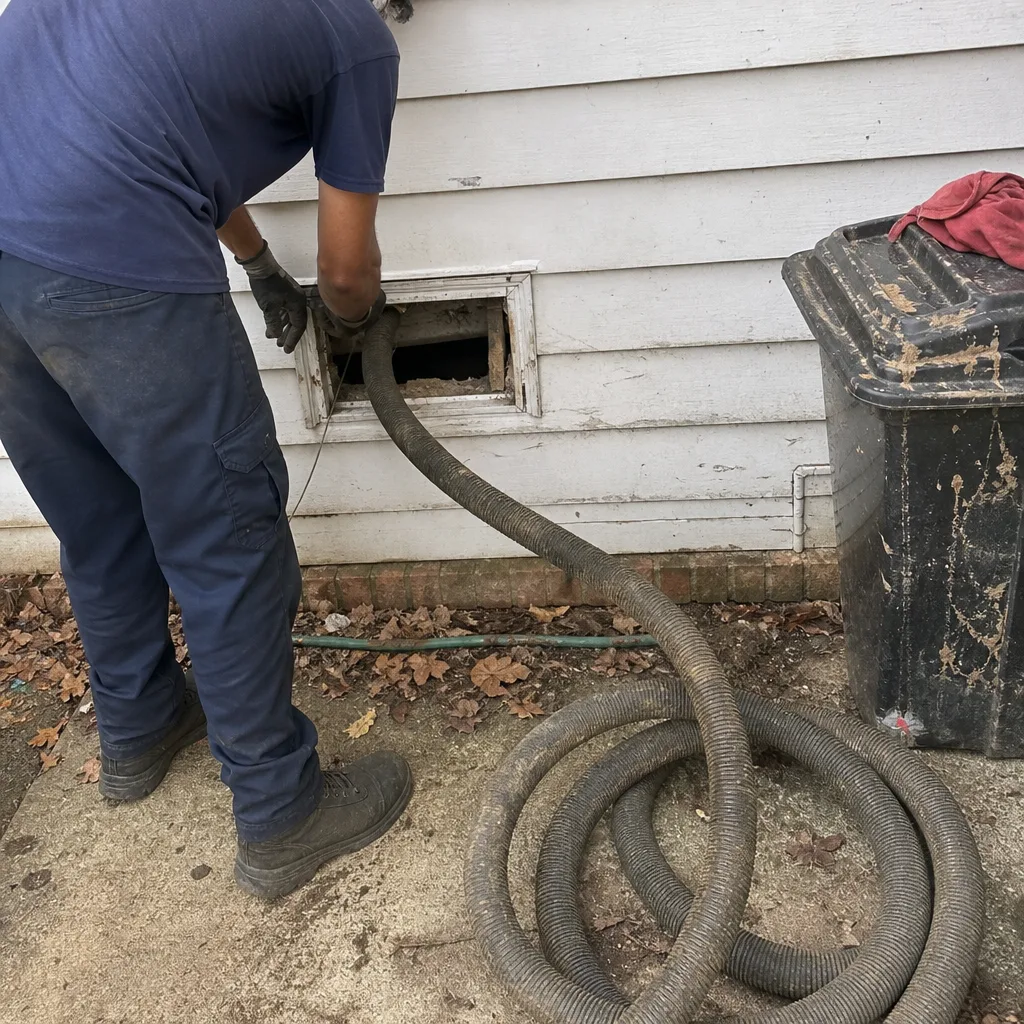 Before
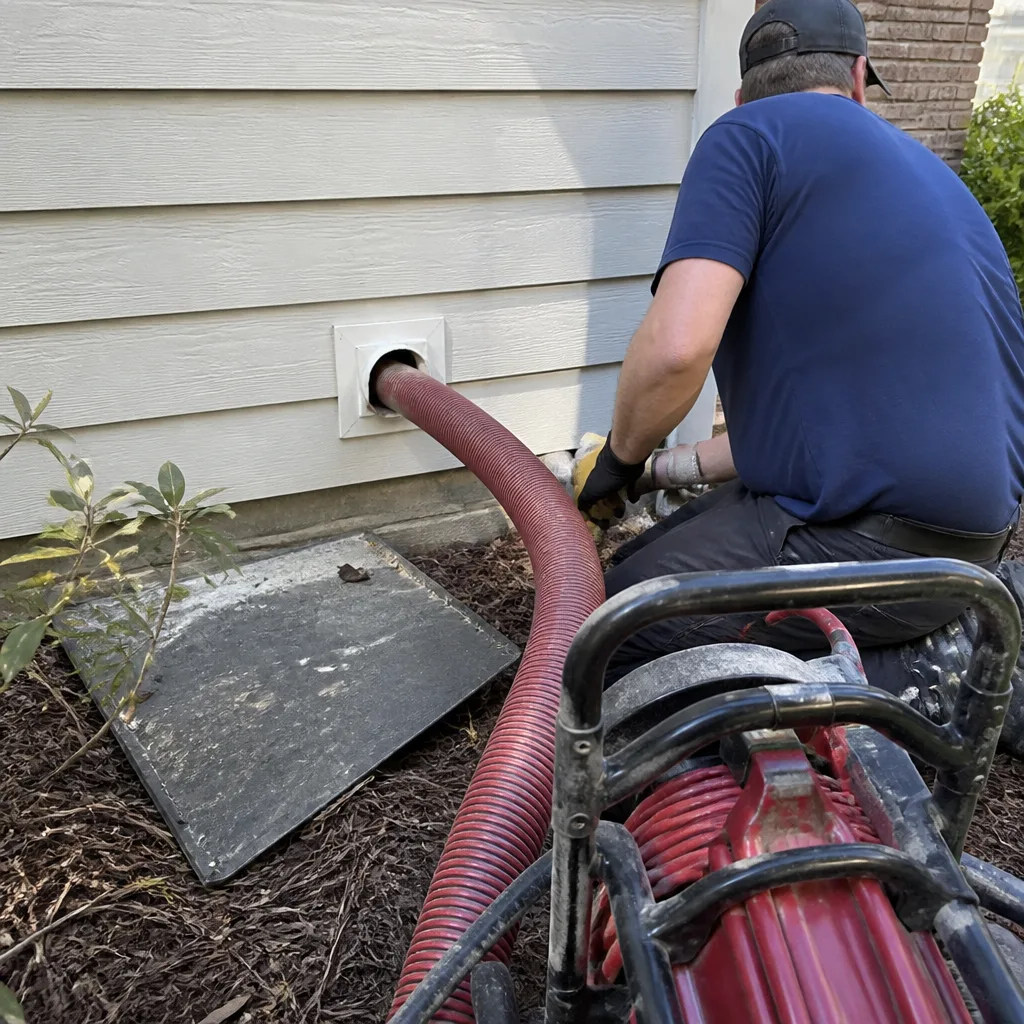 After
After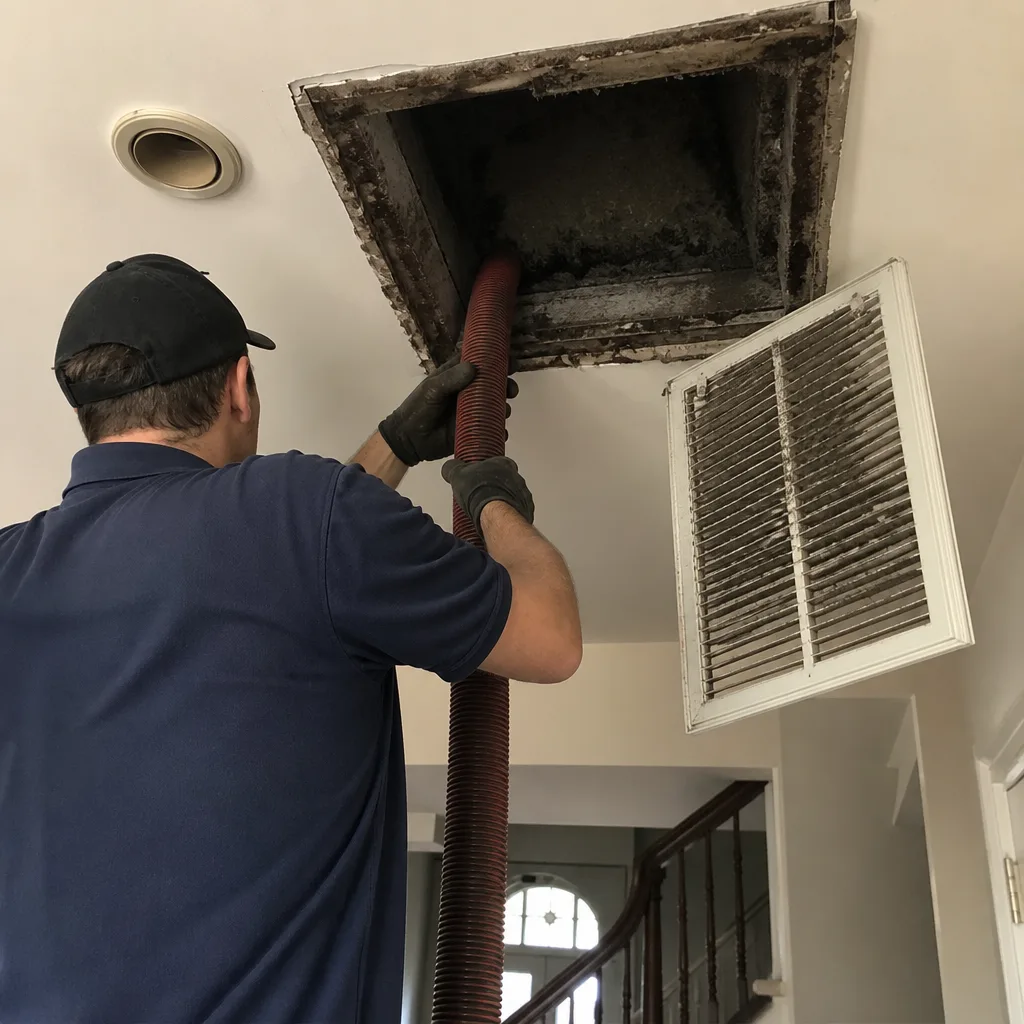 Before
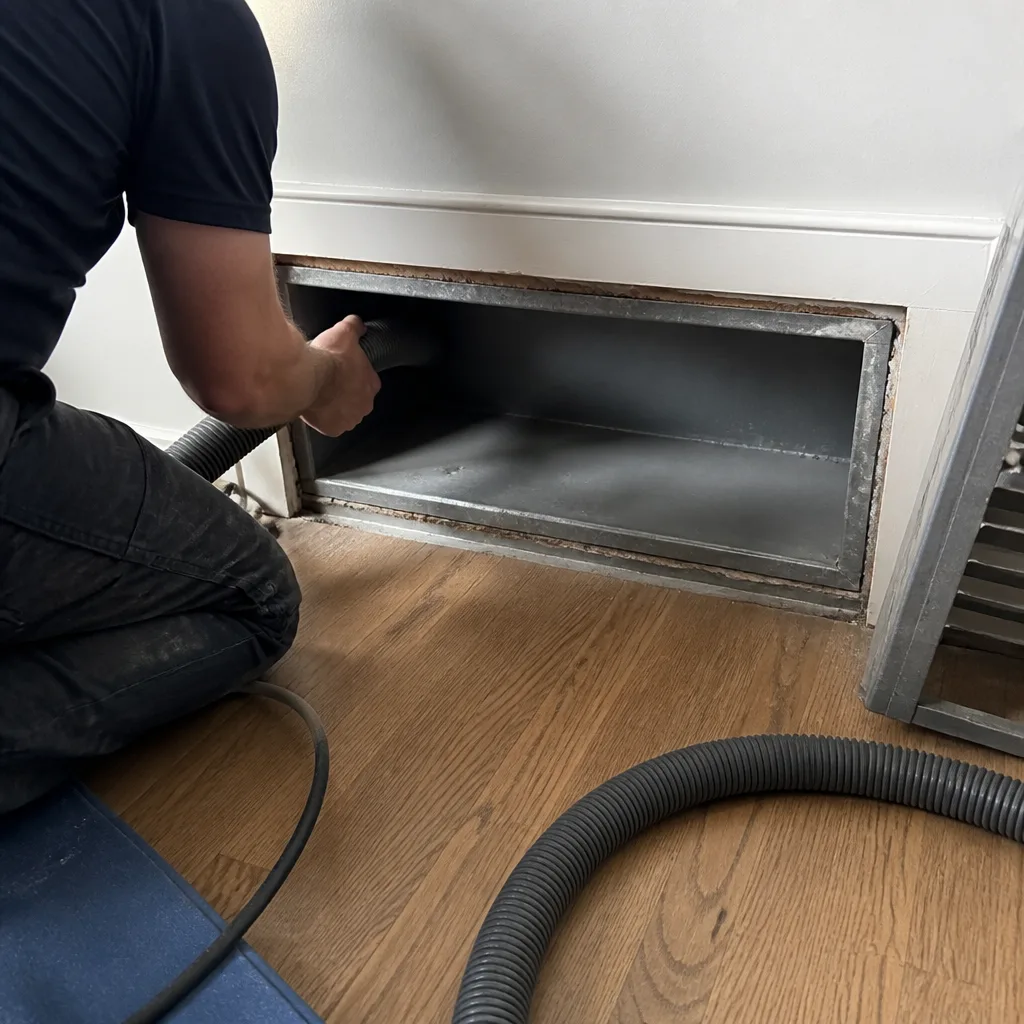 After
AfterThe Complete Guide to Air Duct Cleaning in Alpharetta
A shop vac and a $79 coupon can produce the same invoice as a full negative-pressure system clean. Without photos of every duct run, you have no way to know which one you paid for. In Alpharetta, where new construction from 2015 to 2025 has left thousands of homes with ducts full of construction debris and red clay dust, this distinction matters more than most homeowners realize. This guide shows you exactly how to verify that a duct cleaning job was done correctly, what documentation you should receive, and what a complete Air Duct Cleaning job actually looks like in a typical Alpharetta home.
Quick Answer
Complete air duct cleaning in Alpharetta typically costs $400-$900 for a whole-home system and should include negative-pressure source removal with a written scope, access to every duct run, and before-and-after photos of the interior of each line. A job that cannot be documented with photos of debris removal was not verified.
Table of Contents
- What Complete Duct Cleaning Actually Includes
- Negative-Pressure Source Removal vs. Contact-Vacuum Cleaning
- The Exact Access Points Required in a Typical Alpharetta Home
- What We Actually Find in North Georgia Ductwork
- What a Written Scope of Work Must Include
- What Duct Cleaning Costs in the Alpharetta Market
- How to Verify the Job Was Done Right
- The 365-Day Done Right Promise: What It Covers
 Before
 After
AfterWhat Complete Duct Cleaning Actually Includes
Complete air duct cleaning in Alpharetta means every duct run, the main trunk lines, the plenum (the distribution box attached to your air handler), and the registers are accessed, agitated, and extracted. Partial cleaning, which is common with coupon offers, touches only what is visible from the register openings.
Here is what a complete job requires:
- System inspection before touching anything. A technician examines the furnace or air handler, notes the filter condition, and identifies any access limitations. In Alpharetta homes built 2015-2020, we regularly find flex duct that has been crushed behind drywall during original construction, which must be noted before cleaning begins.
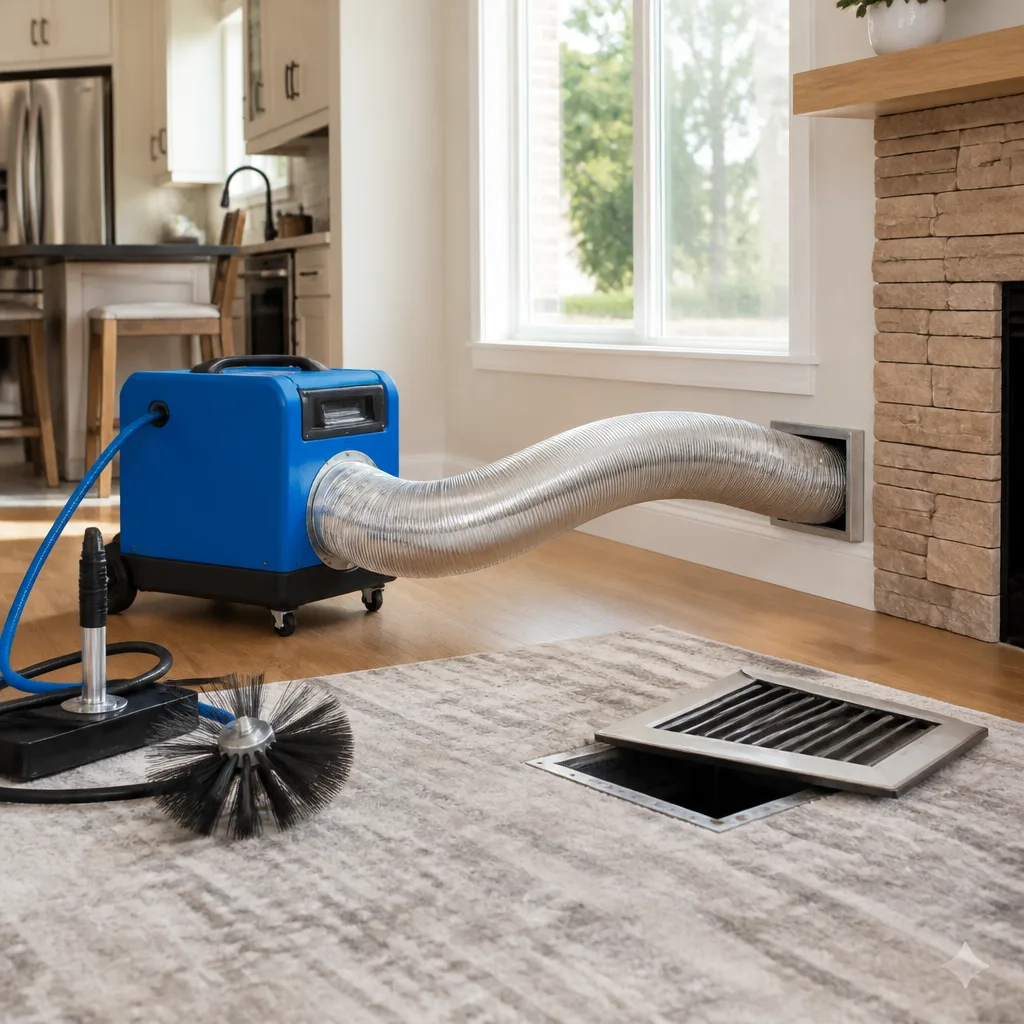
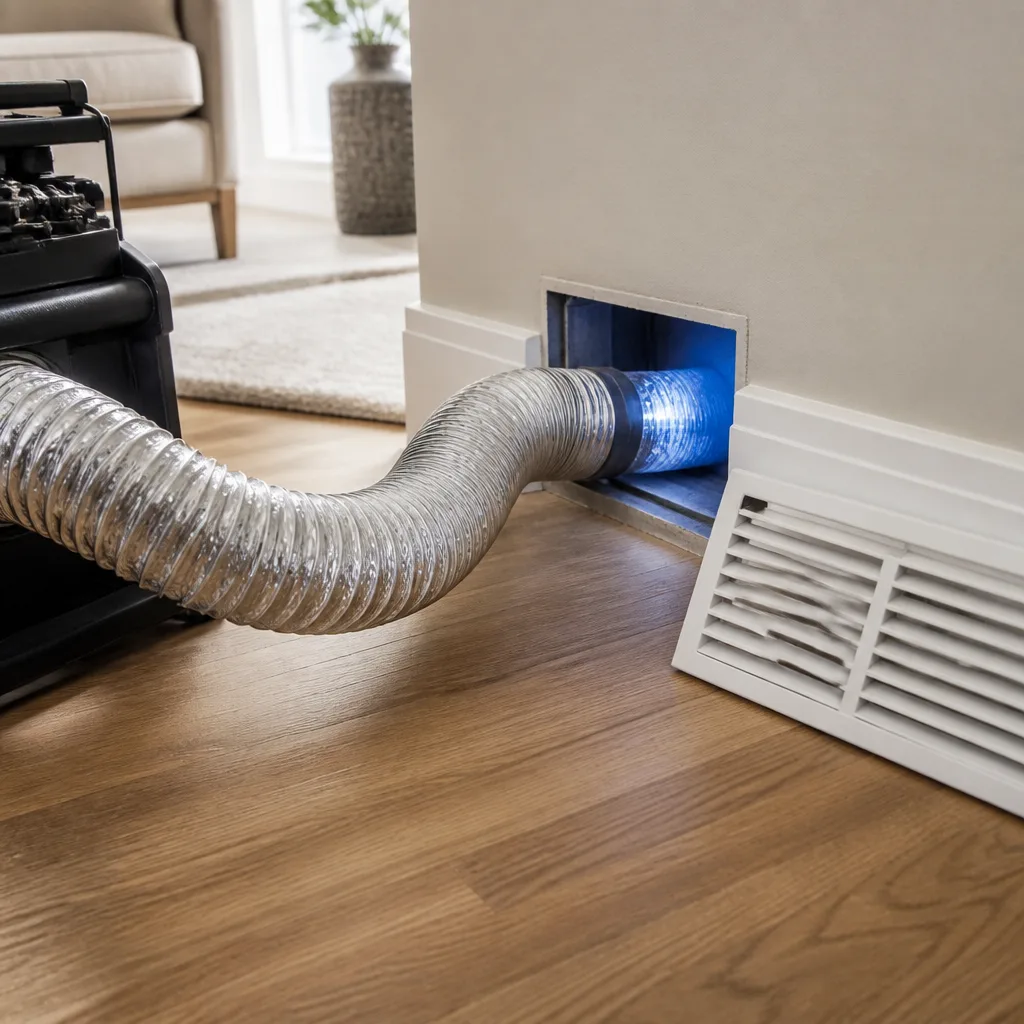
- Negative-pressure extraction at the air handler. A vacuum collection device, typically from manufacturers like Nikro or Abatement Technologies, is connected to the main trunk line near the plenum. This creates suction throughout the entire system.
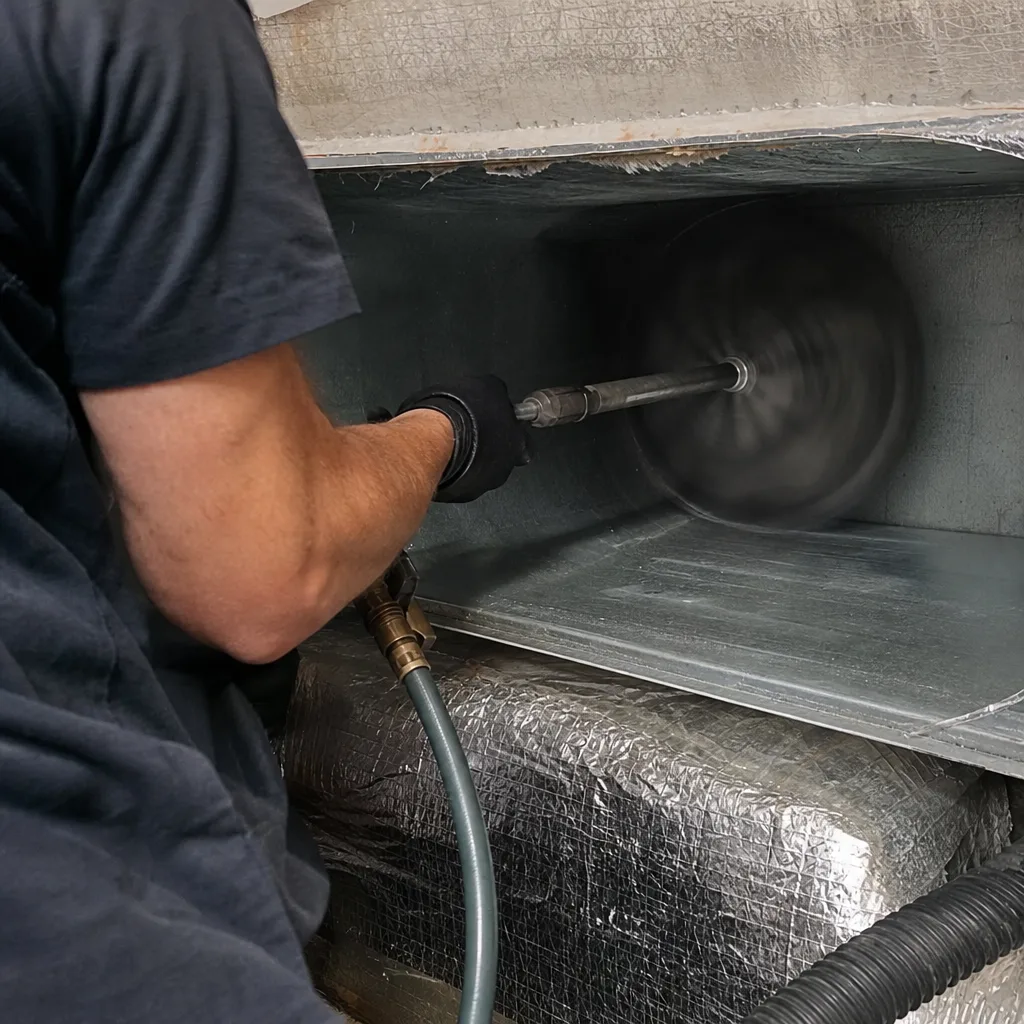
- Agitation at every register and duct run. Compressed air whips, rotary brushes, or power rods are inserted into each line to dislodge debris. The debris is carried by airflow back to the collection point.
- Plenum and coil cleaning. The plenum is opened and cleaned. If the evaporator coil is accessible and included in the scope, it is cleaned with appropriate foaming agents or low-pressure rinses.
- Register and grille cleaning. Registers are removed, cleaned separately, and reinstalled.
- Final system test. The system is run to verify normal operation, filter is replaced if customer-supplied, and all access panels are sealed.
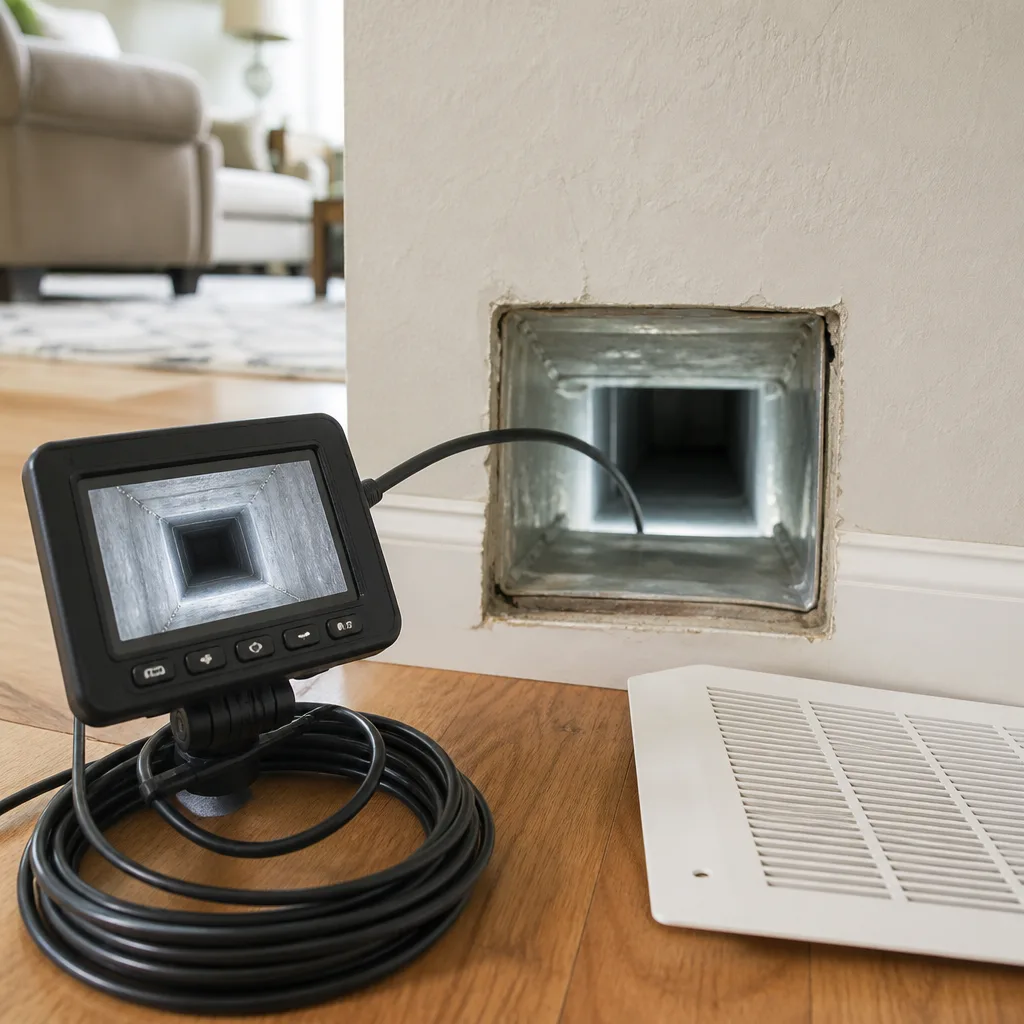
- Documented photo record delivered to the customer. Photos of the interior of every duct run, before and after, are compiled into a job record.
Anything less than this sequence is not complete duct cleaning. In Alpharetta’s competitive market, many providers skip steps 5 through 7, or perform only step 3 with a handheld vacuum at the register face.
Negative-Pressure Source Removal vs. Contact-Vacuum Cleaning
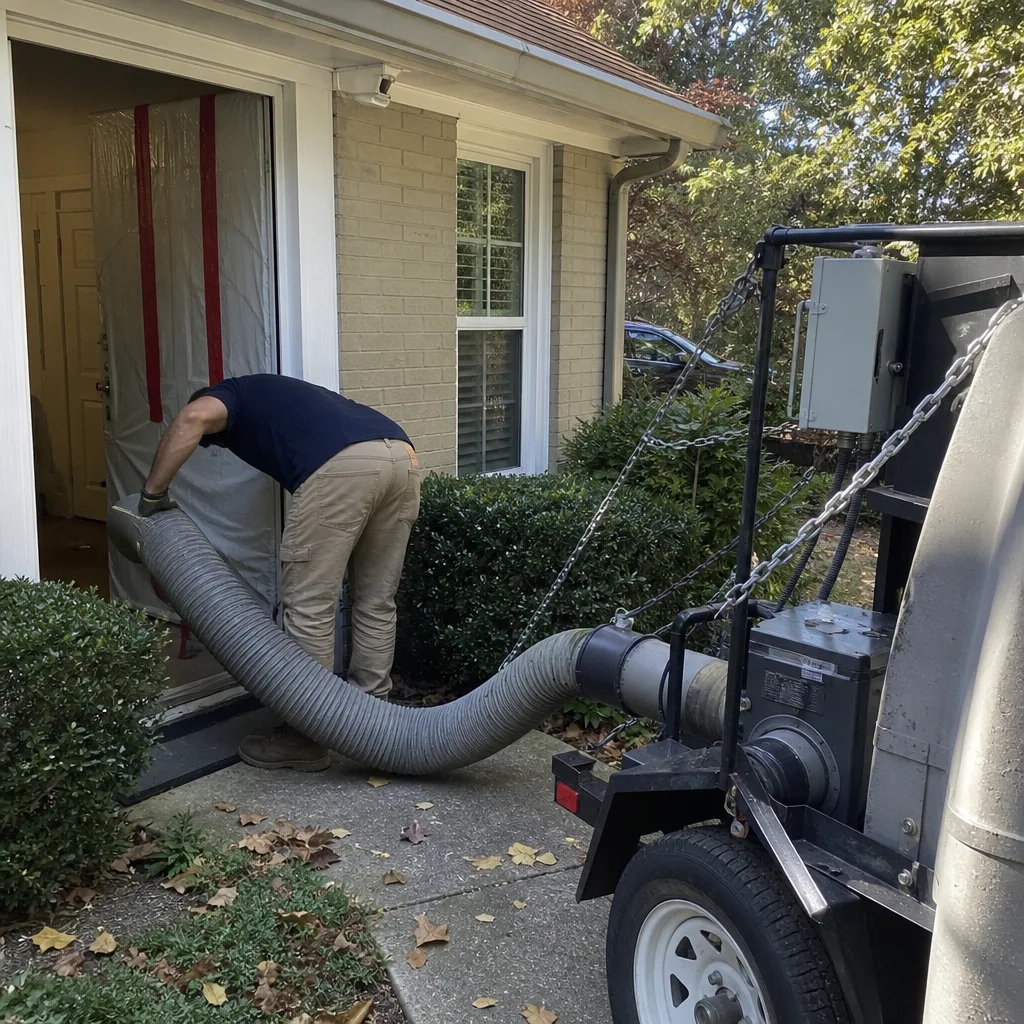
These two methods produce radically different results, and the homeowner can verify which was used by observing the equipment and the access required.
Negative-pressure source removal uses a large vacuum unit connected to the duct system near the air handler. The system is placed under negative pressure, meaning air is drawn inward through the registers toward the collection point. Agitation tools are inserted at each register to knock debris loose, and the vacuum captures it before it enters the living space. This method requires cutting access holes in the main trunk lines if none exist, sealing all registers during the process, and running the vacuum for a sustained period at each location.
Contact-vacuum cleaning uses a portable vacuum, sometimes a modified shop vac or a small HEPA unit, with a hose inserted a few feet into each register. It cleans only what the hose can touch. It does not create system-wide airflow. It does not clean the plenum or the interior of trunk lines. It is what a homeowner could approximate with sufficient patience and a long attachment.
The difference in debris removal is substantial. In a 2022 job in Alpharetta’s Windward neighborhood, negative-pressure extraction removed approximately 11 pounds of red clay dust and fiberglass fragments from a 3,200-square-foot home built in 2017. A contact-vacuum job on a similar home the same week, observed for comparison, collected less than a pound of surface debris.
You can verify which method was used by checking three things:
- Was a large vacuum unit connected at the air handler or main trunk? (Look for the access cut, which should be properly sealed afterward.)
- Were all registers sealed during the process? (This prevents debris from escaping into the home.)
- Does the photo record show the interior of the duct run beyond the first few feet? (Contact-vacuum cleaning cannot photograph what it cannot reach.)
CleanRun uses Nikro and Abatement Technologies negative-pressure systems on every job. The equipment is named on the written scope before work begins, so the customer can verify the manufacturer specifications independently.
The Exact Access Points Required in a Typical Alpharetta Home
A homeowner can count the access points a crew uses and compare that count to what the job should require. This is one of the simplest verification methods available.
Typical Alpharetta ranch or slab home (1,800-2,400 sq ft, built 1995-2010):
- Supply registers: 8-12
- Return registers: 2-4
- Main trunk line access cuts: 2 (one at each end of the supply trunk, or one supply and one return)
- Plenum access: 1
- Total access points: 13-19
Typical Alpharetta two-story home (2,800-4,000 sq ft, built 2010-2025):
- Supply registers: 14-22
- Return registers: 3-5
- Main trunk line access cuts: 2-4 (depending on whether systems are zoned)
- Plenum access: 1-2 (one per air handler)
- Total access points: 20-33
In Alpharetta’s newer subdivisions like Avalon, Halcyon, and the Johns Creek border areas, two-system homes are common. Each system requires its own complete access sequence. A crew that cleans “the whole house” but accesses only one plenum has cleaned only one system.
Access holes in trunk lines must be properly sealed after the job. In our experience, improperly sealed access cuts are a common defect we find when called to repair or re-clean work done by others. The seal should be a metal patch or professional-grade access panel, not foil tape over a rough hole. Haven Standard Clause 2, Workmanship Verification, requires that all access cuts be photographed after sealing and included in the job record.
What We Actually Find in North Georgia Ductwork
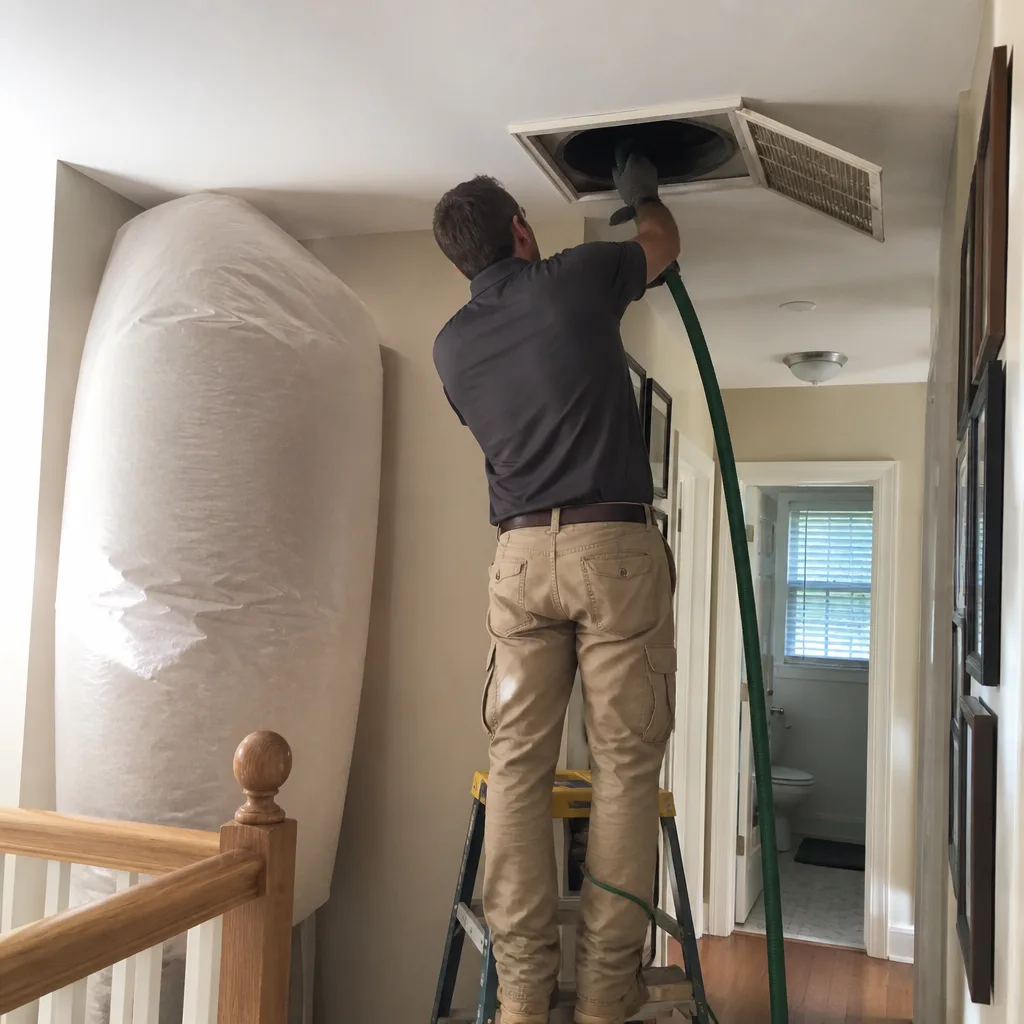
The debris profile in Alpharetta ducts differs from what you will find in coastal or northern climates. Local geology, construction practices, and seasonal conditions create a recognizable pattern.
Red clay dust. North Georgia’s clay-heavy soil produces fine particulate that enters homes through crawl spaces, attics, and construction-phase exposure. In Alpharetta homes built during the 2015-2020 construction surge, we regularly find red clay dust accumulated at the first elbow or bend in duct runs, where airflow velocity drops and particles settle. The camera shows a distinct orange-brown coating, often 1/8 to 3/8 inch thick in homes that have never been cleaned.
Fiberglass fragments. Duct liner, used for thermal and acoustic insulation inside metal trunk lines, degrades over time. The fragments become airborne and recirculate. In Alpharetta homes with systems installed between 2005 and 2015, we find liner degradation more frequently than in older or newer construction. The fragments appear as shiny, hair-like strands in the photo record.
Pest casings and droppings. Alpharetta’s warm, humid summers and mild winters allow extended insect activity. We find cockroach casings, spider egg sacs, and occasional rodent droppings in ductwork, particularly in homes with crawl space return air pathways or gaps where flex duct passes through unconditioned spaces. In the Crabapple and Milton areas, where homes sit on larger lots with more tree cover, rodent entry through exterior gaps is more common than in denser subdivisions.
Construction debris. Homes built during Alpharetta’s rapid expansion often have ducts that were used as temporary trash receptacles during construction. We have removed drywall screws, beverage cans, insulation scraps, and lumber cutoff pieces from duct runs in homes less than five years old. The photo record from these jobs is often startling to homeowners who assumed new construction meant clean ducts.
Mildew and microbial staining. North Georgia’s humidity, combined with oversized air conditioning systems common in Alpharetta’s newer homes, creates cold surfaces where condensation accumulates. When dust is present, microbial growth follows. We document this with photos and note it on the written scope. If sanitizing is appropriate, we use EPA-registered products and note the application on the job record.
None of this is hypothetical. Every item listed above appears in our documented photo records from actual Alpharetta jobs, with dates, addresses, and customer authorization.
What a Written Scope of Work Must Include
Haven Standard Clause 1 requires a written price delivered before any work starts. This is not an estimate range. It is a fixed price for a defined scope, and the homeowner should receive a copy before the first panel comes off.
A proper written scope for CleanRun Air Duct Cleaning Alpharetta home jobs includes:
- Property address and system identification. Which air handler or furnace is being cleaned, located where. In two-system homes, the scope must specify both or note if only one is included.
- Count of duct runs to be cleaned. “All supply and return duct runs” is acceptable only if the count is verified during inspection and noted. A specific number, confirmed by register count, is better.
- Equipment to be used. The manufacturer and model of the negative-pressure system, agitation tools, and any sanitizing or sealing products. This allows the customer to verify specifications independently.
- Access points required. Where cuts will be made in trunk lines, which registers will be removed, and what sealing method will be used afterward.
- Specific exclusions. What is not included: coil cleaning if inaccessible, duct repair if damage is found, sanitizing if not requested. Clarity prevents invoice expansion.
- Fixed price. One flat price per system, with no per-vent add-ons, no “additional if” conditions, and no post-inspection price increase. The price on the scope is the price on the invoice.
- Documentation to be delivered. Photo record of every duct run, before and after, plus the written scope itself and the warranty terms.
- Technician name and license number. Haven Standard Clause 3, Verified Crews, requires that the customer know who is in their home. The technician’s name and state license number are printed on the scope.
If a provider cannot produce this document before starting work, the price is not fixed and the scope is not defined. This is the mechanism by which $79 coupons become $600 invoices. The written scope is your protection against that outcome.
What Duct Cleaning Costs in the Alpharetta Market
Honest whole-system pricing in Alpharetta, based on jobs we have completed in 2023-2025, falls in these ranges:
| Home Type / System Size | Typical Range | What Affects Price |
|---|---|---|
| Small ranch or condo, single system (1,200-1,800 sq ft) | $400-$550 | Accessibility of air handler, number of returns |
| Mid-size home, single system (1,800-2,800 sq ft) | $500-$700 | Duct material (flex vs. metal), presence of duct liner |
| Large home or two-story, single system (2,800-3,500 sq ft) | $650-$850 | Number of duct runs, need for additional access cuts |
| Two-system home (3,500+ sq ft) | $900-$1,400 | Whether both systems are cleaned, zoned system complexity |
Additional services, when appropriate and requested:
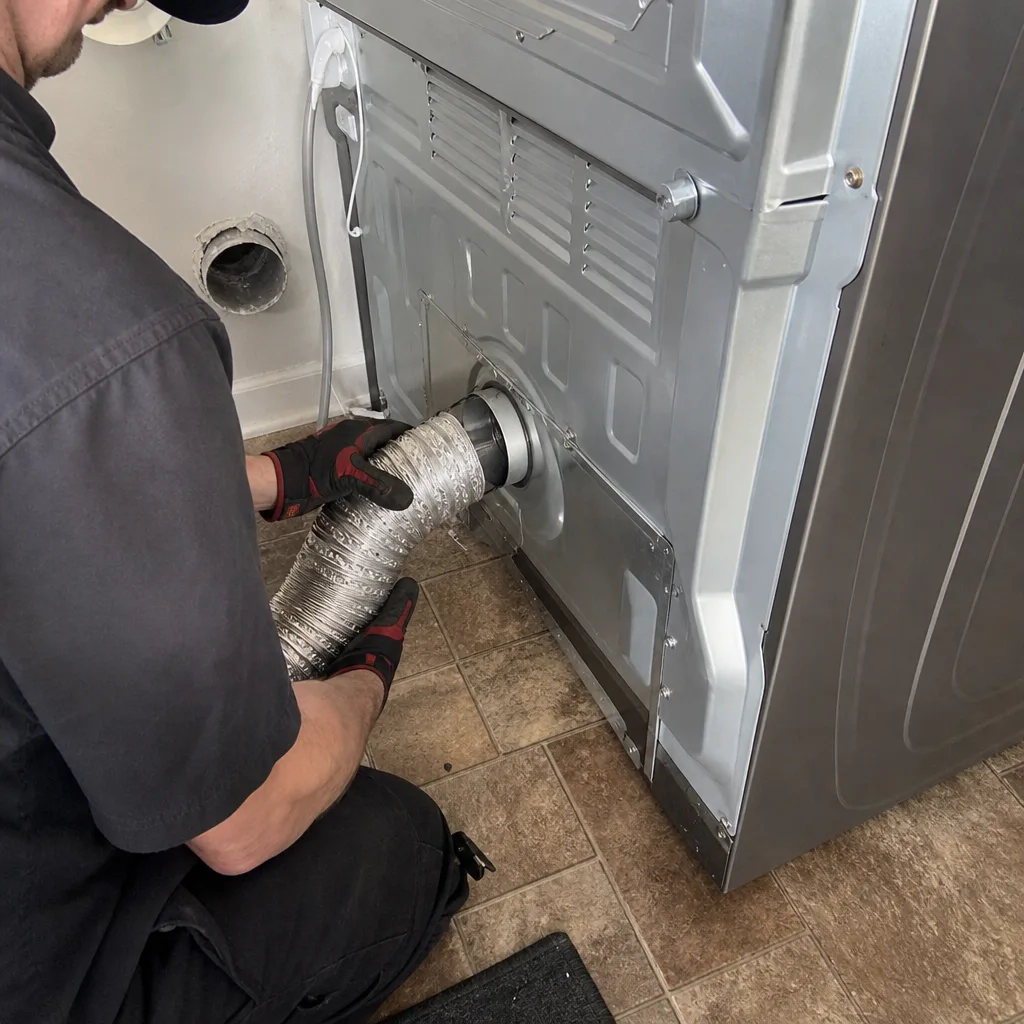
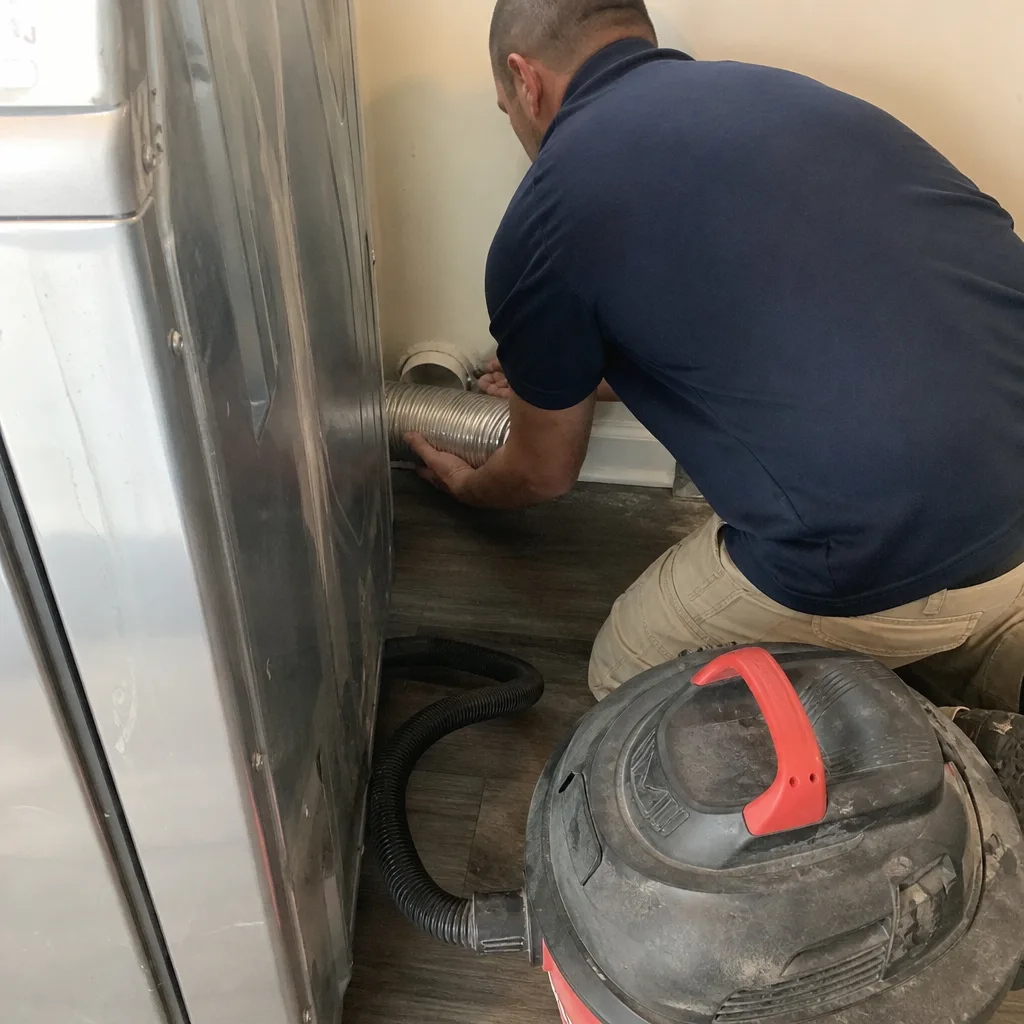
- Dryer vent cleaning: $150-$250 (recommended annually; Dryer Vent Cleaning in Alpharetta details the fire safety rationale)
- Evaporator coil cleaning (if accessible and included): $100-$200
- System sanitizing with EPA-registered product: $75-$150
- Duct sealing with mastic or aerosol sealant: quoted separately based on leakage test results
Prices below $300 for a whole-home system in Alpharetta should be examined carefully. They typically indicate contact-vacuum cleaning only, or a bait-and-switch structure where the advertised price covers a minimal scope and common necessities are added on site. The written scope requirement eliminates this ambiguity.
CleanRun offers a Free Second Opinion on any written estimate from a competitor. Bring the scope or estimate; we will review it against the actual work required and provide our own fixed-price scope in writing at no cost.
How to Verify the Job Was Done Right
The homeowner verification process is straightforward and does not require technical knowledge. It requires only that you receive the documentation you are entitled to and check it against what was promised.
Step 1: Count the photos. The photo record should show every duct run in your home, before and after cleaning. If you have 10 supply registers and 2 return registers, you should see 24 photos minimum (12 before, 12 after), plus plenum photos. If the count is short, ask which runs were not photographed and why.
Step 2: Examine the “before” photos for recognizable debris. You should see dust accumulation, particulate, or staining that matches what you would expect from ducts that have not been cleaned. Blank or uniformly clean “before” photos suggest the photo was taken after cleaning, or the run was not entered.
Step 3: Examine the “after” photos for removal evidence. The duct interior should show clean metal or flex duct with no visible accumulation. Some staining may remain; sanitizing is a separate service. But debris should be gone.
Step 4: Check the access cut seals. If trunk line access was required, the seals should be visible in the photo record. They should be metal patches or professional access panels, not tape alone.
Step 5: Compare the scope to the invoice. The services listed on the invoice should match the scope exactly. Any addition should have a written change order signed before the additional work was performed.
Step 6: Verify the technician identification. The name on the scope should match the technician who arrived. Haven Standard Clause 3 requires advance notification of crew identity.
This verification process is not adversarial. It is the standard quality check that any documented service should support. CleanRun has delivered this documentation on every job since 2013, and we encourage customers to review it before final payment.
The 365-Day Done Right Promise: What It Covers
The 365-Day Done Right Promise is a written guarantee, not a policy subject to manager discretion. It is included on every job record, and it specifies what “done right” means in contractual language.
The promise covers:
- Incomplete cleaning. If the photo record shows that a duct run was not cleaned, or if debris remains visible in “after” photos, the job is corrected at no charge.
- Damage from workmanship. If access cuts are improperly sealed and leak, if registers are damaged during removal, or if the system is left inoperable, repair is completed at no charge.
- Documentation failures. If the photo record is incomplete, illegible, or fails to match the scope, the documentation is redone or the job is re-cleaned, at no charge.
- Post-cleaning air quality issues directly attributable to the cleaning. If the cleaning process itself introduced contamination or left the system in a condition worse than found, remediation is completed at no charge.
What the promise does not cover:
- New debris accumulation after the cleaning date
- Pre-existing duct damage or design flaws not addressed in the scope
- Issues arising from customer alteration of the system after cleaning
- Normal wear or degradation of HVAC components unrelated to the cleaning
The promise is backed in writing on every job, not stated in marketing copy alone. In 52,000+ homes served since 2013, the claim rate is low, but the guarantee exists for the cases where something goes wrong. That is the point of accountability.
Common Mistakes to Avoid
- Accepting a phone estimate without a written scope. Phone estimates for duct cleaning are guesses. The actual work required varies with duct configuration, accessibility, and condition. A fixed price requires an on-site inspection and a written document.
- Assuming new construction means clean ducts. Alpharetta’s building boom from 2015-2025 produced many homes with ducts full of construction debris. We have found lumber scraps and beverage containers in systems less than two years old. Age of home does not predict duct condition.
- Choosing by price alone. The spread between contact-vacuum and negative-pressure cleaning is $200-$400, but the debris removal difference is 10x or greater. A lower price for inferior work is not a bargain.
- Neglecting the return side. The return ductwork pulls air from your home back to the air handler, and it is often dirtier than the supply side because it is unfiltered. A scope that cleans only supply registers is incomplete.
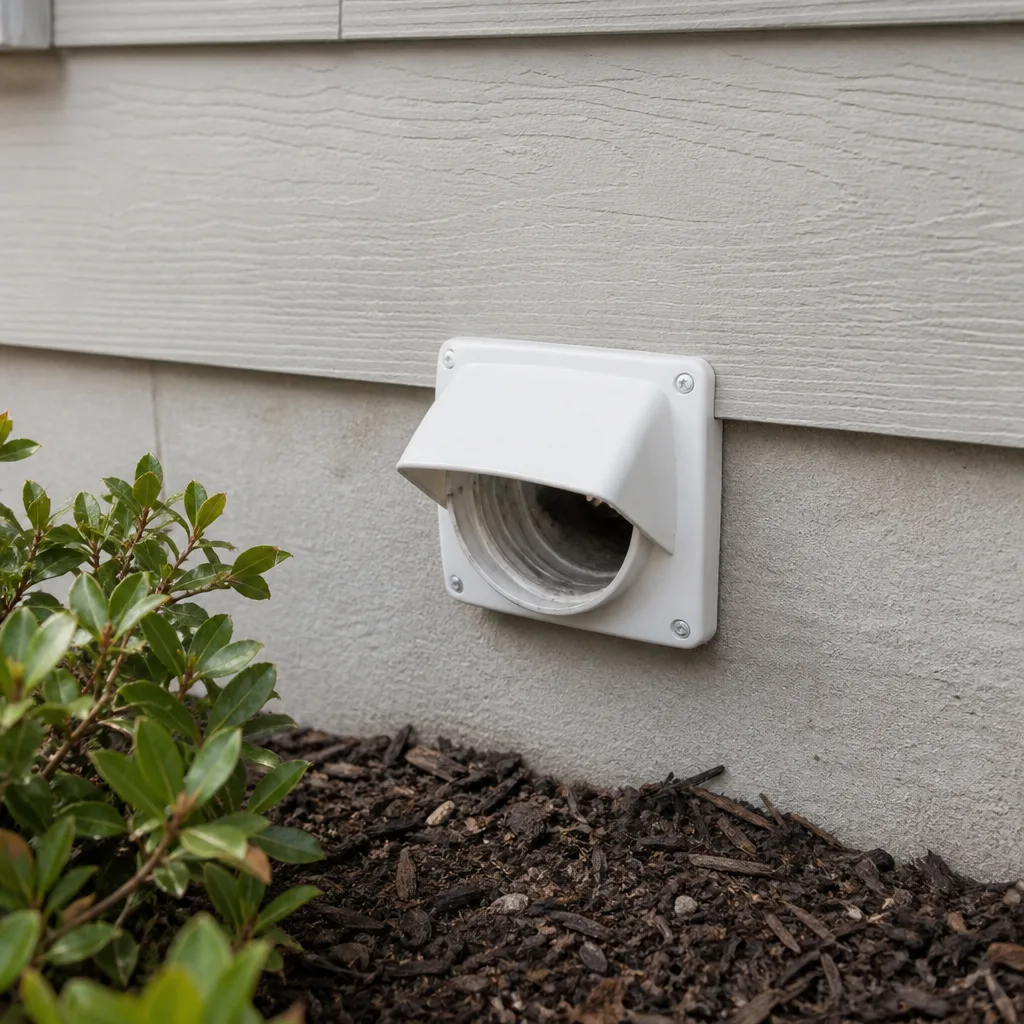
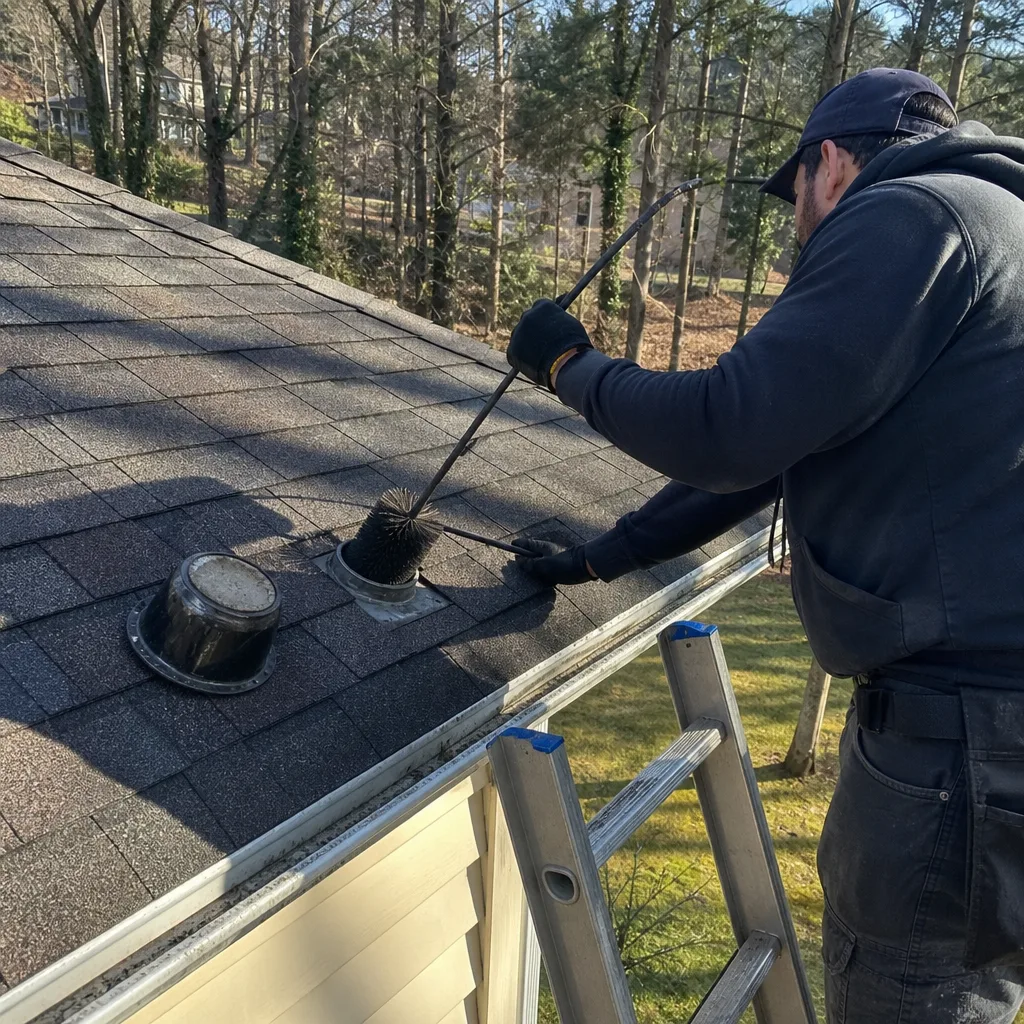
- Ignoring the dryer vent. In Alpharetta’s humid summers, lint accumulation in dryer vents accelerates. A clogged vent is a fire hazard and reduces dryer efficiency. Dryer vent cleaning is a separate service from duct cleaning, but the two are often scheduled together.
- Failing to verify the photo record before payment. The photo record is your proof of work performed. Review it while the crew is still on site, or before final payment if invoiced later. Once the truck leaves, documentation gaps are harder to resolve.
- Overlooking HVAC cleaning scope. Duct cleaning and HVAC cleaning are related but distinct. The ducts are the distribution network; the HVAC components are the air handler, coil, and blower. A complete scope specifies which is included.
When to Call a Professional
Call for an inspection if you notice visible dust emission from registers, inconsistent airflow between rooms, musty odors when the system runs, or if your home was built or renovated during Alpharetta’s 2015-2025 construction period and has never had the ducts cleaned. These are not emergencies, but they are indicators that a documented inspection is warranted.
If you have a written estimate from another provider and want to verify that the scope and price are appropriate, CleanRun Air Duct Cleaning Alpharetta offers free second opinions and more guides & resources to help you evaluate your options. Bring the written estimate; we will provide our own fixed-price scope for comparison at no cost.
For a free estimate in Alpharetta, call (678) 679-7540. All calls are answered by a live person, and technicians are background-checked, uniformed, and identified by name before arrival.
Frequently Asked Questions
Whole-home air duct cleaning in Alpharetta typically costs $400-$900 for a single system, depending on home size, duct material, and accessibility. Two-system homes run $900-$1,400. These are fixed prices agreed in writing before work starts, not per-vent rates or teaser figures. Call (678) 679-7540 for an exact quote - estimates are free.
Low quotes typically reflect contact-vacuum cleaning only, limited register access, or bait-and-switch pricing where the advertised price covers a minimal scope and necessary work is added on site. A complete negative-pressure job with documented photo records of every duct run requires more time, equipment, and access than a coupon service provides. The written scope requirement separates real quotes from marketing figures.
Request and review the documented photo record before final payment. A complete job produces before-and-after photos of the interior of every duct run, plus plenum and access cut photos. Count the photos against your register count. If the documentation is incomplete, the verification is incomplete. CleanRun has included this record on every job since 2013.
For most Alpharetta homes, every 3-5 years is appropriate. Homes with pets, recent construction, or residents with respiratory sensitivities may benefit from more frequent cleaning. Homes with sealed, well-maintained systems in low-dust environments may extend toward the longer end. The “every year” recommendation common in marketing is not supported by industry standards for typical residential conditions.
North Georgia’s clay-heavy soil produces fine particulate that enters homes during construction and through crawl spaces or attic access points. It accumulates in ducts, particularly at elbows and low-velocity points, and appears as orange-brown dust in photo records. It is distinct from ordinary household dust and is common in Alpharetta homes built during the 2015-2025 construction surge.
Moderately, in specific conditions. Significant debris accumulation can restrict airflow and force the blower to work harder. Cleaning restores design airflow, which can reduce runtime and energy use. The effect is most pronounced in systems that were heavily restricted. It is not a dramatic efficiency upgrade for clean or lightly dusted systems, and no honest provider should promise major energy savings from cleaning alone.
Document it immediately with photos and notify the provider before the crew leaves if possible. The 365-Day Done Right Promise covers workmanship-related damage, including improper access cut sealing or register damage during removal. Pre-existing damage, such as crushed flex duct or corroded metal, should be noted on the initial inspection and scope, and repair should be quoted separately before work proceeds.
The Bottom Line
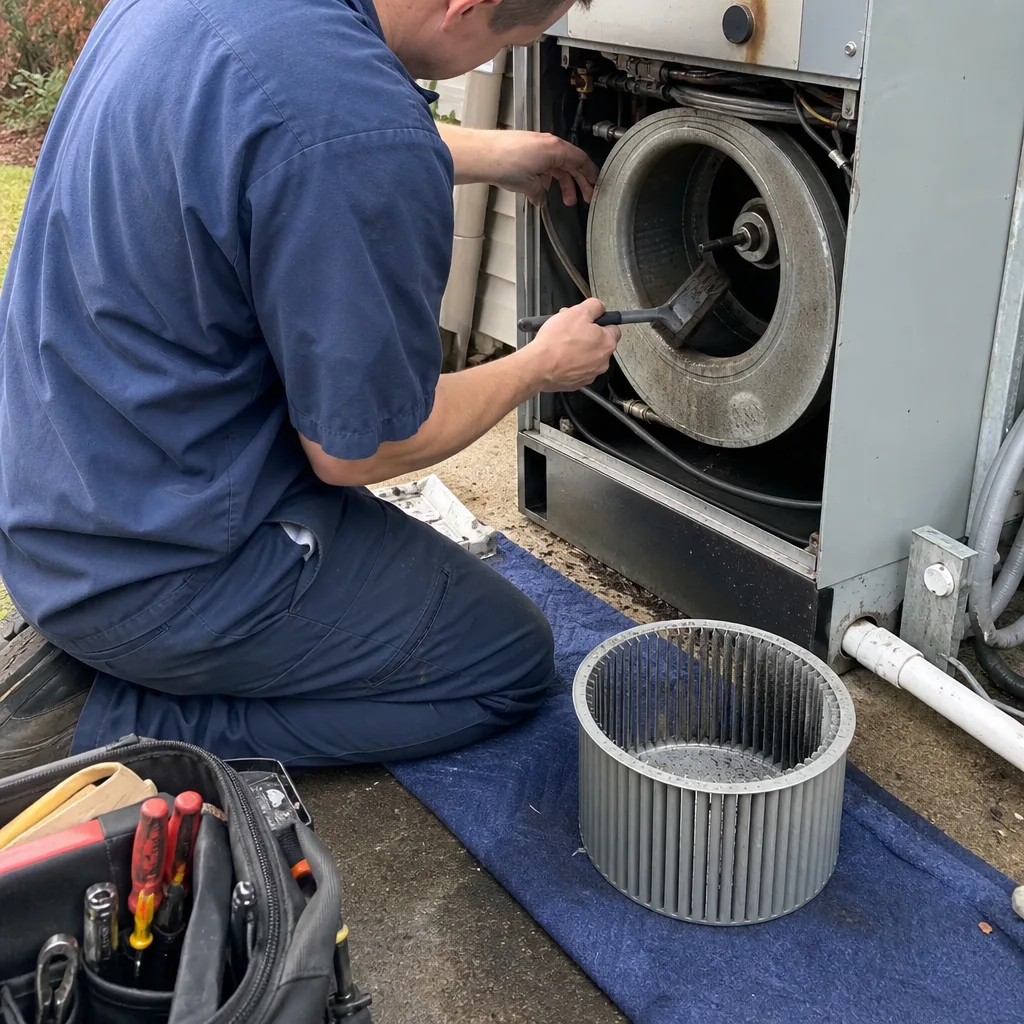
A completed duct cleaning job should leave a paper trail, not just a receipt. In Alpharetta’s market, where construction debris, red clay dust, and variable service quality are realities, the homeowner’s protection is documentation: a written scope with a fixed price, before-and-after photos of every duct run, and a written guarantee that survives the technician’s departure. The equipment used matters, the access points required are countable, and the difference between negative-pressure source removal and contact-vacuum cleaning is verifiable with simple observation. Demand the documentation. Verify the count. Keep the guarantee.
Written by Tomas Reyes, Owner at CleanRun Air Duct Cleaning Alpharetta, serving Alpharetta since 2013.