
Last updated September 23, 2026
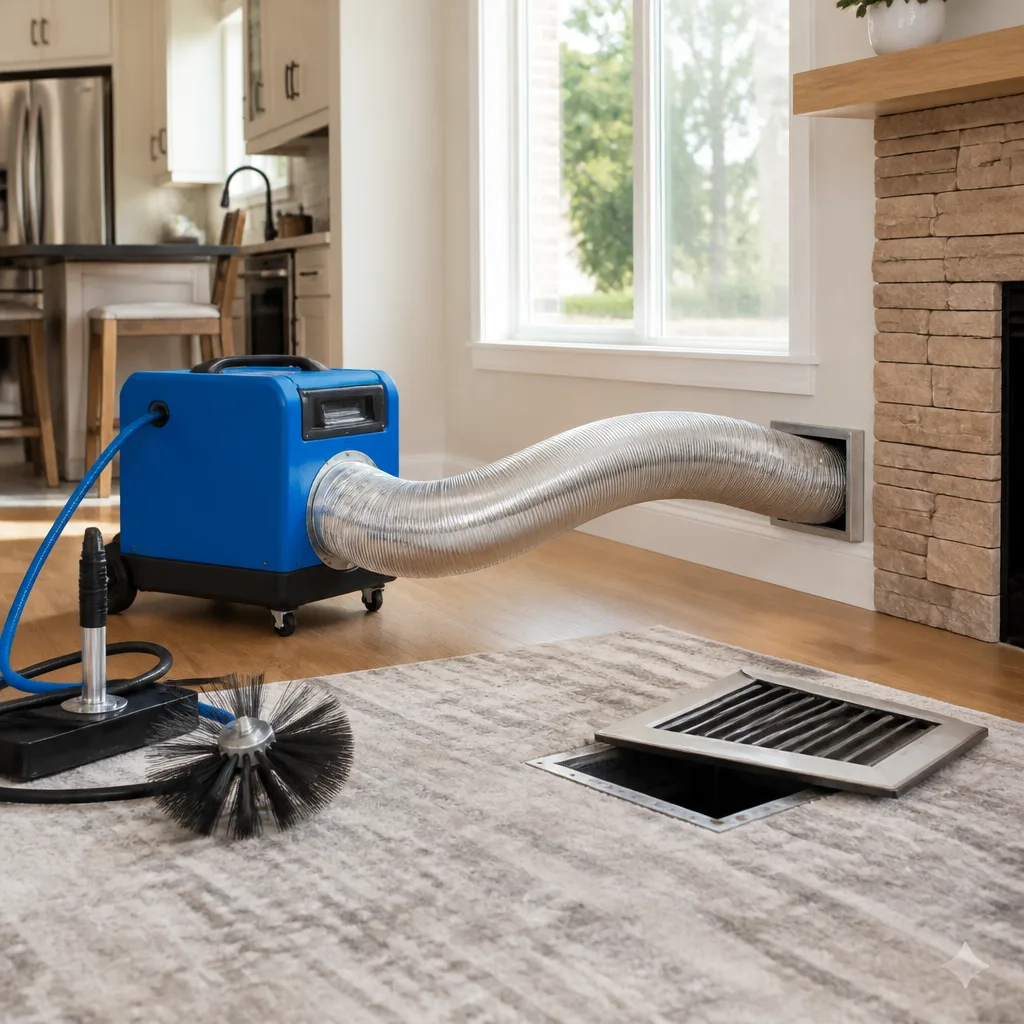
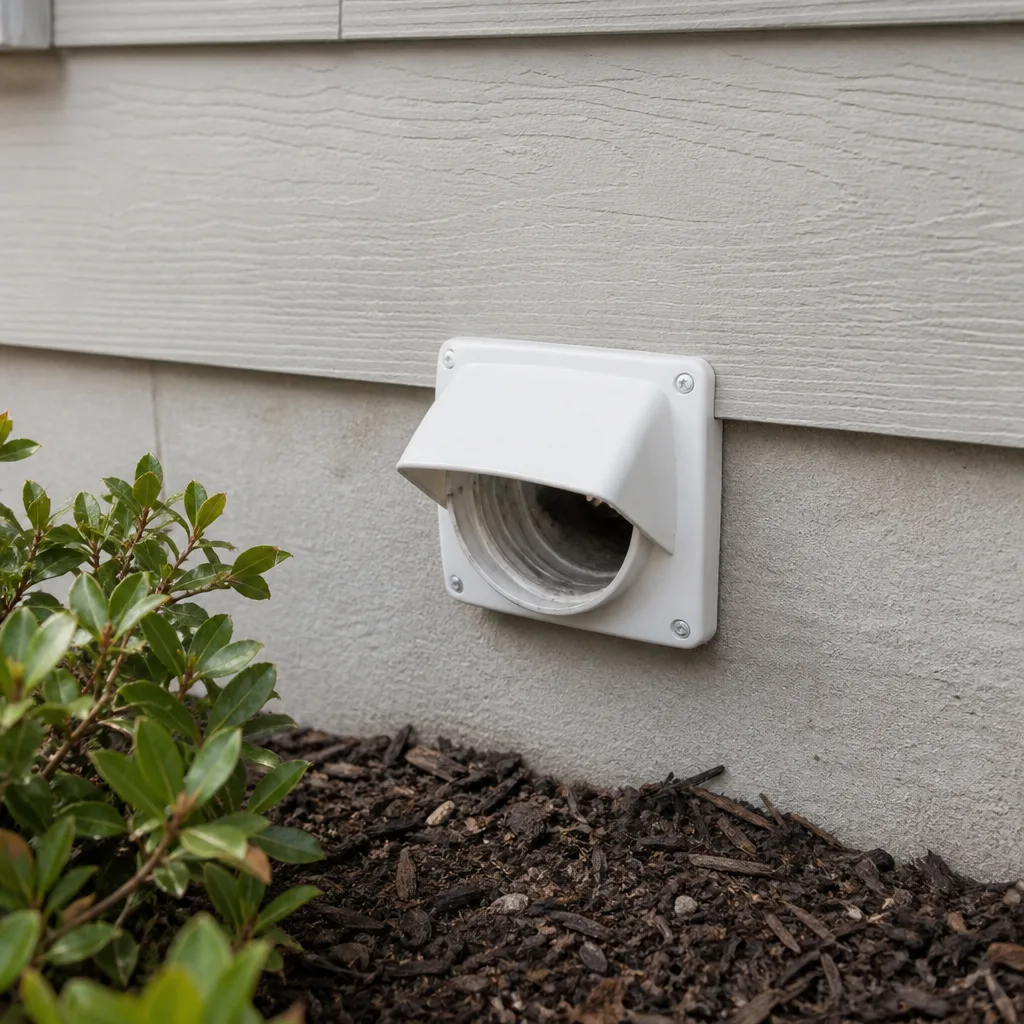
Whole-system duct and dryer vent check with before-and-after photos - you see exactly what came out of your vents
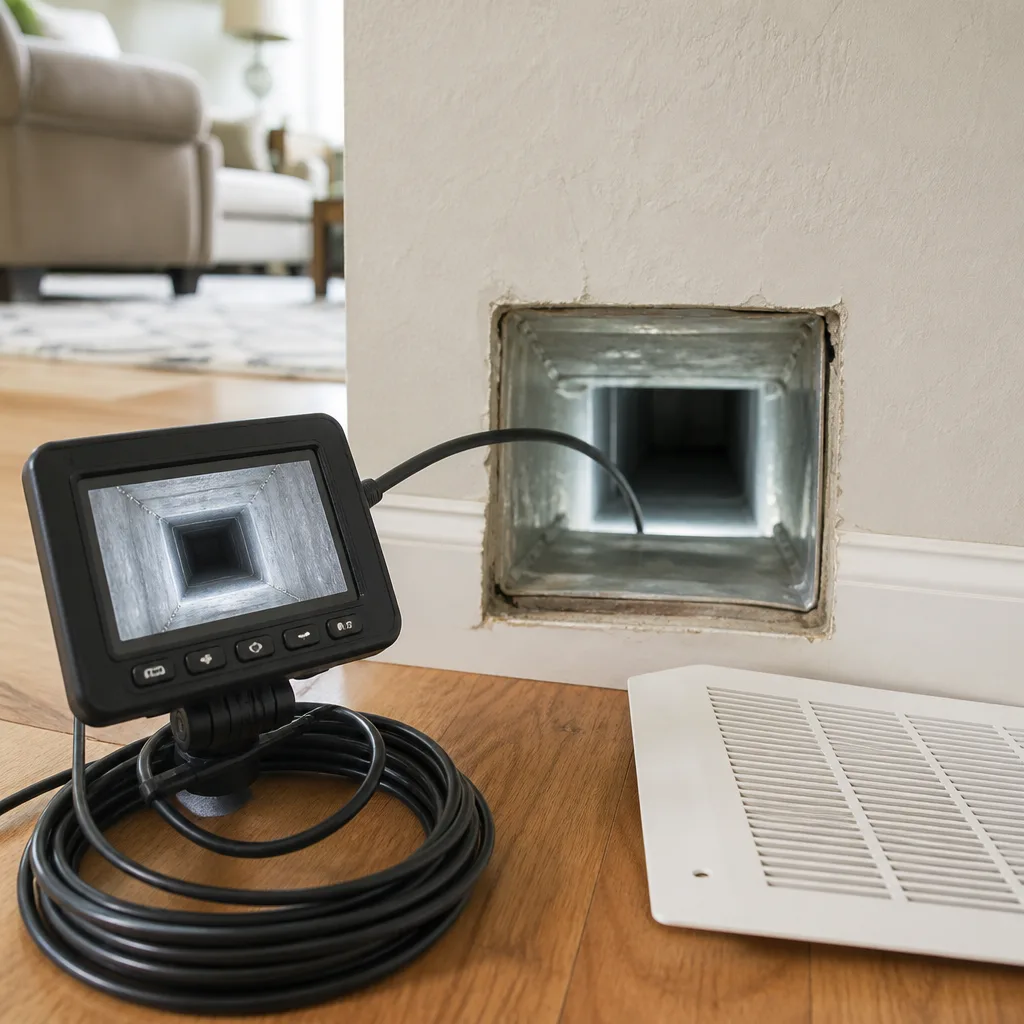
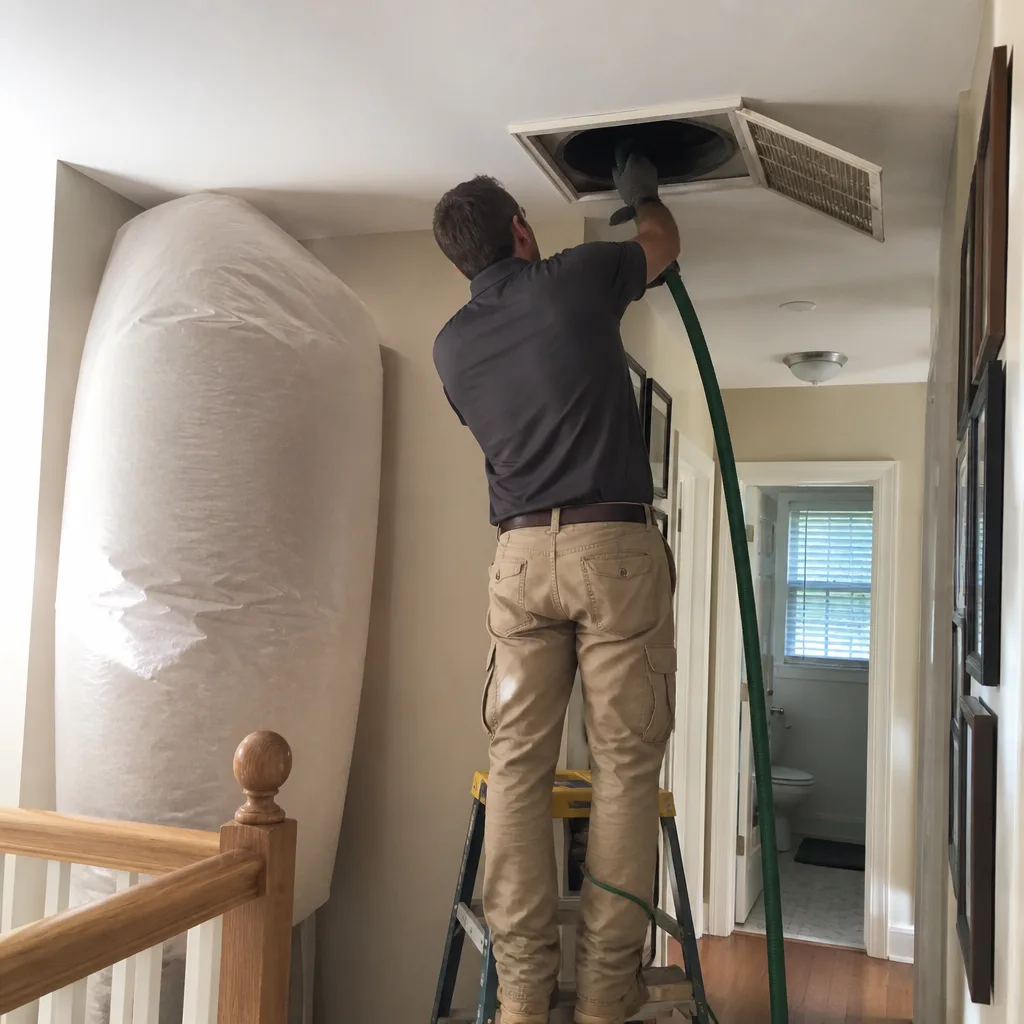
That "$99 whole-house special" is a bait ad - the real number appears once they are in your hallway, or the "clean" is a shop-vac at the register. We photograph the inside of your ducts before and after instead.
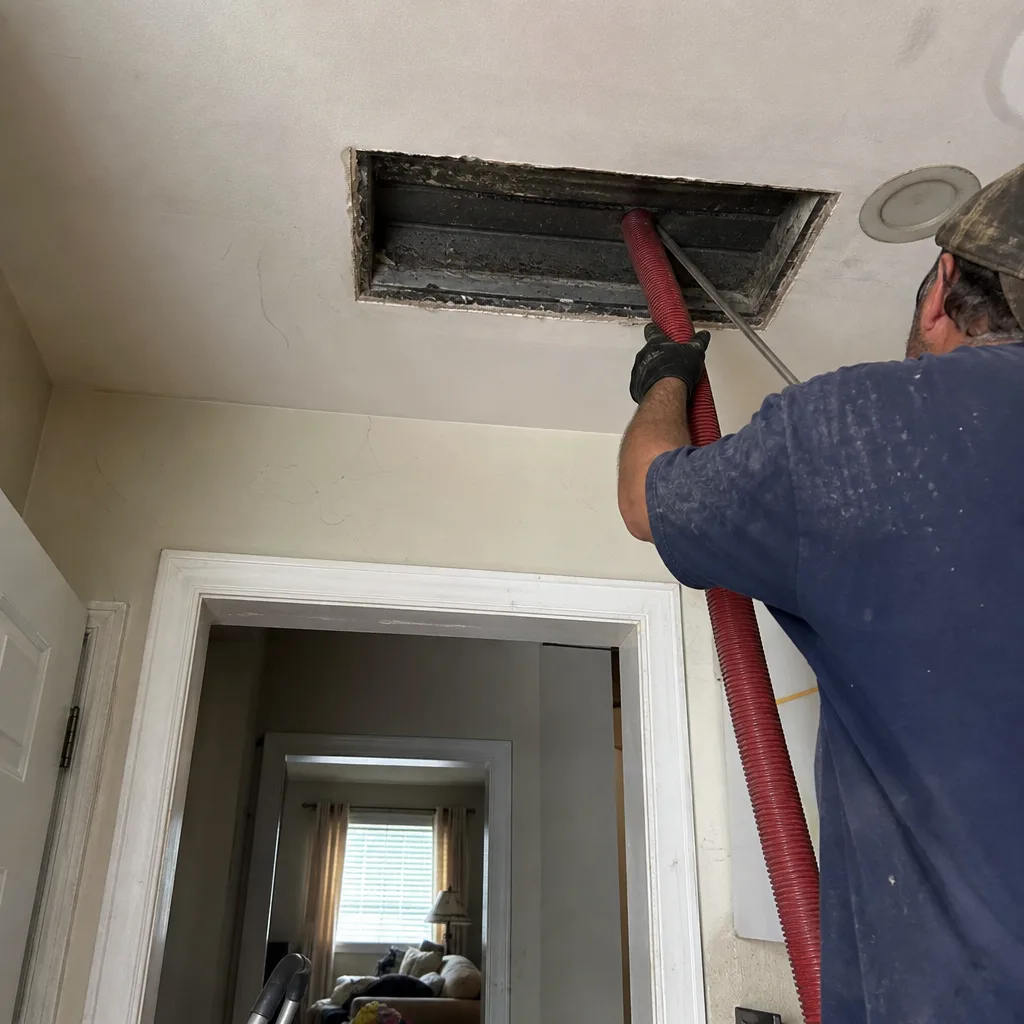 Before
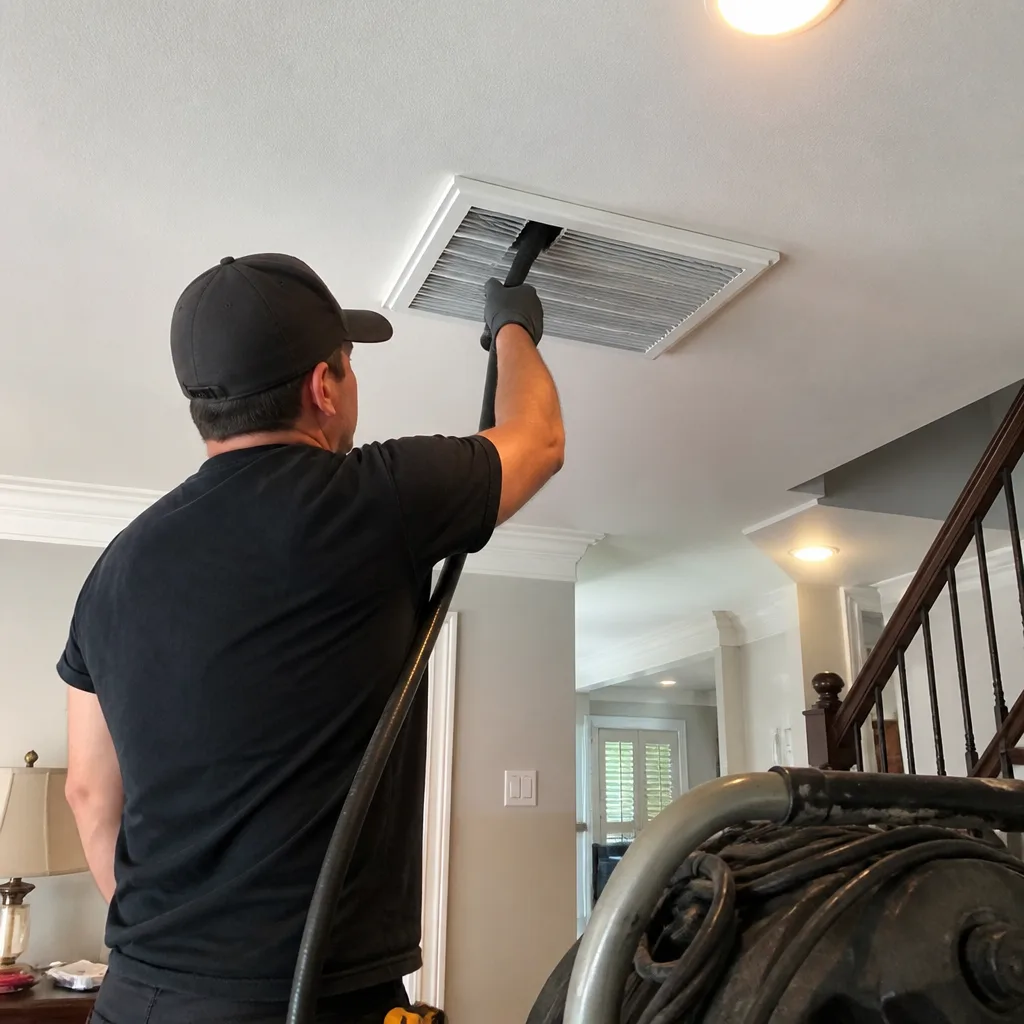 After
After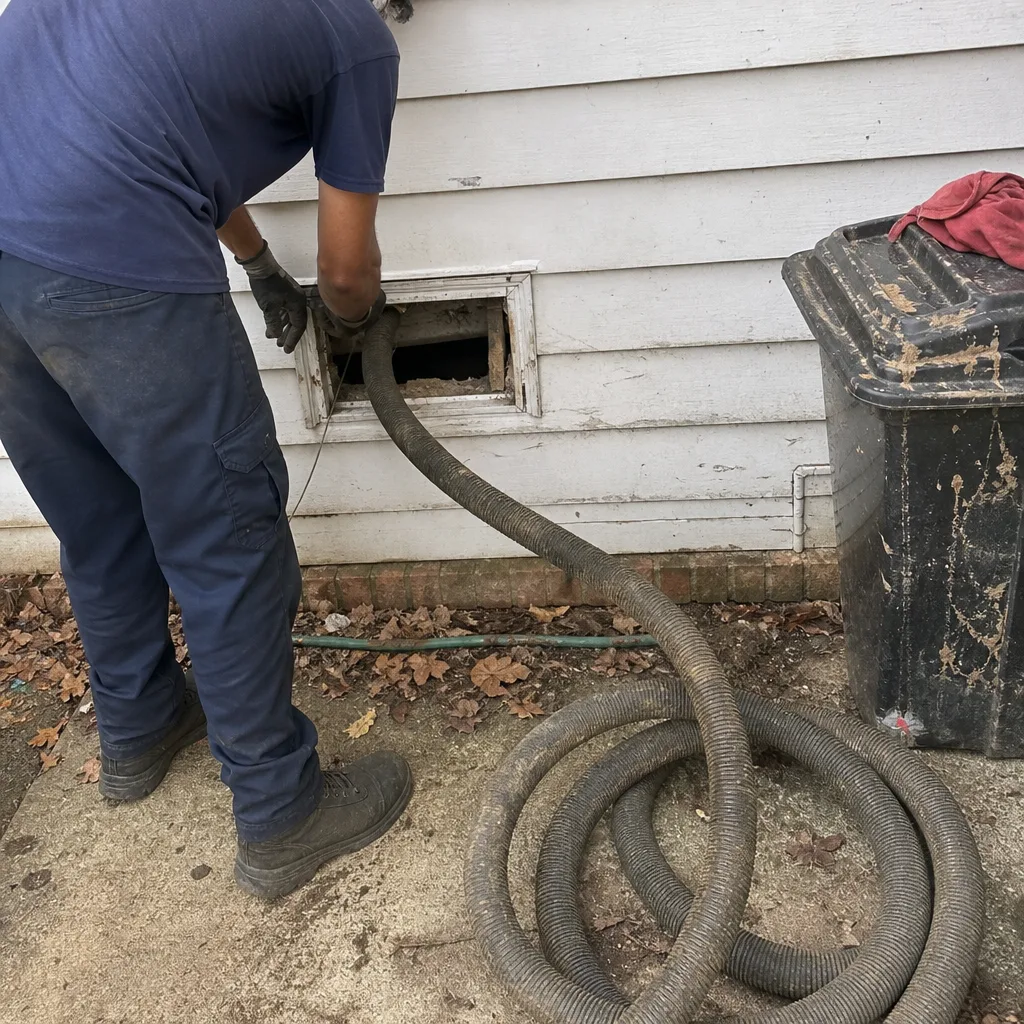 Before
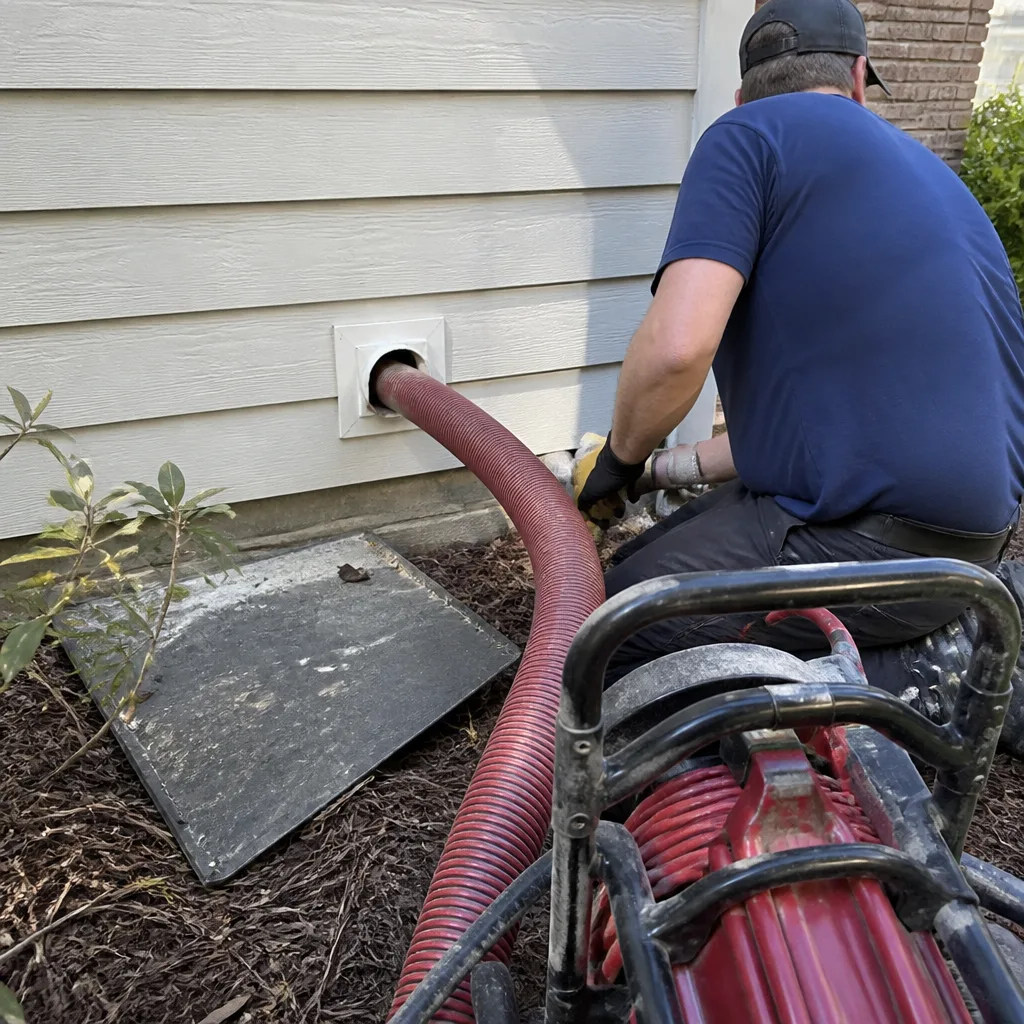 After
After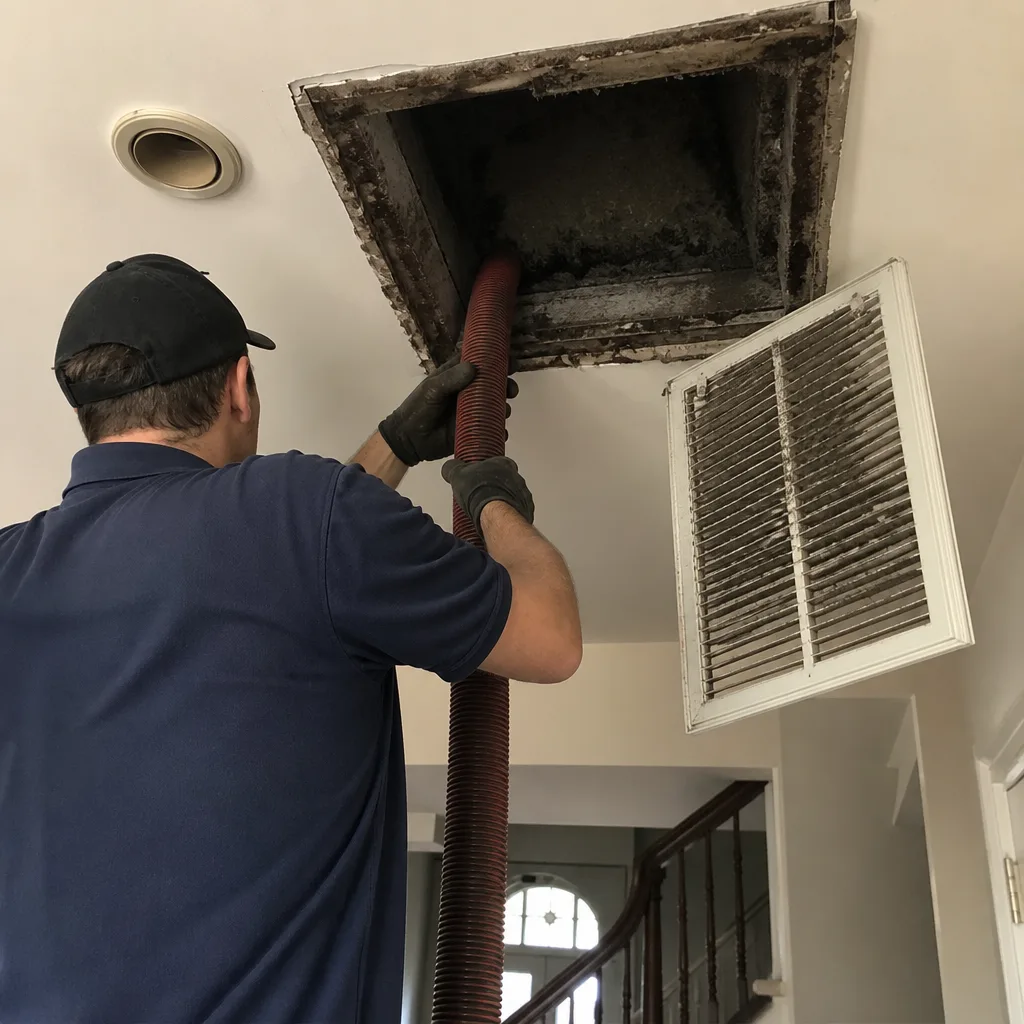 Before
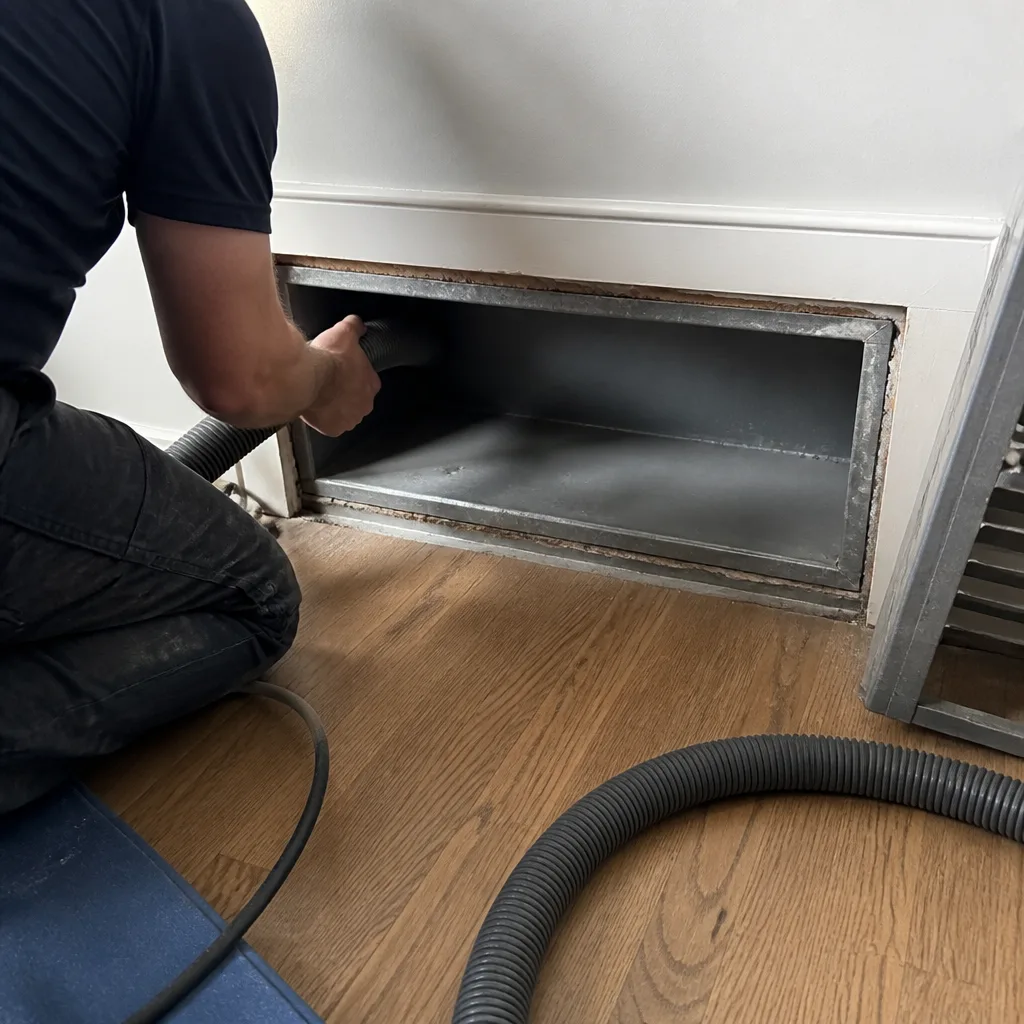 After
AfterAir Duct Cleaning Permits, Codes & Inspections in GA: What You Need to Know
Your duct cleaning contractor found a disconnected flex duct run and patched it in the same visit. That repair may have required a Georgia mechanical permit. If it didn’t get one, the liability stays with you when the house sells. In Alpharetta, we’ve seen this exact scenario derail closings in subdivisions like Avalon and Windward, where buyers’ inspectors flag unpermitted HVAC modifications that looked like “just a quick fix.” This guide draws the precise line between permit-exempt duct cleaning and permit-required mechanical work under Georgia code, so you know what questions to ask before anyone touches your system. For a deeper look at the process itself, see our Air Duct Cleaning service page.
Quick Answer
Most air duct cleaning in Alpharetta requires no permit. However, duct repair, replacement, or modification that alters the mechanical system’s airflow capacity, materials, or connections triggers Georgia’s mechanical code and requires a permit pulled by a licensed contractor. In Alpharetta and Fulton County, that permit must be inspected and signed off before the work is legally complete.
Table of Contents
- Permit-Exempt vs. Permit-Required Duct Work in Georgia
- How Georgia’s Mechanical Code Applies to Duct Services
- Alpharetta and Fulton County: The Local Permit Process
- When a Homeowner Can Pull the Permit vs. When a Licensed Contractor Must
- Resale and Homeowner’s Insurance Risks of Unpermitted Work
- What a Compliant Duct Repair Scope Looks Like
- Georgia Code Sections in Plain Language
- Documentation You Should Receive from Any Duct Contractor
 Before
 After
AfterPermit-Exempt vs. Permit-Required Duct Work in Georgia
The distinction is simpler than most contractors let on, though the consequences of getting it wrong are serious.
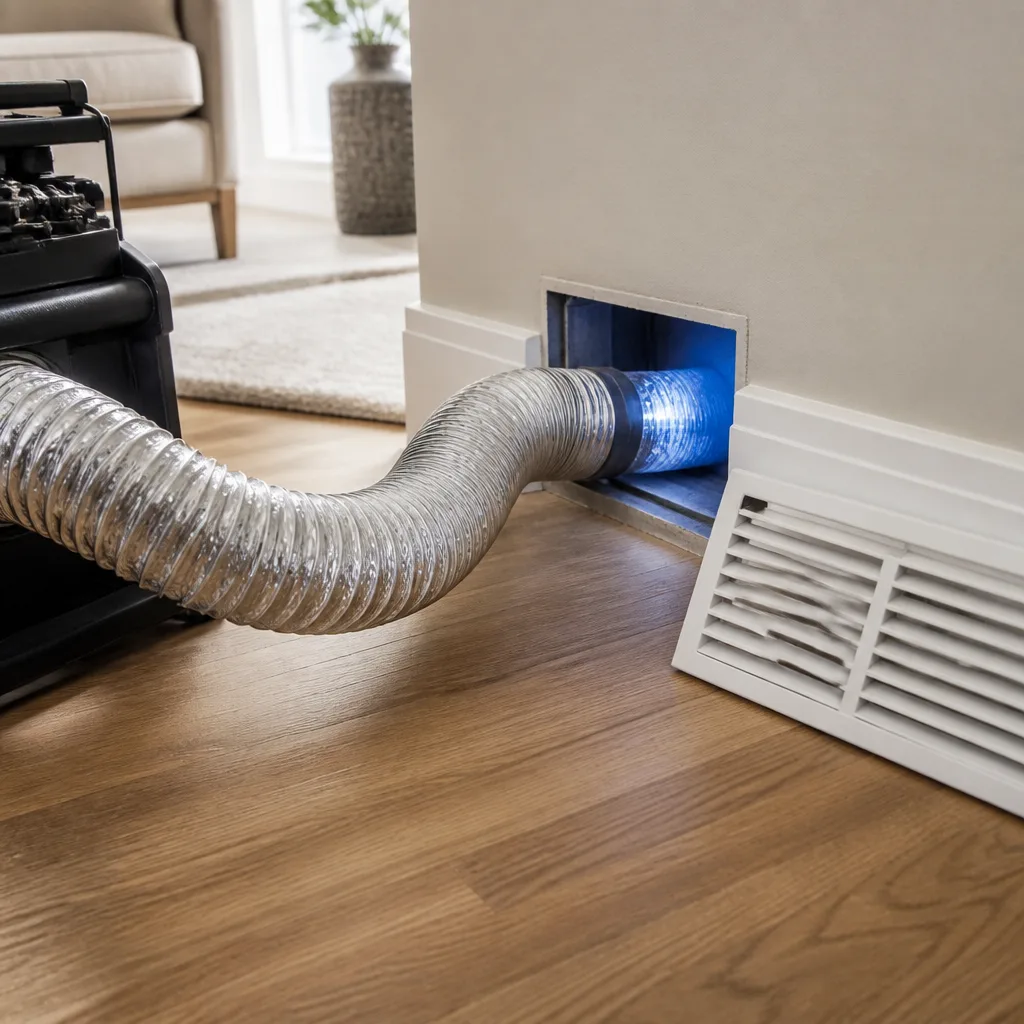
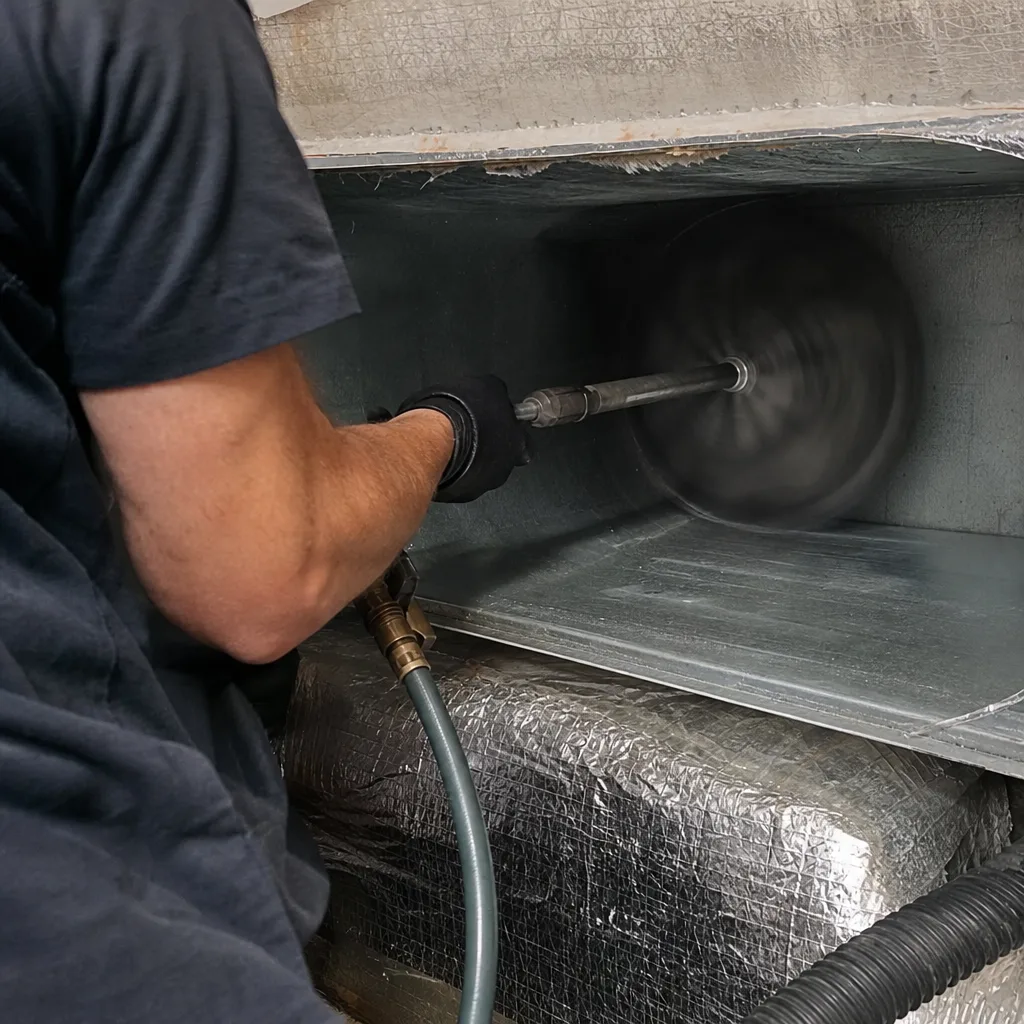
Permit-exempt work includes cleaning, sanitizing, and minor sealing of existing ductwork where no materials are replaced and no connections are altered. This covers the core of what most homeowners think of as “air duct cleaning.” Negative-pressure extraction, which pulls debris from the duct run using a vacuum attached to the main trunk, falls here. So does applying mastic sealant to small leaks at joints, provided the sealant doesn’t change the duct’s original dimensions or airflow characteristics.
Permit-required work begins when any of these happen:
- A section of ductwork is removed and replaced, even with identical materials
- Flex duct is reconnected, rerouted, or extended
- Metal duct is modified, cut, or spliced
- The plenum (the distribution box attached to your air handler) is opened, repaired, or replaced
- Any change affects the system’s rated airflow capacity, measured in CFM (cubic feet per minute)
In our work across Alpharetta, the most common trigger - and one of the key air duct cleaning warning signs - is a disconnected or collapsed flex duct run in an attic. The typical scenario: a cleaning crew finds a 6-inch flex duct pulled loose from its collar at a trunk line connection. They reconnect it with a zip tie and tape. That reconnection is a mechanical modification under Georgia code. It requires a permit.
We’ve documented this exact finding in homes near North Point Mall and in the older ranch-style builds off Rucker Road, where attic temperature swings degrade flex duct connections over 10 to 15 years. The cleaning itself needs no permit. The repair does. Many homeowners don’t learn this until a later inspection reveals the gap.
How Georgia’s Mechanical Code Applies to Duct Services
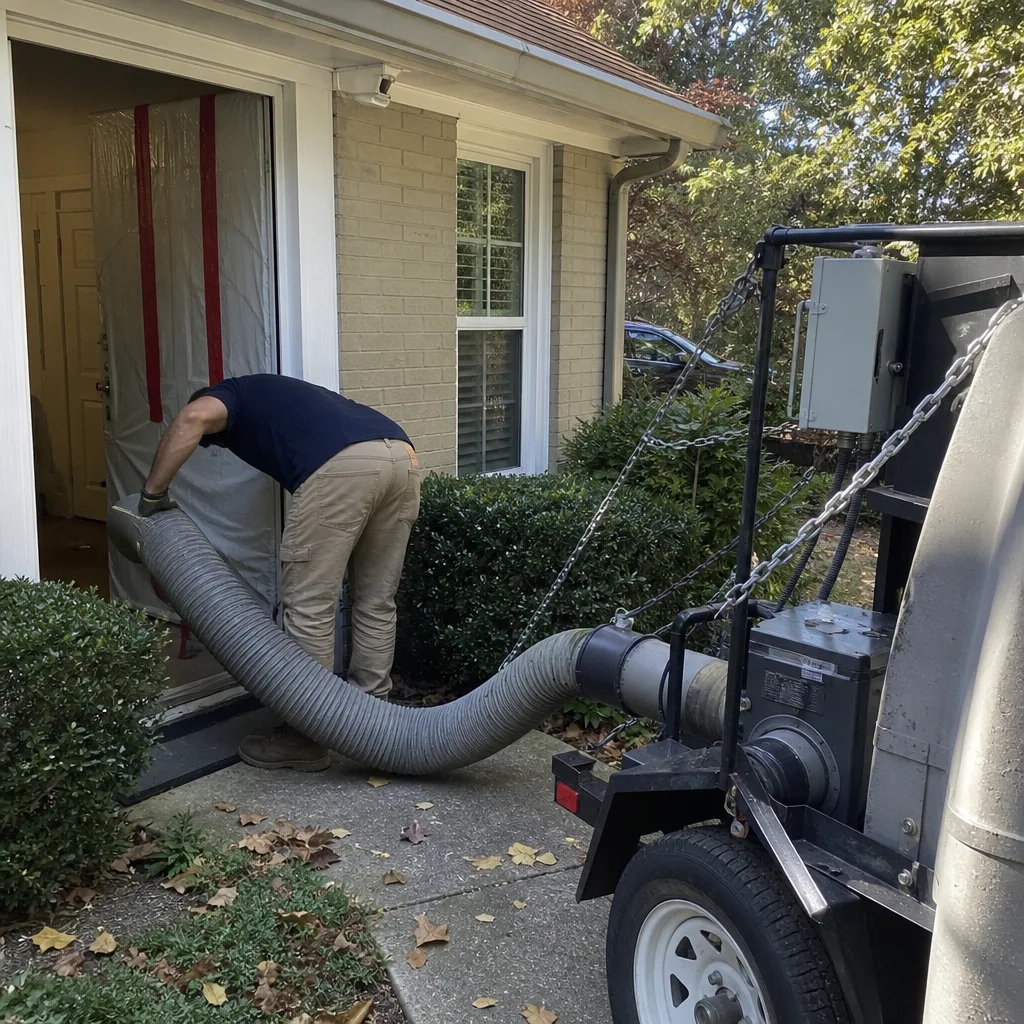
Georgia operates under the Georgia State Minimum Standard Mechanical Code, which adopts and amends the International Mechanical Code (IMC). For ductwork, the relevant provisions fall in Chapter 6 (Duct Systems) and Chapter 3 (General Regulations) of the IMC as adopted.
The code’s intent is straightforward: any work that could affect system efficiency, safety, or indoor air quality must be documented, performed by qualified personnel, and inspected. This isn’t bureaucracy for its own sake. Improperly reconnected ductwork can create pressure imbalances that strain HVAC equipment, pull attic insulation fibers into living spaces, or backdraft combustion gases in homes with gas appliances.
Key provisions that affect duct cleaning appointments:
- IMC 603.1 (as adopted): Duct systems must be constructed and installed to allow access for cleaning. This is why legitimate duct cleaning companies like ours photograph the interior of every duct run - the code anticipates this maintenance, and the photo record verifies compliance.
- IMC 603.2: Duct materials must be rated for their application. A contractor who patches a damaged flex duct with non-rated materials, even temporarily, violates this provision.
- IMC 603.9: Joints and seams must be sealed appropriately. Mastic sealant applied during cleaning is generally fine; duct tape alone is not code-compliant for permanent repairs.
The Georgia amendments add one critical layer: any mechanical permit for work exceeding $2,500 in value requires a licensed Georgia conditioned air contractor to pull and sign off on the permit. This is where many duct cleaning companies, operating under a residential light commercial license or no HVAC license at all, step across a line they may not know exists.
At CleanRun Air Duct Cleaning Alpharetta home, we hold the appropriate licenses for the work we perform. When our Rotobrush and Nikro equipment reveal damage that requires permit-level repair, we document it, explain the code requirement, and refer the mechanical work to a licensed conditioned air contractor we trust - or work under their permit if the scope is within our licensing. We don’t patch and hope.
Alpharetta and Fulton County: The Local Permit Process
Alpharetta sits within Fulton County’s jurisdiction for building and mechanical permits, though the city maintains its own planning and zoning authority. For homeowners, this means permit applications route through Fulton County’s Department of Public Works, Building Division, with inspections performed by county-certified mechanical inspectors.
The practical process for duct-related mechanical permits:
- Application: A licensed contractor submits a permit application with scope of work, system specifications, and their Georgia conditioned air license number. Homeowner-pulled permits are restricted (see next section).
- Plan review: For residential duct repair or replacement, this is typically same-day or next-day approval if the scope is straightforward. Complex modifications, such as resizing trunk lines, may require engineered drawings.
- Inspection scheduling: Fulton County uses an online portal and phone scheduling. Mechanical inspections are generally available within 2 to 5 business days in Alpharetta’s 30004, 30005, 30009, and 30022 ZIP codes.
- Rough inspection: For new duct installations, this occurs before insulation or concealment. For repairs, the inspector verifies materials, connections, and clearances.
- Final inspection: The system is run-tested for airflow and proper operation. The inspector signs off, and the permit is closed.
Permit fees in Fulton County for residential mechanical work typically run $75 to $150 for minor duct repairs, scaling with project value. The licensed contractor usually includes this in their quoted price.
Here’s where Alpharetta’s market matters: the city’s housing stock includes a high concentration of homes built between 1995 and 2015, many with original flex duct systems now reaching end-of-service life. In neighborhoods like Windward, Crooked Creek, and the newer sections of Milton High School district, we’ve found that roughly one in three duct cleaning appointments reveals damage requiring at least evaluation for permit-level repair. The clay-heavy soils and seasonal humidity shifts in this part of North Fulton accelerate attic structural movement, which stresses duct connections.
Fulton County’s inspectors are thorough. We’ve had customers tell us their inspector photographed our documented repair work during a final inspection and noted the photo record in the permit file. That’s the standard we aim for.
When a Homeowner Can Pull the Permit vs. When a Licensed Contractor Must
Georgia allows homeowners to act as their own contractor under specific conditions, but the limitations are tighter than most realize.
A homeowner may pull a mechanical permit if:
- The property is their primary residence
- The work is performed entirely by the homeowner (no employees, no paid labor)
- The total project value does not exceed $2,500
- The work does not involve gas lines, refrigerant handling, or electrical modifications beyond basic connections
A licensed conditioned air contractor must pull the permit when:
- Any portion of the work is performed by paid labor, including subcontractors
- The project value exceeds $2,500
- The work involves the air handler, heat exchanger, refrigerant lines, or gas connections
- The duct modification affects system capacity or requires load calculations
The $2,500 threshold is the practical tripwire for most Alpharetta homes. Replacing a single flex duct run in a 2,500-square-foot home might fall under it. Replacing the trunk line or multiple runs almost certainly exceeds it. More importantly, the “performed entirely by the homeowner” requirement means that if a duct cleaning company does any of the work, the homeowner cannot legally pull the permit. The company must hold the license and pull it themselves.
This is where the industry’s bait-and-switch pricing creates legal exposure. A company quotes $199 for “whole house duct cleaning,” finds damage, and offers to “fix it while we’re here for just a little more.” If that fix requires a permit and the company isn’t licensed to pull one, the homeowner has unpermitted work performed by an unqualified contractor. The low initial price just became a liability.
Haven Standard Clause 1 - our written price before any work starts - exists partly to prevent this. When our technician finds damage during a Air Duct Cleaning in Alpharetta appointment, the scope is documented, the permit requirement is explained, and the repair is either quoted under our license or referred to a licensed partner with a separate written price. No surprises. No legal gray area.
Resale and Homeowner’s Insurance Risks of Unpermitted Work
Unpermitted duct repair work surfaces at the worst possible moment: during a real estate transaction, when the buyer’s inspector crawls the attic, or when an insurance claim involves the HVAC system.
In Alpharetta’s competitive resale market, where homes in top school districts often attract multiple offers and meticulous buyer scrutiny, unpermitted mechanical work is a deal-killer. Here’s how it plays out:
- Buyer’s inspection: The inspector notes newer duct tape at a connection, checks permit history with Fulton County, finds no record, and flags it as unpermitted modification. The buyer’s lender may require permit clearance before closing.
- Retroactive permitting: The seller must now hire a licensed contractor to expose the work, have it inspected, and potentially redo it to current code. This costs significantly more than original permitted work and delays closing.
- Insurance denial: If an HVAC-related fire, water damage, or indoor air quality claim occurs, the insurer may deny coverage for portions of the system modified without permit, arguing the unpermitted work contributed to the loss.
We’ve been called to Alpharetta homes where the seller’s “duct cleaning” from three years prior included a reconnection that now requires $800 in retroactive permitting and inspection fees, plus the original repair redone to current code. The $150 patch cost $1,200 to legitimize.
Homeowner’s insurance policies vary, but most contain language excluding losses from “work performed without required permits or by unlicensed contractors.” The exclusion is broad enough to cover ductwork. We’ve reviewed claim denials where the insurer’s adjuster specifically cited unpermitted attic duct modifications as the basis for rejecting mold remediation coverage.
The documentation CleanRun provides - written scope, photo record, permit verification when applicable - is designed to prevent this. Our customers in Alpharetta can produce a paper trail for any future transaction or claim.
What a Compliant Duct Repair Scope Looks Like
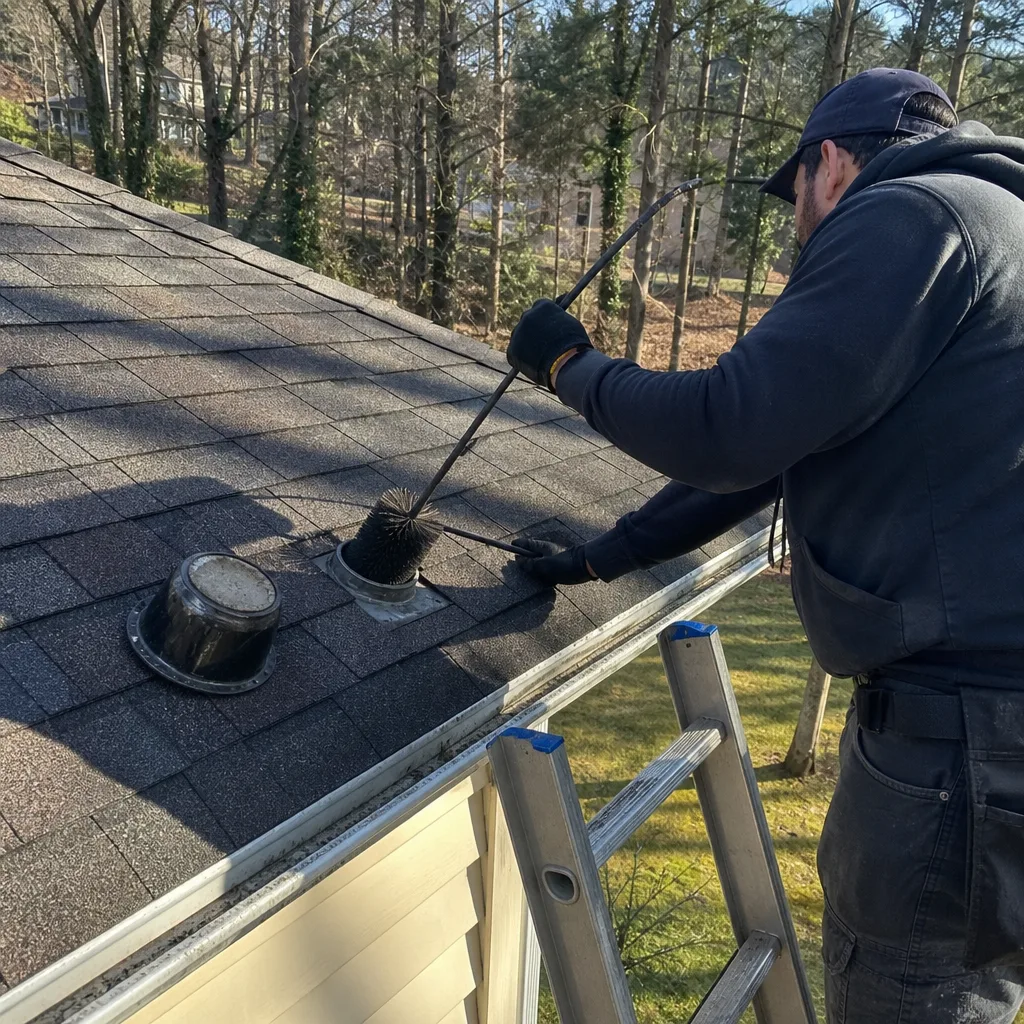
When duct cleaning reveals structural damage, the response should follow a clear decision tree. Here’s what compliance looks like in practice, based on the damage our crews document with Rotobrush camera systems and Nikro negative-pressure equipment.
Scenario 1: Light debris accumulation, intact ductwork
Scope: Negative-pressure extraction of all duct runs, register and return cleaning, sanitizer application (Aprilaire or Guardsman products per customer preference), photo record delivered. No permit required. Written price: typically $450 to $750 for Alpharetta homes under 3,500 square feet.
Scenario 2: Minor leak at accessible joint, no material damage
Scope: Cleaning as above, plus mastic sealant application at identified leaks. Mastic is a water-based paste that seals without altering duct dimensions. No permit required. Written price: add $75 to $150 to base cleaning.
Scenario 3: Disconnected or damaged flex duct run
Scope: Document disconnection with photo. Stop. Explain to homeowner that reconnection requires mechanical permit and licensed conditioned air contractor. Offer three paths: (a) Clean only, document damage for homeowner’s own contractor; (b) CleanRun coordinates with our licensed partner, permit included, single written price; (c) Homeowner handles separately. No repair performed without permit.
Scenario 4: Collapsed or deteriorated metal duct, plenum damage
Scope: Document extensively. This is permit-required, often exceeding $2,500, requiring licensed contractor and engineered scope. Referral only. CleanRun does not perform this work without proper permitting.
The key distinction: we clean what we can legally and safely clean. We document what we find. We do not perform mechanical modifications that require permits we cannot or will not pull. Haven Standard Clause 3 - Verified Crews - means our technicians are trained to recognize the line, not cross it.
In Alpharetta’s older homes, particularly the 1970s and 1980s builds off Kimball Bridge Road and near downtown, we’ve found metal duct systems with original asbestos tape at joints. Disturbing this tape during repair triggers EPA notification requirements alongside mechanical permits. Our crews photograph, stop, and refer. The photo record protects the homeowner and documents our compliance.
Georgia Code Sections in Plain Language
Georgia’s mechanical code is accessible online, but the cross-references and amendments confuse most homeowners. Here’s what matters for duct services, translated from regulatory language.
Official Code of Georgia Annotated (O.C.G.A.) Title 43, Chapter 14 - Conditioned Air Contractors
This establishes licensing for anyone performing “conditioned air” work, defined as installing, maintaining, or repairing systems that heat, cool, or ventilate. The license classes are:
- Class I (Restricted): Systems under 5 tons cooling or 175,000 BTU heating. Most residential duct repair falls here.
- Class II (Unrestricted): All systems. Required for commercial or large residential.
A duct cleaning company that only cleans and seals minor leaks does not need this license. One that repairs, replaces, or modifies ductwork does.
Georgia State Minimum Standard Mechanical Code, Chapter 6 (Duct Systems)
The adopted IMC provisions require:
- Ducts to be sized per ACCA Manual D or equivalent (603.1)
- Materials to be labeled with flame-spread and smoke-developed ratings (603.3)
- Flexible ducts limited to 14 feet in length unless engineered otherwise (603.6)
- All joints and seams sealed with mastic, gaskets, or tape rated for the application (603.9)
The Georgia amendment adds: permits required for “alteration, repair, or replacement of any portion of a mechanical system.” This is the broad language that catches duct repairs.
Fulton County Supplementary Regulations
Fulton County requires mechanical permits for any work on HVAC ductwork that is not “routine maintenance.” The county’s interpretation, confirmed in our discussions with building officials, is that cleaning and minor sealing are maintenance. Reconnection, replacement, or modification of any component is not.
Alpharetta homeowners can verify permit requirements directly through Fulton County’s online permit lookup or by calling the Building Division. We encourage this. A legitimate contractor welcomes permit verification.
Documentation You Should Receive from Any Duct Contractor
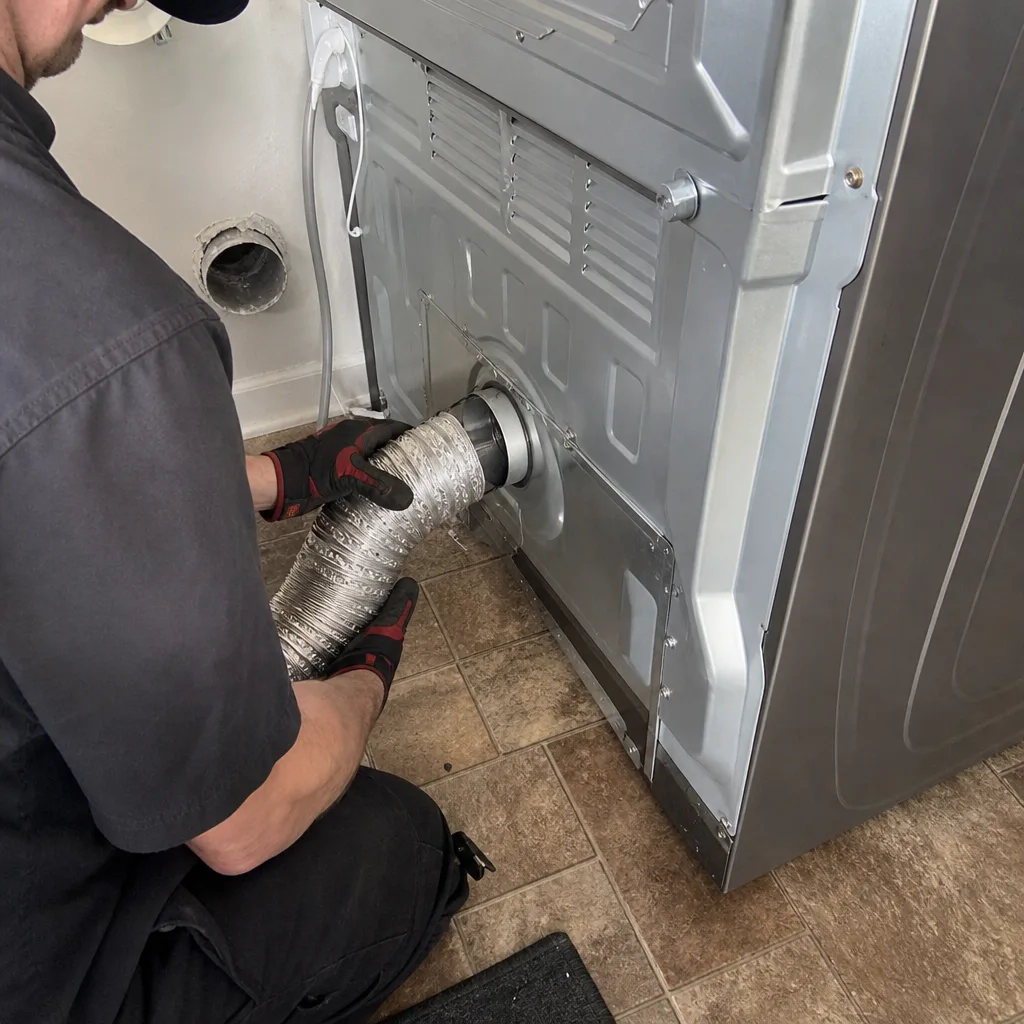
Whether the work requires a permit or not, the documentation separates legitimate operators from coupon-chasing van tours. For more guides & resources on protecting your home investment, explore our blog. Here’s what every Alpharetta homeowner should demand:
- Written scope and price before work starts. Not an estimate. A fixed price for a defined scope. Haven Standard Clause 1. No exceptions.
- Photo record of every duct run, before and after. Not a single “representative” photo. Every run. Time-stamped if possible. This is our standard deliverable, included on every job since 2013.
- Permit documentation when applicable. If repair work is performed, the permit number, inspector sign-off, and final approval should be provided. We coordinate this when we manage permitted repairs.
- Material specifications. What duct material was used? What sealant? What insulation R-value? Brand names matter. We use Honeywell and Aprilaire components where specified by system requirements.
- Warranty in writing. Our 365-Day Done Right Promise is printed, not promised verbally. It states: if the work is not right, we make it right. The mechanism is defined: call, schedule return, no charge for correction of our work.
- License verification. The contractor’s Georgia conditioned air license number should be provided on request. Ours is published on every proposal and our website, not buried in a footer.
The absence of any of these documents is a signal. The contractor who won’t put the price in writing, won’t photograph the work, or won’t discuss permitting is not operating at the standard Alpharetta homeowners should accept.
We’ve reviewed competitors’ “completion” paperwork that consists of a carbon-copy receipt with a total and no itemization. Compare that to our job record: written scope, line-item pricing, 20 to 40 photos per system, material specs, warranty terms, and technician identification. The difference is accountability.
Common Mistakes to Avoid
- Assuming “cleaning only” means no permit issues. If the cleaning company finds damage and repairs it without telling you a permit was needed, you’re still liable. Ask before they touch anything beyond cleaning tools.
- Accepting verbal assurances that a permit “isn’t necessary for small jobs.” Georgia’s $2,500 threshold is clear. More importantly, the “who performs the work” rule is absolute. Paid labor requires a licensed contractor’s permit.
- Letting a cleaning company subcontract repair work to an unnamed “partner.” You have no verification of their license, insurance, or permit compliance. Demand the subcontractor’s name and license number before work begins.
- Failing to check Fulton County permit records before listing a home. Alpharetta sellers should verify their property’s permit history at least 60 days before listing. Unpermitted work discovered during buyer due diligence costs more to fix under time pressure.
- Ignoring insurance implications. Call your insurer and ask specifically: “Does my policy exclude losses related to unpermitted HVAC modifications?” The answer may prompt you to verify past work.
- Choosing based on lowest price without documentation requirements. The $79 coupon special cannot include photo records, written warranties, or permit compliance. The true cost surfaces later.
When to Call a Professional
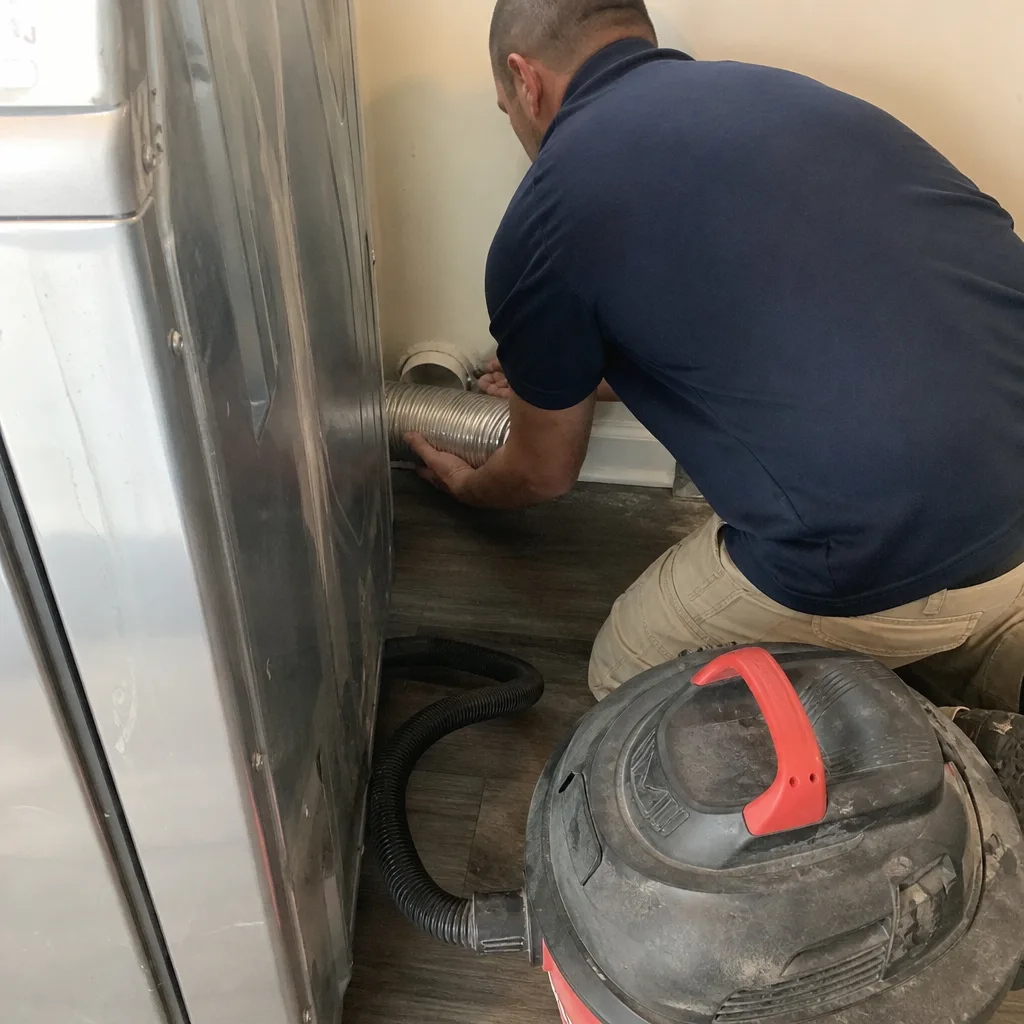
Call a licensed, documented professional when: your ducts haven’t been cleaned in 5+ years and you want a baseline photo record; a cleaning company finds damage and you’re unsure whether permitting applies; you’re preparing to sell and need to verify your mechanical work is properly documented; or you’ve received a quote that seems too low and lacks itemization or permit discussion.
CleanRun Air Duct Cleaning Alpharetta offers free estimates in Alpharetta. Every estimate includes a written scope and price, no exceptions. Call (678) 679-7540. We also provide free second opinions on any written estimate from a competitor - bring their paperwork, we’ll put our number next to it in writing under Haven Standard Clause 1.
Frequently Asked Questions
No. Standard air duct cleaning - negative-pressure extraction, register cleaning, and minor sealing with mastic - is considered routine maintenance under Fulton County regulations and does not require a permit. Call (678) 679-7540 for a written estimate on cleaning; we’ll flag any damage that would trigger permitting.
Duct repair, replacement, reconnection, or modification that alters materials, dimensions, or airflow capacity requires a mechanical permit under the Georgia State Minimum Standard Mechanical Code. This includes reconnecting disconnected flex duct, replacing damaged sections, or modifying the plenum. The permit must be pulled by a Georgia licensed conditioned air contractor.
Only if the work is performed entirely by you, on your primary residence, and the total value is under $2,500. If any paid labor is involved, including a duct cleaning company’s technicians, a licensed contractor must pull the permit. Most residential duct repairs in Alpharetta exceed the $2,500 threshold or require paid labor, making homeowner permits impractical.
Search Fulton County’s online permit records by property address, or call the Building Division. Unpermitted work will not appear in the database. If you purchased recently, your closing attorney may have obtained a permit clearance letter; check your closing documents. CleanRun can also photograph and document your current duct system to establish a baseline for future verification.
Possibly. Most policies exclude losses caused by unpermitted work or unlicensed contractors. If an HVAC-related claim occurs and the insurer discovers unpermitted modifications, they may deny coverage for affected components. The risk is highest for claims involving fire, water damage, or indoor air quality issues where the duct system is implicated.
Permitted repair costs more upfront because it includes licensed contractor labor, permit fees ($75 to $150 in Fulton County), and inspection time. However, unpermitted fixes often cost far more when retroactive permitting, reinspection, or deal-delay penalties are required. CleanRun provides written prices for both cleaning and permitted repair coordination so you can compare real totals, not teaser rates.
The Bottom Line
Georgia’s mechanical code draws a clear line: cleaning is maintenance, repair is modification. Most Alpharetta homeowners hire a duct cleaning company expecting the former and unknowingly receive the latter, without the permit that makes it legal. The liability doesn’t fade; it waits for the inspection that finds it. Protect yourself by demanding written scopes, photo documentation, and explicit discussion of permit requirements before any repair work begins. The companies that operate cleanly will welcome these questions. The ones that don’t are telling you exactly who they are.
Written by Tomas Reyes, Owner at CleanRun Air Duct Cleaning Alpharetta, serving Alpharetta since 2013.