
Last updated September 23, 2026
Whole-system duct and dryer vent check with before-and-after photos - you see exactly what came out of your vents
That "$99 whole-house special" is a bait ad - the real number appears once they are in your hallway, or the "clean" is a shop-vac at the register. We photograph the inside of your ducts before and after instead.
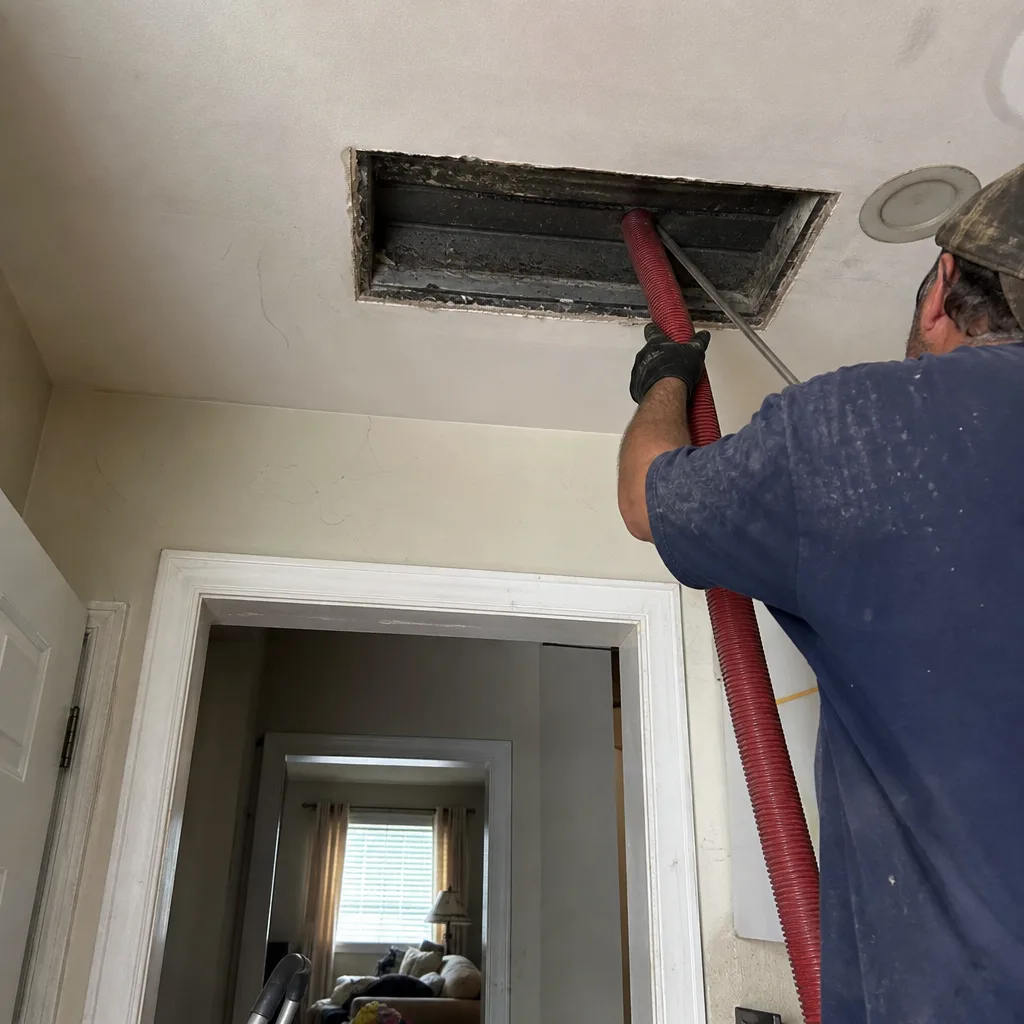 Before
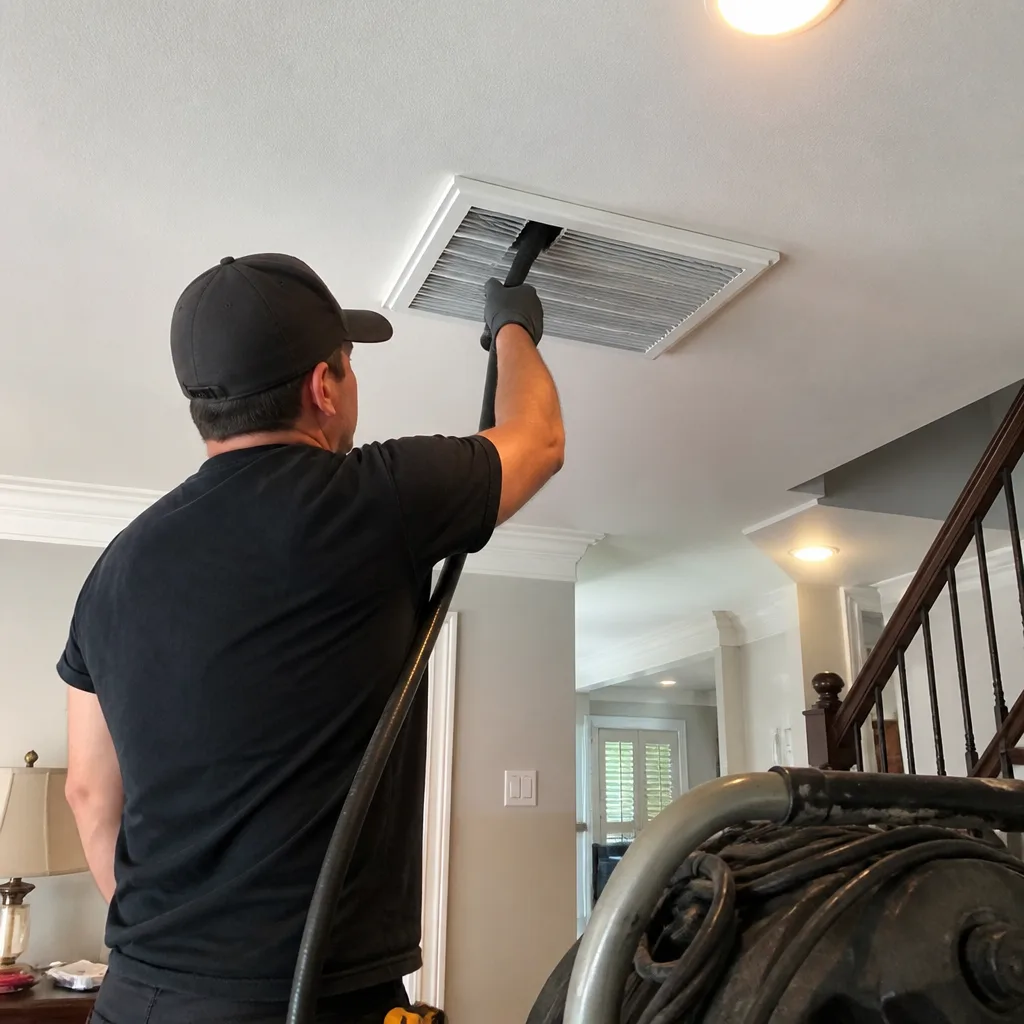 After
After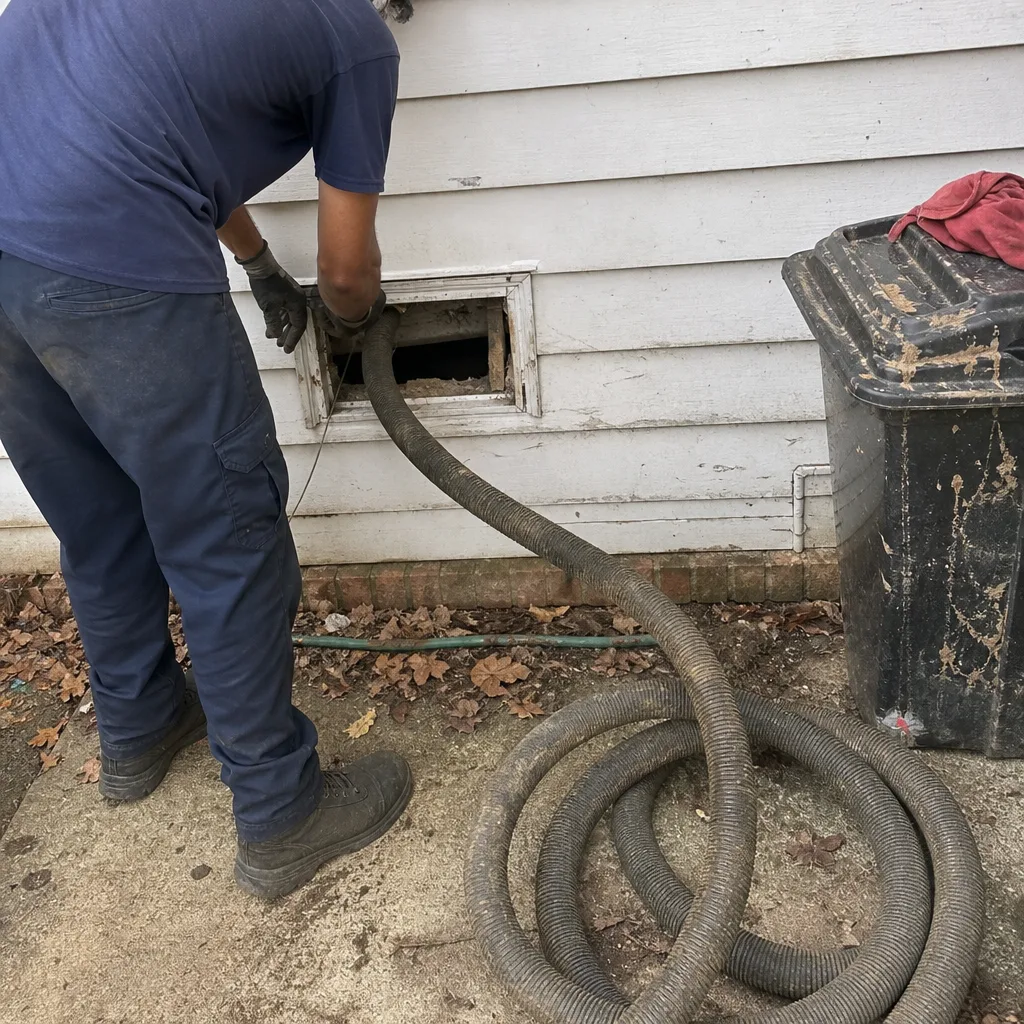 Before
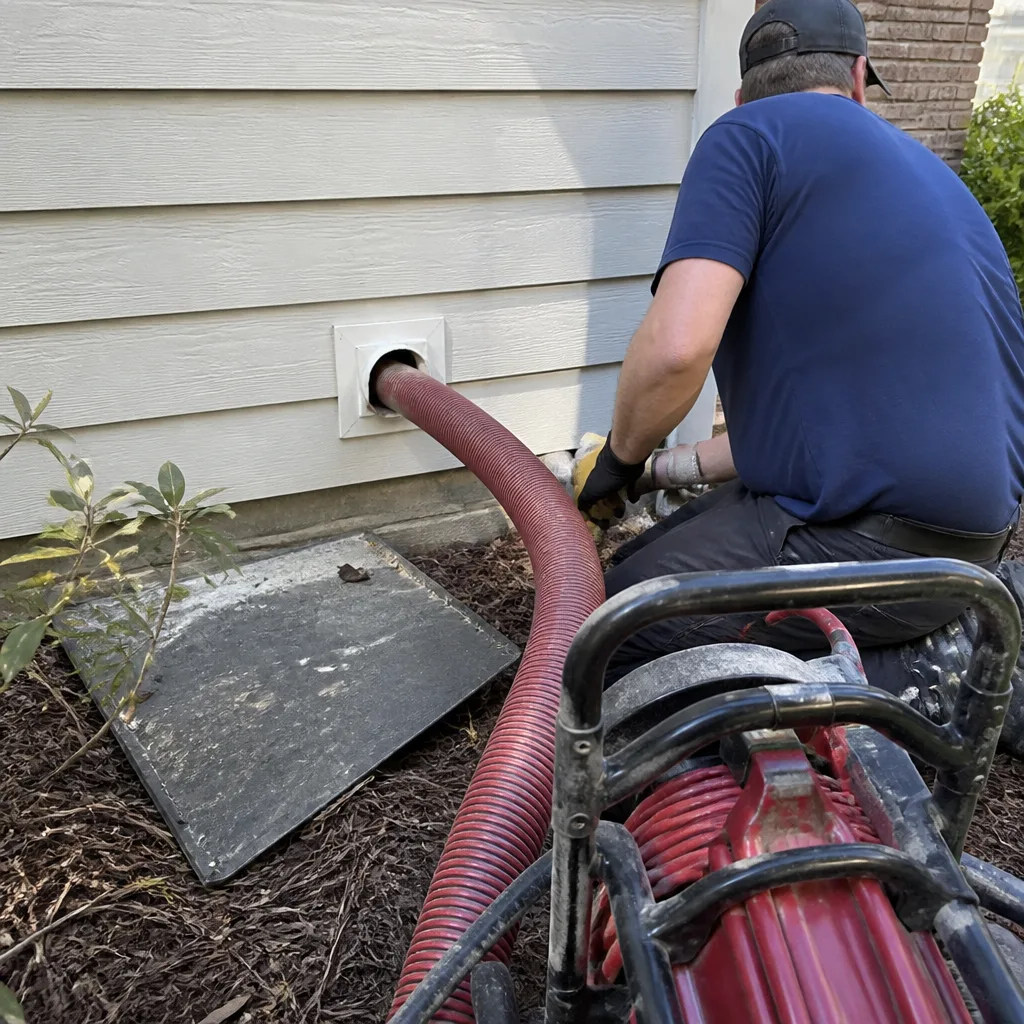 After
After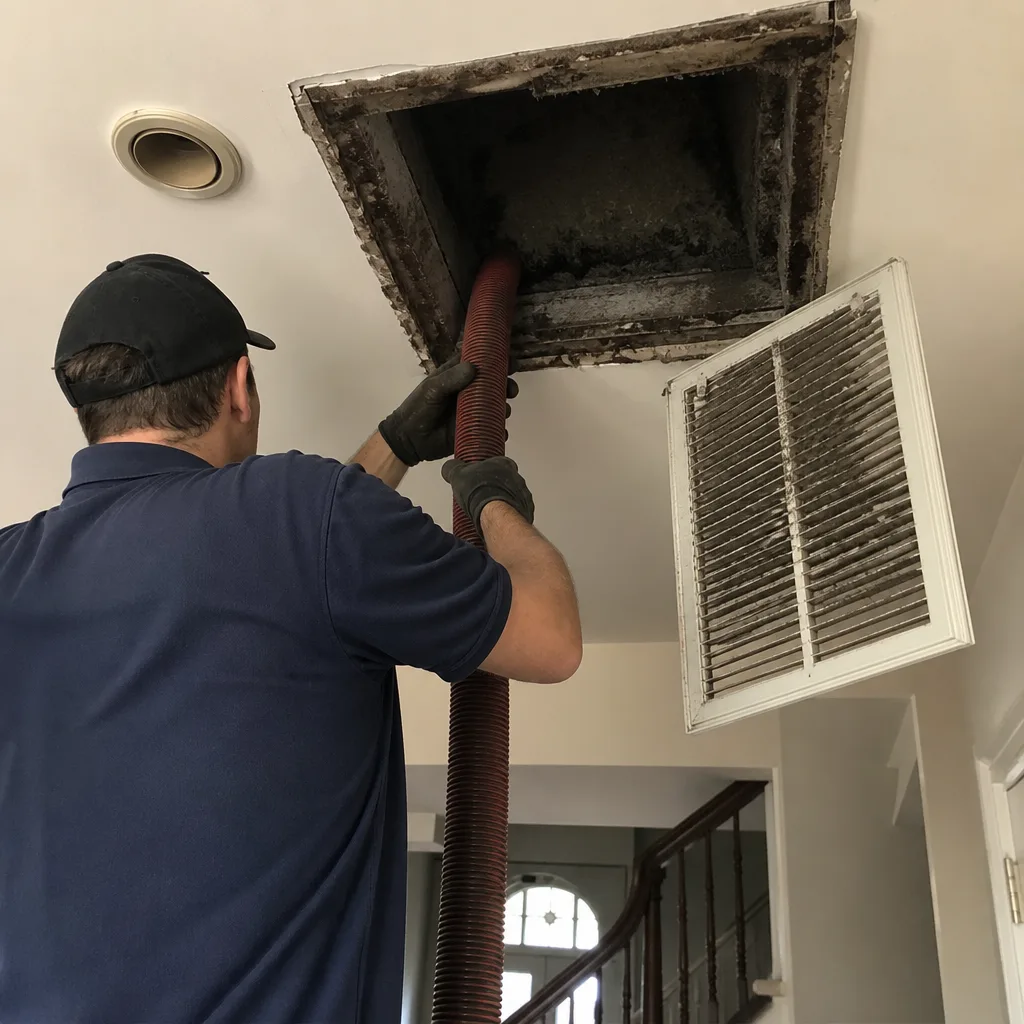 Before
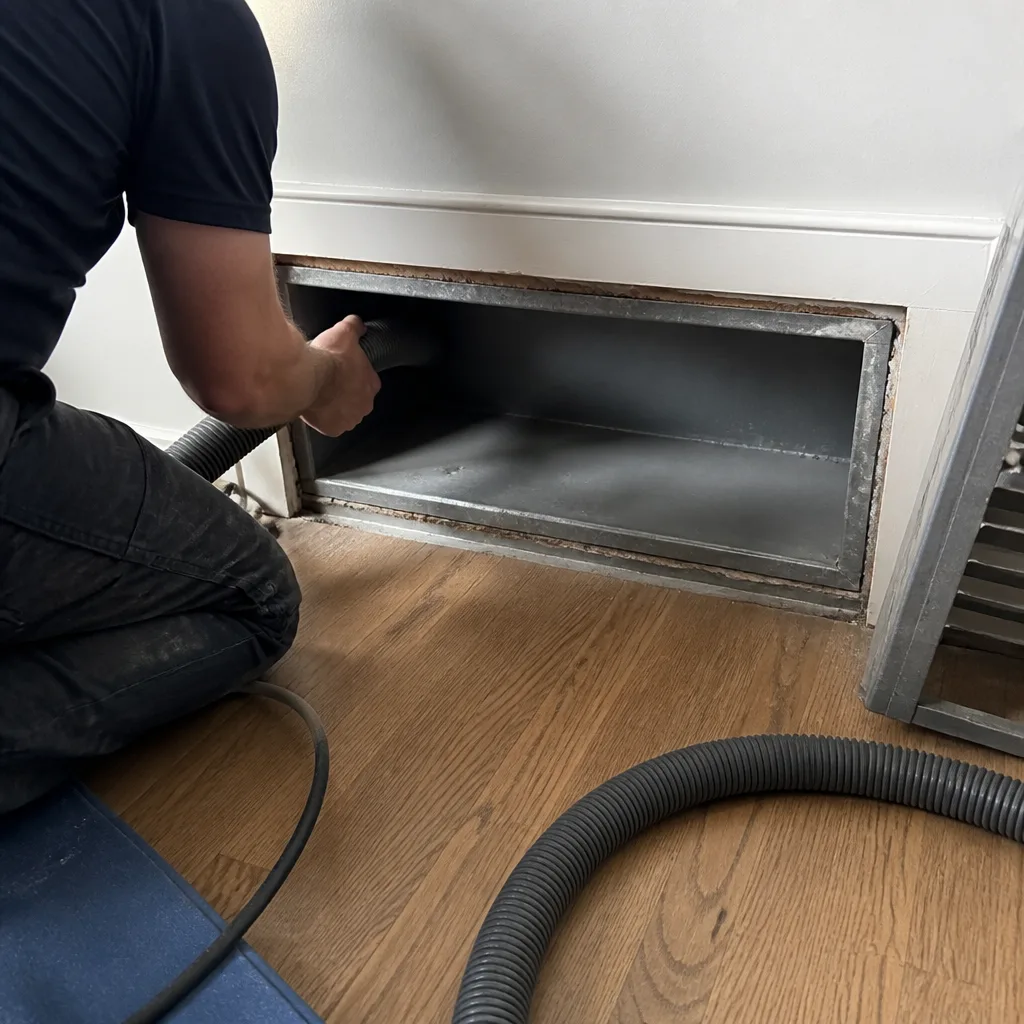 After
AfterAir Duct Cleaning Warning Signs: A Alpharetta Homeowner’s Reference Guide
Most Alpharetta homeowners who think they need duct cleaning actually need a filter change. We’ve been in this trade since 2013, and the single most common call we answer starts with “there’s dust everywhere” - nine times out of ten, the pleated filter hasn’t been changed in fourteen months and the MERV rating is wrong for the system. This guide - alongside our The Complete Guide to Air Duct Cleaning in Alpharetta - is built on what we’ve documented across 52,000+ homes: the warning signs that actually point to ductwork failure, how to confirm them with a ten-minute self-inspection, and which symptoms mean you’re about to hire the wrong trade entirely. By the end, you’ll know whether your problem lives in the filter, the duct run, or the mechanical equipment - and what to photograph before anyone quotes you a price.
Quick Answer
The warning signs that specifically indicate dirty or damaged ductwork in Alpharetta homes are: uneven room temperatures that persist after filter replacement, musty odors that appear only when the system first cycles on, visible debris accumulation at the return air plenum, and red clay dust streaking at ceiling registers. Dusty registers alone are not a reliable sign - they typically indicate a filter or airflow balance issue rather than contaminated ductwork.
Table of Contents
- Filter Problem, Duct Problem, or HVAC Mechanical Issue?
- What to Look for at Registers and Return Grilles
- What to Look for in Crawlspaces and Unconditioned Spaces
- Warning Signs Unique to Alpharetta Conditions
- When Cleaning Helps and When It Hides a Bigger Problem
- The 10-Minute Self-Inspection Protocol
- What Professional Duct Cleaning Actually Looks Like
- Common Mistakes to Avoid
- When to Call a Professional
- Frequently Asked Questions
 Before
 After
AfterFilter Problem, Duct Problem, or HVAC Mechanical Issue?
The duct cleaning industry profits from confusion. A homeowner notices a symptom, searches for answers, and lands on a page that lists fifteen vague warning signs - most of which could indicate anything from a failing compressor to a dirty evaporator coil. Here’s how we separate the three categories in Alpharetta homes.
Filter problems produce broad, consistent symptoms across the whole house. If every room has a light layer of dust on furniture, if the return grille is coated with a fuzzy mat of fibers, or if you’ve been running the same 1-inch fiberglass panel filter for more than ninety days, start there. The filter is the system’s lung. When it’s clogged, the blower pulls air through any gap it can find - around the filter rack, through the return plenum seams, even backward through a poorly sealed access door. That bypass air is unfiltered, and it deposits exactly what you’d expect.
Duct problems produce localized, persistent symptoms that don’t resolve with filter changes. A single bedroom that stays five degrees warmer in July. A musty smell that hits exactly when the compressor cycles on, then fades after two minutes. Visible debris at the mouth of a duct run that reappears within weeks of wiping it clean. These patterns point to contamination inside the ductwork itself, or to physical damage that’s allowing unconditioned attic or crawlspace air to mix with conditioned air.
HVAC mechanical issues masquerade as duct problems more often than you’d think. A refrigerant undercharge produces weak airflow at registers. A failing blower motor ramps up slowly and never reaches design CFM. A dirty evaporator coil restricts airflow and can cause ice formation that drips water into the return plenum - the resulting musty smell is identical to duct liner saturation, but the fix is coil cleaning, not duct cleaning. If your symptom includes temperature problems (not just air quality), call an HVAC technician first. We offer HVAC Cleaning in Alpharetta that addresses the coil and blower assembly, but we won’t sell you duct cleaning if the problem is mechanical.
Here’s a quick reference we use when homeowners call:
- Change the filter first if: dust is even throughout the house, the return grille is visibly loaded, or the symptom is less than three weeks old.
- Inspect the ductwork if: the symptom persists after a fresh filter, affects only certain rooms, or includes odors that correlate with system cycling.
- Call HVAC before duct cleaning if: temperatures are wrong, airflow is weak at all registers, or you see water stains near the air handler.
What to Look for at Registers and Return Grilles
The register face is where most homeowners look first. It’s also where most homeowners draw the wrong conclusion. A thin film of dust on the louvers is normal - it’s the last surface the air touches before entering the room, and any particles small enough to remain airborne through the duct run will deposit there by simple physics. What matters is the type, thickness, and pattern of what’s accumulating.
Normal accumulation: a uniform, light gray film that wipes away with a damp cloth and doesn’t reappear for several weeks. This is airborne household dust settling on a surface that has air moving across it.
Sign of duct contamination: a thick, felt-like mat of debris - often darker in color, with visible fibers, hair, or granular material - that reappears within days of cleaning. In our documented photo records from Alpharetta homes, we’ve measured buildup exceeding 3/8 inch at supply register throats in homes where the ductwork hadn’t been cleaned in fifteen years. The camera shows layered debris: recent household dust on top, compacted older material below, often with a visible line where the damper blade sits when partially closed.
Sign of filter bypass: dust accumulation concentrated on the return side of the house, particularly at the largest return grille (usually the one nearest the air handler). If the filter rack has gaps, the blower is pulling unfiltered air through those gaps at high velocity. The debris deposits in a characteristic pattern: heaviest at the return, lighter at supplies, with streaking that follows the louvers’ angle.
Sign of duct leakage: dust or debris on the ceiling around the register boot, not just on the register itself. This indicates that conditioned air is escaping between the duct and the drywall cutout, or that unconditioned attic air is being drawn in. In Alpharetta’s cooling-dominated climate, the pressure dynamics of summer operation make this pattern more common than homeowners realize - the attic can reach 140°F, and any leak on the supply side pressurizes that hot air into the ceiling cavity, where it carries attic dust through the gap.
At the return grille, look specifically at the back side. Remove the grille (usually two screws) and shine a flashlight into the duct throat. You’re looking for:
- Debris depth: anything more than a thin surface coating suggests the duct interior is loaded.
- Debris type: fibrous, hair-like material indicates filter failure; granular, sandy material indicates duct liner degradation or construction debris that was never removed; dark, almost greasy accumulation indicates long-term neglect with possible biological activity.
- Moisture signs: water staining, rust on metal components, or a swollen, distorted appearance of fiberboard duct. Any of these means the problem is beyond cleaning - you need repair.
What to Look for in Crawlspaces and Unconditioned Spaces
The most diagnostically valuable warning signs are the ones homeowners never see. In Alpharetta, where many homes built between 1995 and 2010 have flex duct runs through vented crawlspaces or attic kneewalls, the condition of ductwork in unconditioned spaces tells a story that register inspection cannot.
Visible daylight at connections. Flex duct attaches to plenums and distribution boxes with metal collars and tension straps. When a strap loosens or a collar separates, the gap is often visible as a sliver of light from the conditioned space below. More importantly, that gap is pulling crawlspace air - damp, mold-spore-laden, insect-bearing - directly into the duct system every time the blower runs. We’ve photographed gaps in Alpharetta crawlspaces where the strap had completely detached and the flex duct was held in place only by friction, leaking approximately 15% of total system airflow into the crawlspace and replacing it with unconditioned, unfiltered air.
Kinked or crushed flex duct. The spiral wire helix inside flex duct maintains its round shape. When a run is compressed by storage items, improperly supported, or routed through too tight a bend, the helix collapses. The restriction reduces airflow to the affected room and increases velocity at the constriction, which can cause the inner liner to tear. A torn liner in a crawlspace exposes the fiberglass insulation blanket to moisture and contamination. Once that insulation is wet or loaded with debris, cleaning the duct interior is incomplete - the insulation is part of the air path.
Sagging duct runs with pooled condensation. Flex duct must be supported at intervals that maintain slope for drainage. In Alpharetta’s humid summers, a sagging low point becomes a condensation trap. The outer vapor barrier may look intact, but the inner liner and insulation can be waterlogged. The warning sign inside the house is a musty odor that intensifies when the system first starts - the initial airflow disturbs the stagnant water. By the time this odor is noticeable, the duct liner may already be compromised.
Duct tape that has failed. The cloth-backed “duct tape” used in residential construction degrades rapidly in temperature extremes. In an Alpharetta attic, the adhesive fails within three to five years. Silver tape that has turned gray, lifted at edges, or completely detached is not sealing anything. Every joint it once covered is a leak point. Mastic-sealed joints, by contrast, remain intact for decades if properly applied - look for the smooth gray coating at connections.
If you’re comfortable entering your crawlspace or attic, bring a flashlight and your phone. Photograph any of the conditions above. These images are more useful to a technician than any verbal description, and they form the basis of a meaningful conversation about whether cleaning, repair, or replacement is appropriate.
Warning Signs Unique to Alpharetta Conditions
Georgia’s Piedmont region presents a specific set of conditions that shape what we find in Alpharetta ductwork. The red clay soil, the summer humidity profile, and the construction practices common to Fulton County’s 1990s-2010s housing stock create warning signs that a generic guide will miss.
Red clay dust streaking at ceiling registers. Alpharetta’s native soil is high in iron oxide - the same compound that gives Georgia clay its distinctive color. When ductwork in vented crawlspaces or attics leaks, the pressure differential pulls fine soil particles through gaps in the building envelope. These particles are smaller than typical household dust and more abrasive. At ceiling registers, they appear as reddish-brown streaks radiating from the register boot, often more pronounced on the supply side where positive pressure forces air and particles through small gaps. This is not a cleaning issue until the leaks are sealed - cleaning without repair simply removes the evidence while the infiltration continues.
White powder residue at supply register faces. The white, almost chalky deposit that some Alpharetta homeowners notice on supply registers is typically degraded fiberglass from duct liner or flex duct insulation. The fiberglass erosion is caused by airflow velocity over years of operation, accelerated in systems with undersized ductwork or high-static blower configurations. The powder is respirable fiber - small enough to remain airborne and deposit in the room. Its presence indicates that the duct interior lining is breaking down, and that cleaning will remove loose material but cannot restore the liner’s integrity. In our experience, this condition is most common in homes with flex duct installed during the 2003-2008 construction period, when rapid building pace sometimes led to duct sizing shortcuts.
Biological growth odor in summer. Alpharetta’s July and August dew points regularly exceed 70°F. When ductwork in unconditioned spaces lacks proper insulation or vapor barrier integrity, the cold supply air chills the duct exterior below the dew point of the surrounding air. Condensation forms on the outer jacket, migrates to any breach, and saturates the fiberglass insulation. The resulting microbial growth produces a distinctive sweet-musty odor that appears within thirty seconds of system startup, then diminishes as the duct surface warms. This is not a “dirty duct” problem in the conventional sense - it’s a moisture control failure that requires insulation repair or duct replacement, followed by cleaning of any contaminated sections.
Construction debris in newer homes. Alpharetta’s rapid growth means many homeowners are in homes built between 2015 and 2022. During that period, we documented construction debris - drywall dust, wood chips, insulation scraps, even fastener packaging - in roughly 40% of first-time duct cleanings in homes less than five years old. The debris was present because builders rarely clean ductwork before occupancy, and the first years of operation compact this material into the duct low points. The warning sign is often reduced airflow in specific rooms, or a faint gypsum-dust smell when the system first runs after seasonal shutdown. For these homeowners, Air Duct Cleaning in Alpharetta is genuinely corrective, not maintenance.
When Cleaning Helps and When It Hides a Bigger Problem
The most expensive mistake in this industry is cleaning ductwork that should be repaired or replaced. The second most expensive mistake is replacing ductwork that only needed cleaning. We explored this decision in depth in our DIY vs Professional Air Duct Cleaning: The Alpharetta Homeowner’s Decision Guide; here’s how we separate the two based on what the camera shows.
Cleaning is the right first step when:
- The interior of the duct run shows uniform debris accumulation without structural damage - compacted dust, hair, and household fiber that negative-pressure extraction can remove.
- The register boots and plenums are intact, with no visible gaps, rust, or water damage.
- The flex duct liner is intact, with no tears, delamination, or exposed insulation.
- The odor complaint is consistent with accumulated organic material (pet dander, cooking residue, previous water intrusion that has since been resolved) rather than active moisture.
Repair or replacement must precede cleaning when:
- There are disconnected duct runs, separated collars, or failed strap connections. Cleaning a disconnected duct with a portable vacuum simply deposits debris into the crawlspace or attic - the negative pressure pulls air through the gap, not through the intended path.
- The duct liner is waterlogged, delaminated, or actively growing microbial contamination. Cleaning cannot restore saturated insulation, and agitation can release spores into the airstream.
- There are rust holes in metal duct, crushed sections that reduce cross-sectional area by more than 20%, or fiberboard duct that has swollen from moisture exposure.
- The ductwork is original to a 1980s or earlier home and consists of unlined sheet metal with transverse joints sealed only by original duct tape. The tape has failed, the joints leak, and the interior is likely contaminated with material that predates modern filtration standards.
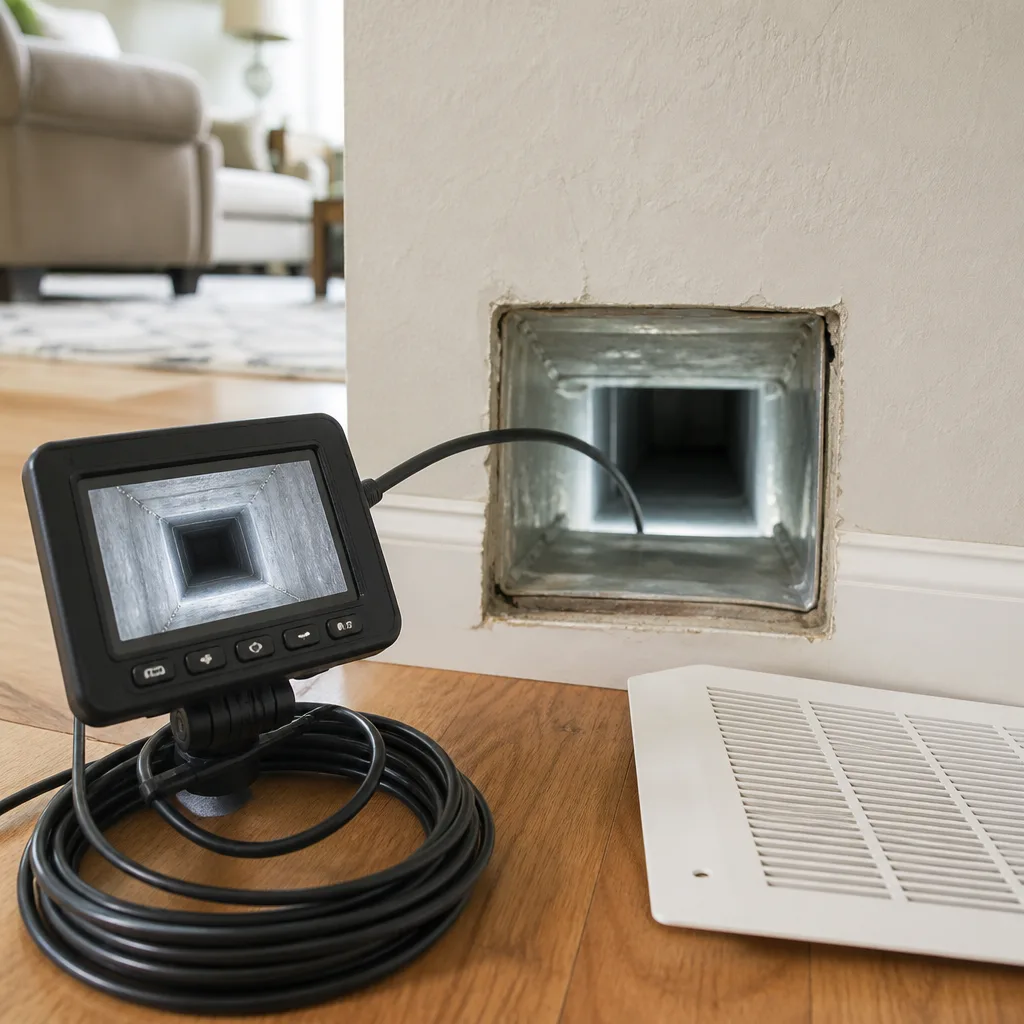
In our CleanRun Air Duct Cleaning Alpharetta home assessments, we photograph the interior of every duct run before recommending any work. If the camera shows repair conditions, we stop and present the photo record to the homeowner with a written scope for repair first, cleaning second. Haven Standard Clause 1 - written price before any work starts - applies to both scenarios, but the scope changes based on what the evidence shows.
One specific warning sign that always indicates repair, not cleaning: temperature stratification that correlates with specific duct runs. If the bedroom over the garage is ten degrees warmer in summer, and the duct serving it runs through the attic, the problem is almost certainly a disconnected or severely leaking duct. Cleaning it will not change the temperature. The repair - reconnecting, sealing, and insulating the run - will.
The 10-Minute Self-Inspection Protocol
This protocol is designed to produce documented evidence of what your ductwork actually contains. It requires a smartphone with flashlight, a screwdriver, and ten minutes of access to your return air grille and the air handler location (typically basement, closet, garage, or attic).
Step 1: Locate your return air plenum. This is the largest grille in the house, usually centrally located on a wall or in a hallway ceiling. It’s where air is drawn back to the system for conditioning. Remove the grille - typically two to four screws, or spring clips that compress with finger pressure.
Step 2: Photograph the duct throat. With your flashlight on, hold your phone at the grille opening and photograph straight into the duct. Take three shots: one centered, one angled toward the left wall, one angled toward the right wall. You’re documenting the debris depth on the duct floor, the condition of the duct walls, and any visible obstructions. In our records, a clean duct throat shows smooth metal or intact liner with only a light surface film. A duct that needs cleaning shows measurable debris accumulation - typically darkest at the bottom where gravity deposits material.
Step 3: Inspect the filter rack. With the filter removed, photograph the rack itself. Look for gaps between the filter and the rack frame - any light visible around the filter perimeter indicates bypass. Look for dust loading on the blower side of the rack - heavy accumulation here confirms that unfiltered air is passing through.
Step 4: Locate the air handler and photograph the return plenum connection. The return plenum is the large duct section that connects the filter rack to the blower cabinet. In many Alpharetta homes, this is a site-built fiberboard plenum that sits on top of a vertical air handler. Photograph the seams - particularly the horizontal joint where the plenum meets the cabinet. Look for dust streaking that indicates leakage, or water staining that indicates condensation issues.
Step 5: Check one supply register in the problem room. Remove the register and photograph into the duct throat as you did with the return. Compare the debris type and depth. If the return is heavily loaded and the supply is clean, the problem is likely filter-related. If both are loaded, or if the supply shows construction debris or liner degradation, the scope is broader.
These five photographs, stored on your phone, accomplish two things. First, they give you a baseline to compare against after any work is completed - a genuine before record, not a marketing photo from someone else’s house. Second, they allow any technician you call to give you a meaningful preliminary assessment without a site visit, and they protect you from the technician who claims your ducts are “the worst we’ve seen” without producing comparable documentation of their own.
What Professional Duct Cleaning Actually Looks Like
The difference between vacuum noise and actual duct cleaning is documented in the photo record. Here’s what the process looks like when it’s done to a standard that produces verifiable results.
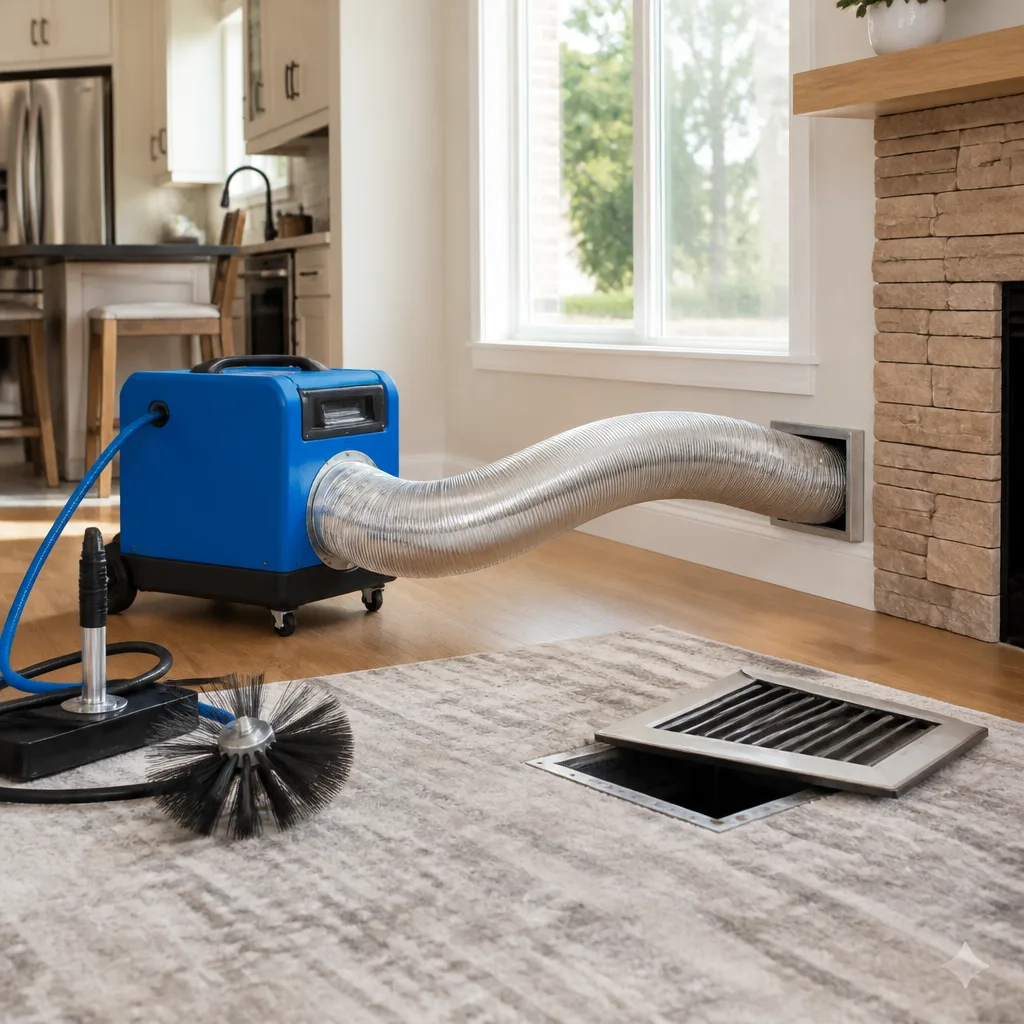
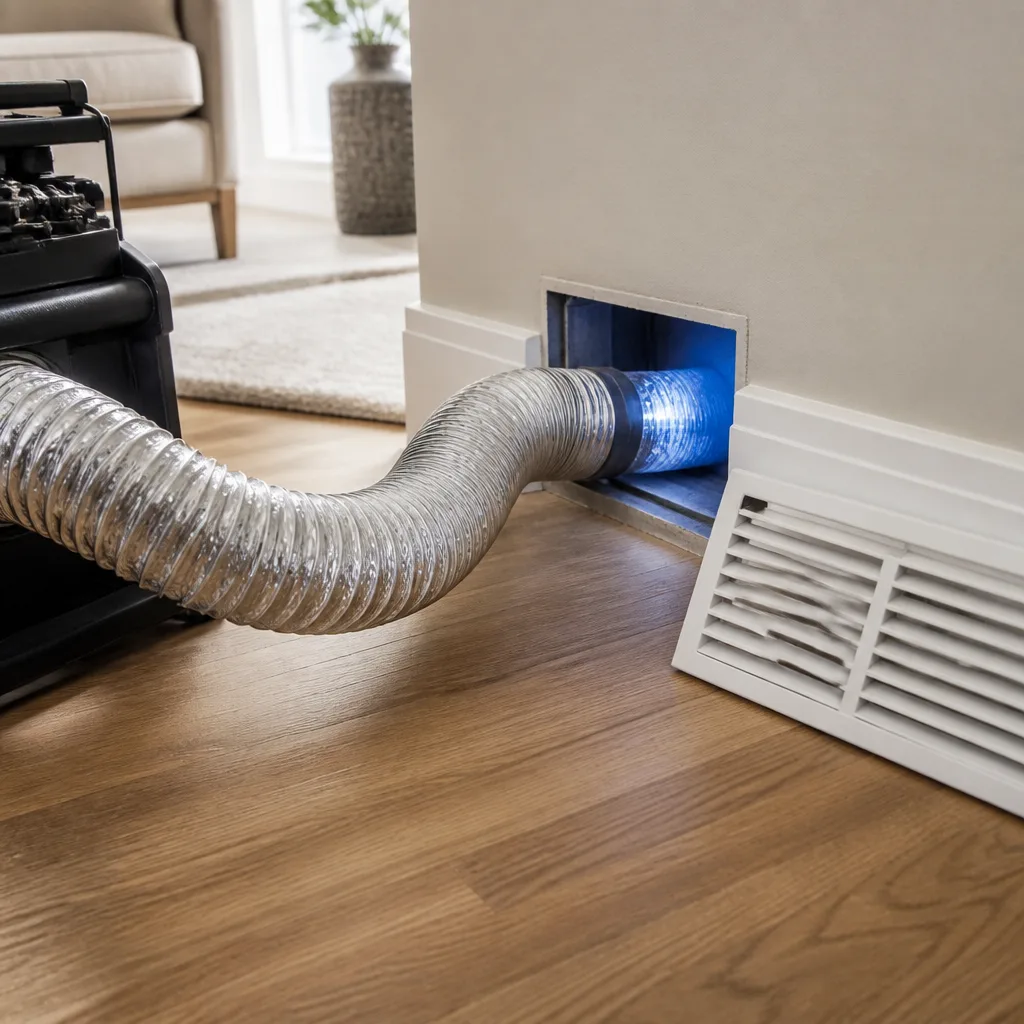
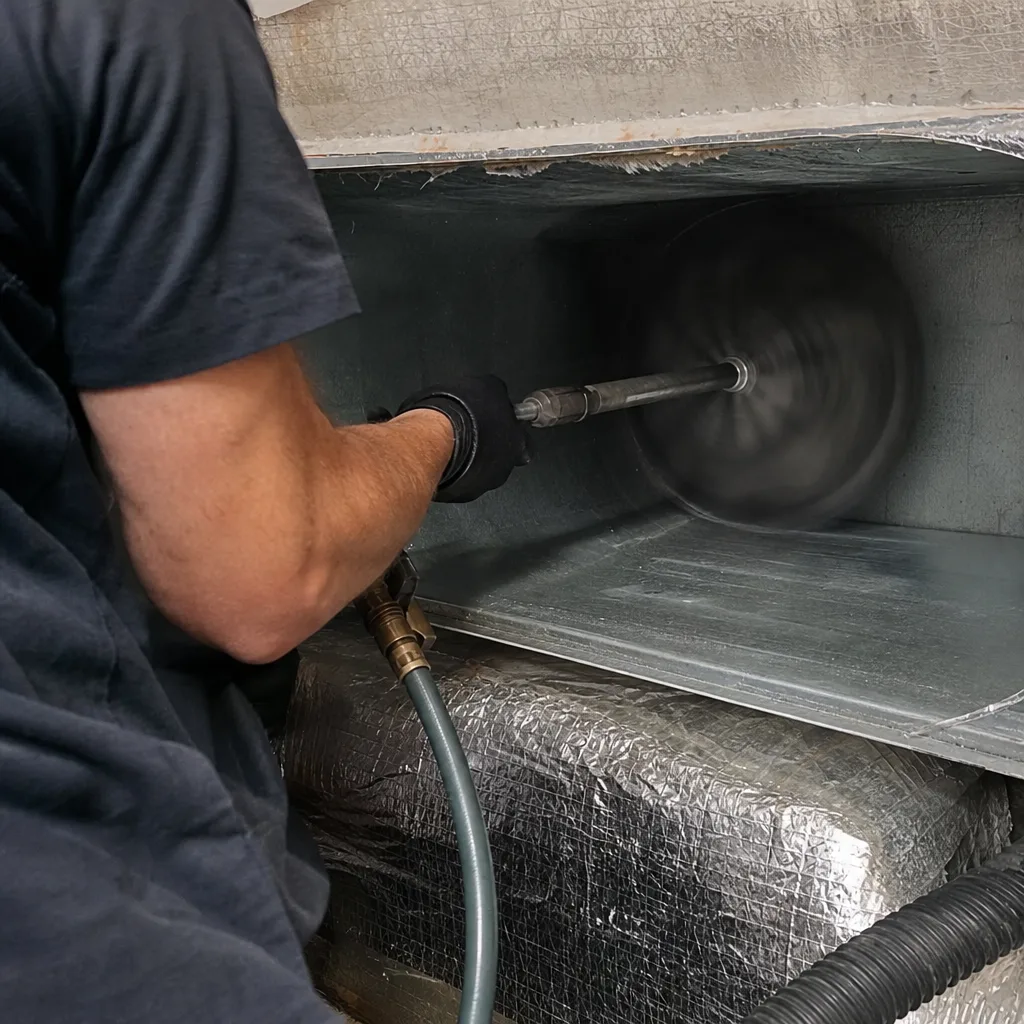
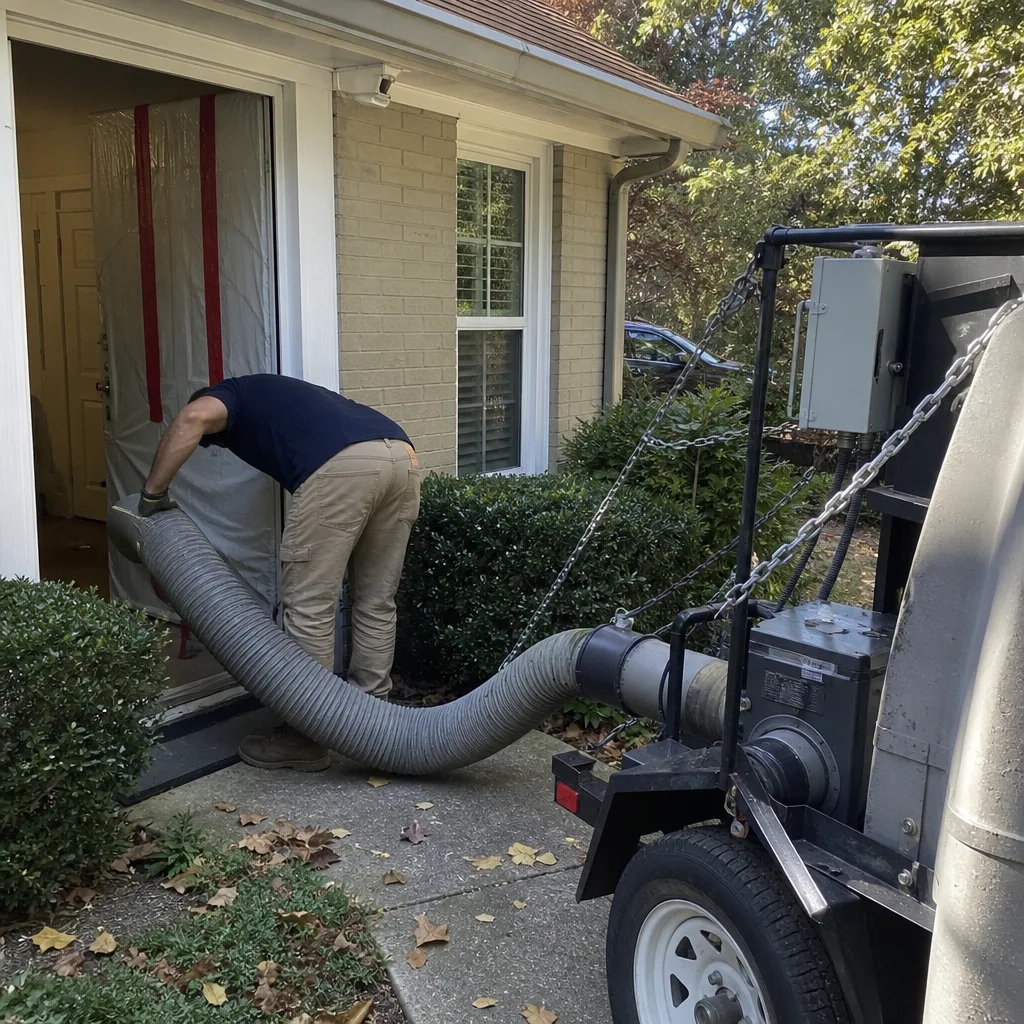
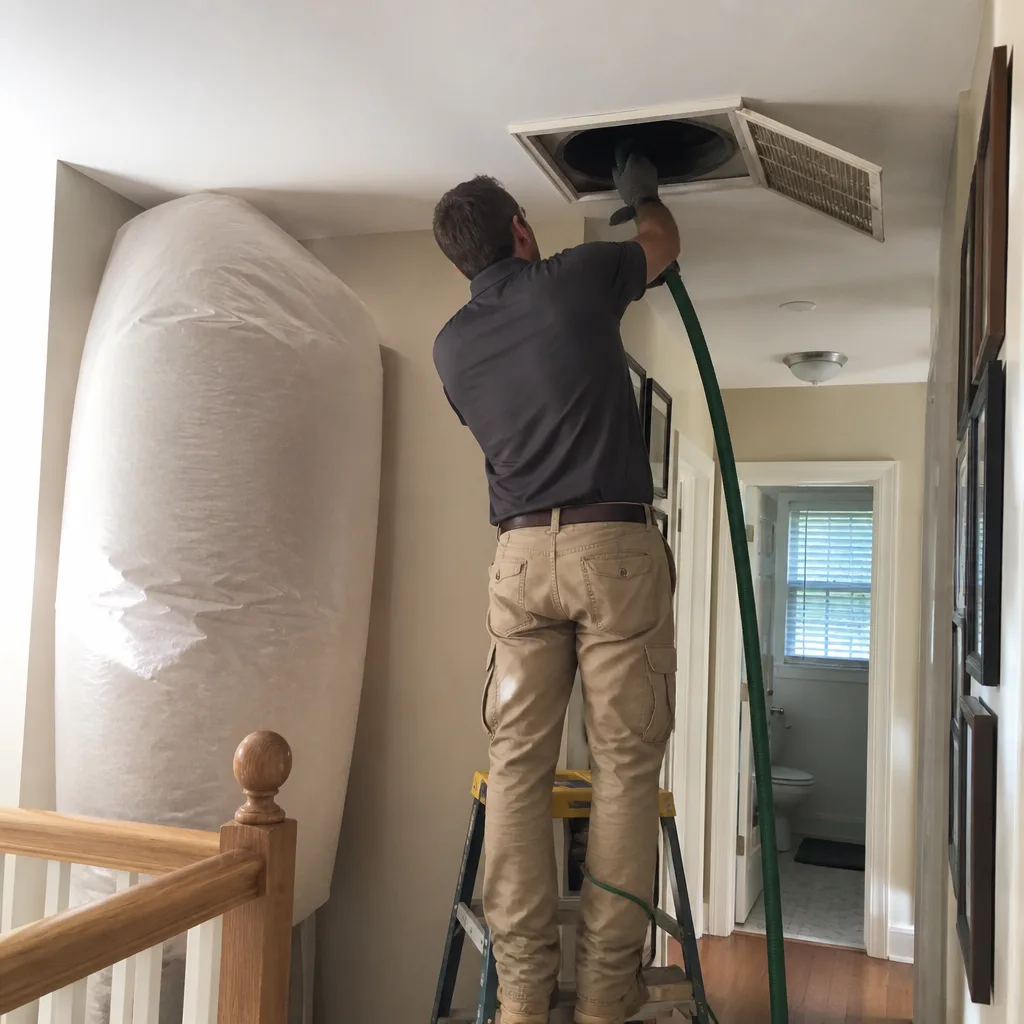
Negative-pressure extraction. The duct system is placed under sustained vacuum - typically 2,000-4,000 CFM - by connecting a large collector unit to the main trunk line. This vacuum is the primary removal mechanism. Agitation tools - rotary brushes, air whips, compressed air snakes - dislodge debris from duct walls so the airflow can carry it to the collector. Without adequate vacuum, agitation simply redistributes debris within the system.
Our equipment roster includes Rotobrush rotary brush systems for lined ductwork, Nikro negative air machines for whole-system extraction, and Abatement Technologies HEPA-filtered collectors that exhaust to the exterior. We name these brands so homeowners can verify specifications independently - the Honeywell and Aprilaire air quality products we install post-cleaning are similarly documented in the written scope.
Register-by-register service. Each supply and return register is individually addressed. The register is removed, the boot (the sheet metal transition from duct to wall or ceiling) is cleaned, and the duct run is agitated and extracted. The register itself is cleaned and reinstalled. This is labor-intensive - a typical Alpharetta home has 12-18 registers - and it’s why flat-rate pricing per system, not per-vent gimmicks, is the only honest model.
Before-and-after documentation. At CleanRun, we photograph the interior of every duct run before work begins and after it concludes. These images are delivered to the homeowner as part of the standard job record, not held hostage or offered as an upsell. The photo record is the only proof that the work reached the full length of each duct run, not just the first few feet accessible from the register.
Written scope and price before work starts. Haven Standard Clause 1 requires a written price for the complete scope, delivered before any panel is removed or any tool is powered on. There is no “call for a quote” - the quote is written, itemized, and signed. If the inspection reveals conditions that change the scope (repair needs, inaccessible ductwork, etc.), the homeowner is shown the photo evidence and a revised written scope is prepared before work proceeds.
The 365-Day Done Right Promise applies to every job: if the work is not right, we make it right. This is backed in writing, not mentioned verbally and forgotten. In twelve years of operation, we’ve honored this promise across the full range of correction scenarios - missed runs, inadequate vacuum due to equipment failure, and in one case, a homeowner who correctly identified that a register boot had not been cleaned because it was hidden behind a stored item in the garage.
Common Mistakes to Avoid
- Hiring based on a per-vent coupon price. The $79-$149 duct cleaning promotion is structured to fail. The technician arrives, inspects the system, and discovers “additional vents” or “heavy contamination” that voids the advertised price. By then, the homeowner has invested the scheduling time and feels committed. CleanRun’s flat-rate pricing per system, agreed in writing before work starts, eliminates this dynamic entirely.
- Cleaning without inspecting the crawlspace or attic. A technician who never leaves the conditioned space cannot identify the disconnected duct, the crushed flex run, or the failed vapor barrier that is causing the symptom. In Alpharetta’s climate, the unconditioned space is where the critical failures occur.
- Treating all odors as “dirty ducts.” Musty odors that persist when the system is off indicate building envelope moisture or plumbing leaks, not duct contamination. Odors that intensify with system startup but fade quickly suggest duct liner moisture. Only odors that are consistently present during system operation, with no water damage indicators, point to accumulated debris as the primary cause.
- Ignoring the air handler. The blower wheel and evaporator coil are part of the air path. A clean duct system connected to a contaminated air handler recontaminates within days. Our HVAC Cleaning in Alpharetta addresses the full air path, not just the distribution ductwork.
- Accepting “trust us, it needed it” without documentation. Every legitimate duct cleaning company can show you what they removed and what remains. If a technician cannot produce images of your specific ductwork - not stock photos, not a generic “before and after” from another job - the work is unverifiable.
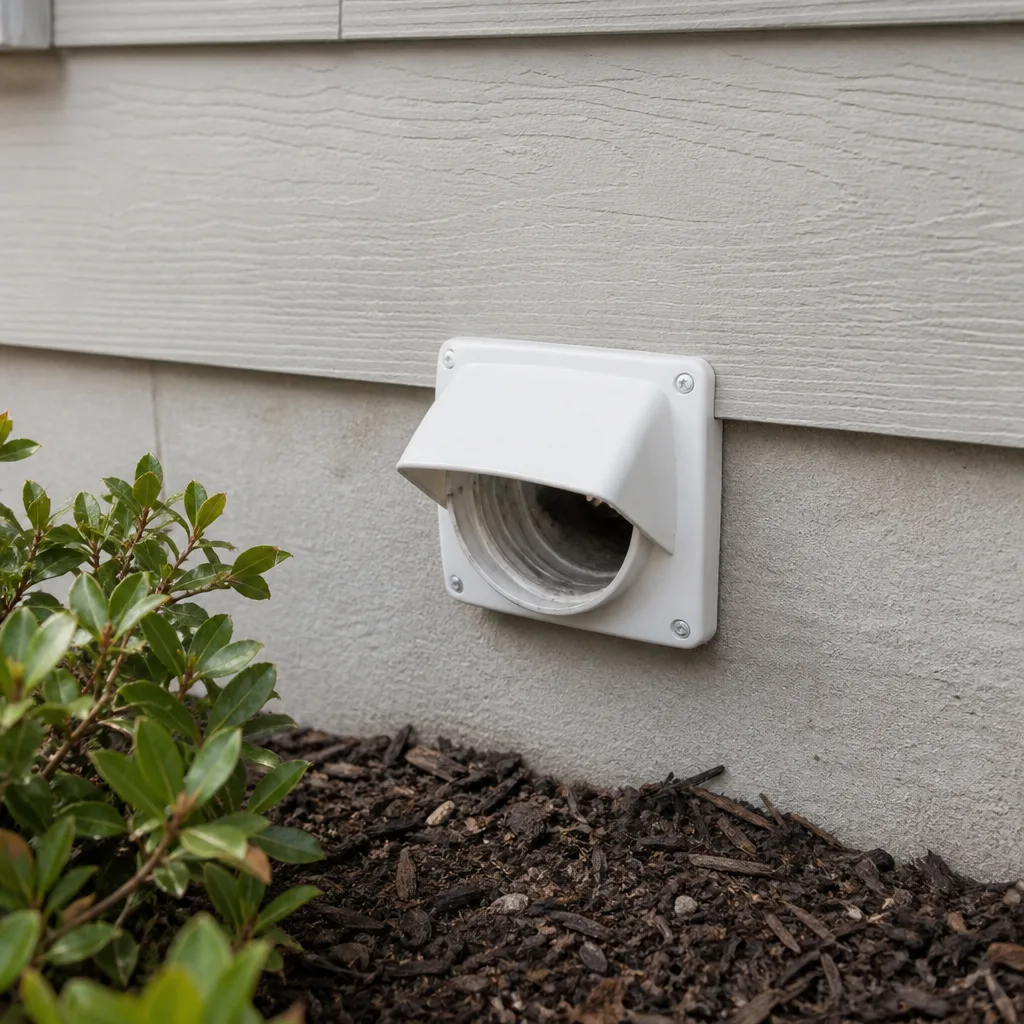
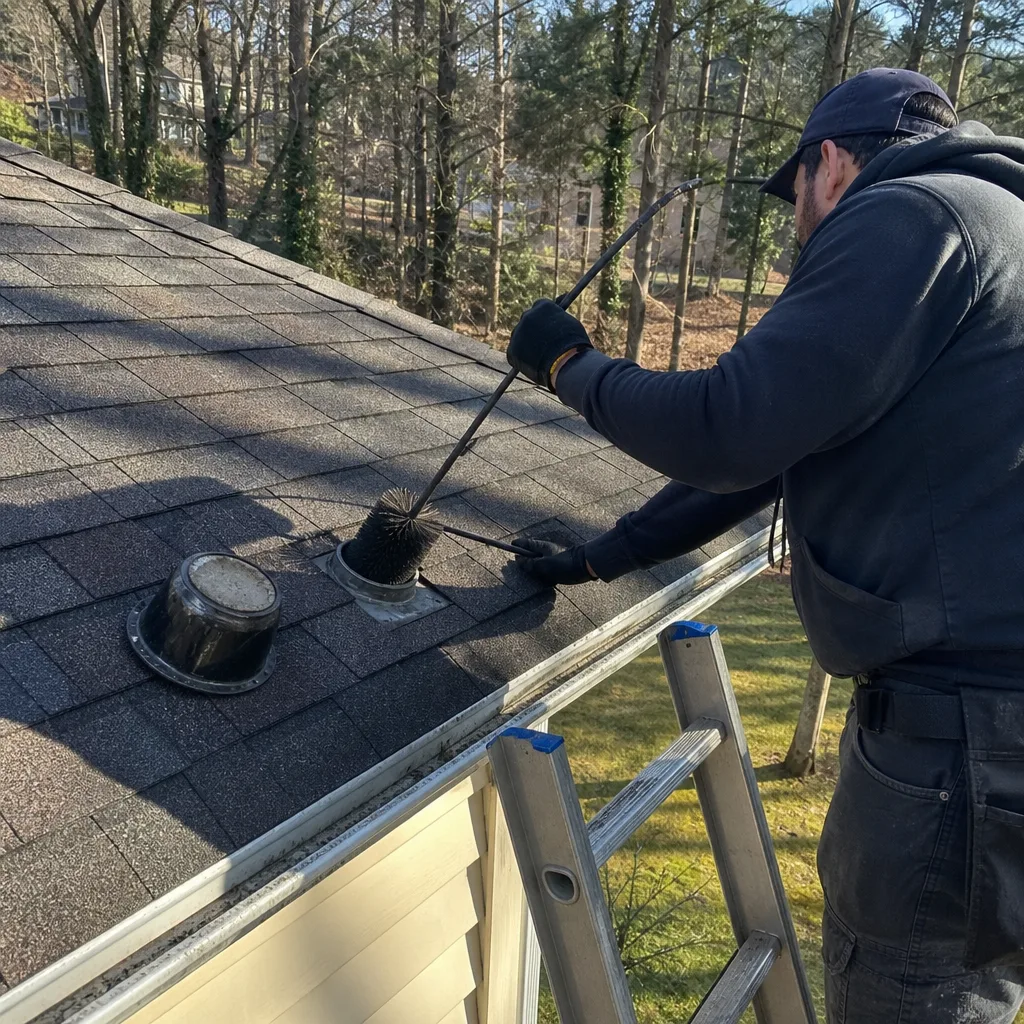
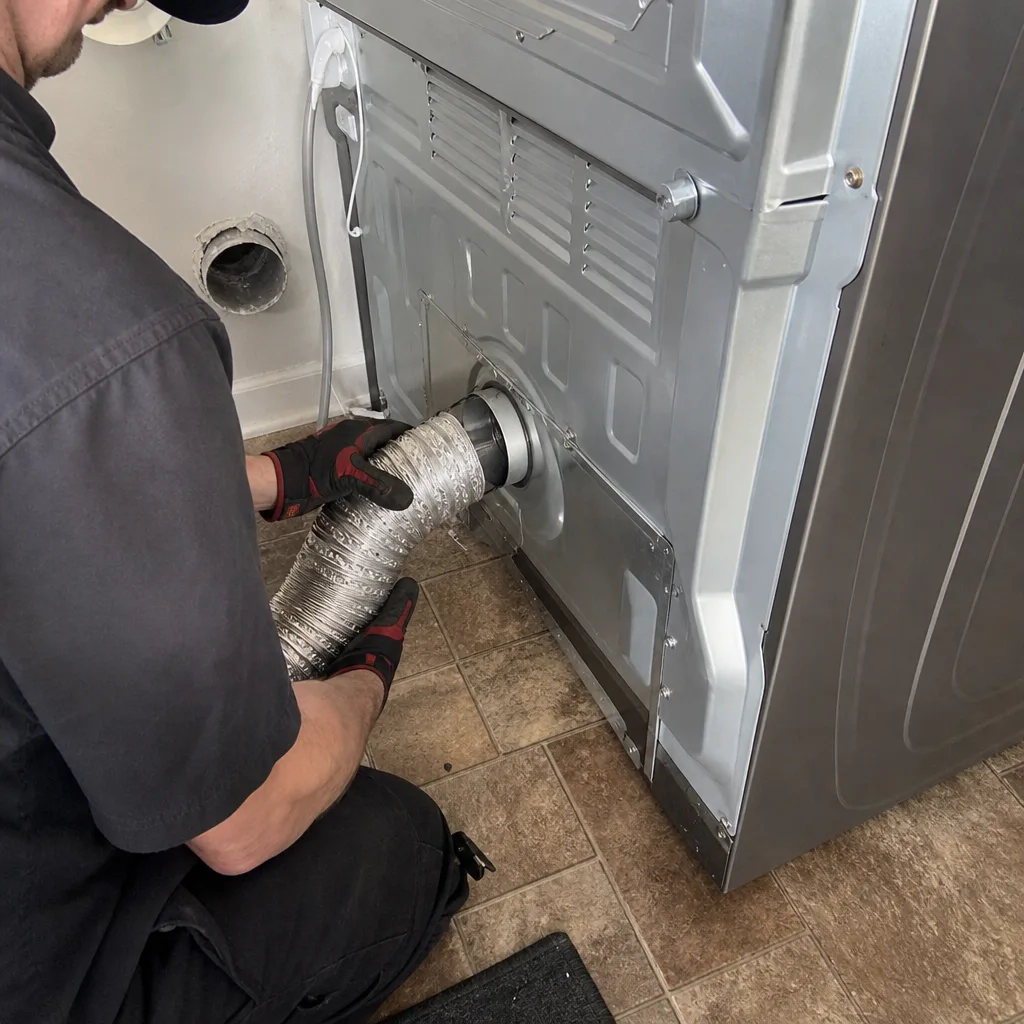
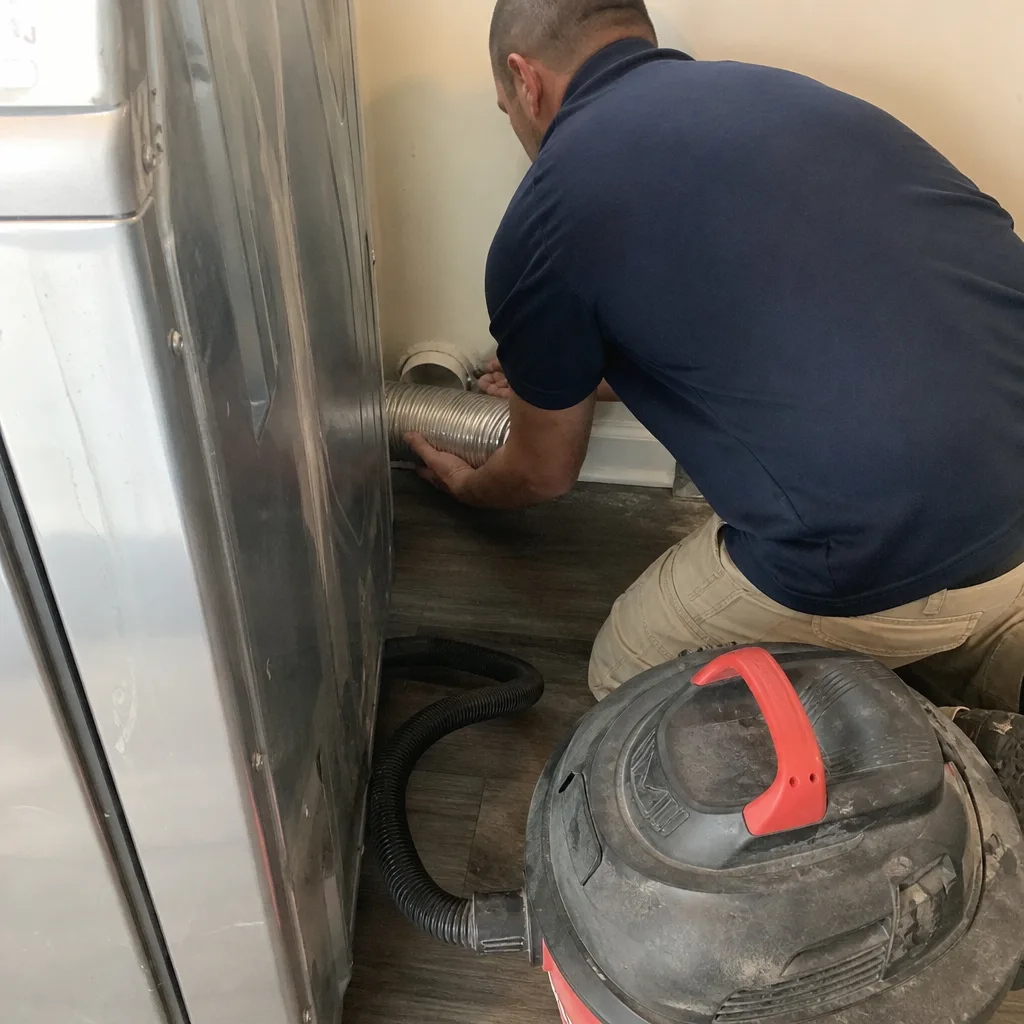
- Neglecting dryer vent maintenance while focusing on HVAC ducts. The dryer vent is a separate system with a different fire risk profile. Lint accumulation restricts airflow, extends drying times, and creates ignition risk. Our Dryer Vent Cleaning in Alpharetta is often scheduled alongside duct cleaning, but it’s a distinct scope with its own inspection criteria.
- Assuming new construction means clean ducts. As noted above, Alpharetta’s building pace during the 2015-2022 period left construction debris in many new homes. The “new house, clean ducts” assumption has cost homeowners years of reduced airflow and accumulated contamination.
When to Call a Professional
Call CleanRun for Air Duct Cleaning services when your self-inspection shows debris accumulation beyond a surface film, when you identify any structural damage to ductwork, or when symptoms persist after filter replacement and basic register cleaning. The specific scenarios that warrant prompt attention: water staining or rust in the duct system (indicates active moisture failure), temperature stratification that affects daily comfort, or any odor that suggests biological growth.
CleanRun Air Duct Cleaning Alpharetta offers free estimates in Alpharetta - call (678) 679-7540. Every estimate includes a written scope and price before any work is proposed, and our technicians are background-checked, uniformed, and identified by name before arrival under Haven Standard Clause 3: Verified Crews. If you have a written estimate from another company, we provide a Free Second Opinion at no cost, with our written number placed next to theirs for direct comparison.
Frequently Asked Questions
For more guides & resources on pricing and what to expect, see our blog. Whole-system duct cleaning for a typical Alpharetta home ranges from $450 to $850, depending on system size, accessibility, and contamination level. This is a flat rate per system, not a per-vent price that balloons at the door. CleanRun delivers a written price before any work starts - no exceptions - under Haven Standard Clause 1. Call (678) 679-7540 for an exact quote; estimates are free.
The low-quote model depends on upselling once the technician is in your home. A $79 coupon covers a brief vacuum at the register face, not full-system negative-pressure extraction with register-by-register service and documented photo records. The true cost of legitimate duct cleaning - equipment, labor, documentation, insurance - cannot be delivered at coupon prices. We put our full written price in your hands before work starts so you can compare complete scopes, not opening offers.
Demand a documented photo record of your specific ductwork, before and after, with timestamps if possible. CleanRun includes this as a standard deliverable on every job - interior of every duct run, delivered to you as part of the job record. If a company cannot show you what your ducts looked like before and what they look like now, the work is unverifiable.
For most Alpharetta homes with standard 1-inch pleated filters changed every 60-90 days, duct cleaning is warranted every 5-7 years. Homes with pets, recent construction, or occupants with respiratory sensitivities may benefit from more frequent service. The self-inspection protocol described in this guide lets you verify conditions rather than relying on a calendar. If your return plenum shows less than 1/8 inch of debris accumulation after three years, you can extend the interval.
Homeowners can and should maintain registers, change filters, and perform the self-inspection protocol in this guide. Full-system cleaning requires negative-pressure extraction equipment, agitation tools, and access to the full duct network that most homeowners do not have. More importantly, improper agitation without adequate vacuum can release concentrated debris into the living space. For the ductwork itself, professional service is the appropriate choice.
Alpharetta’s humidity increases the risk of duct liner moisture issues and biological growth, particularly in unconditioned spaces. The red clay soil produces finer, more abrasive particulate that accumulates differently than dust in sandy or loamy regions. These factors don’t necessarily increase cleaning frequency, but they do change what we look for during inspection - the moisture and soil-specific warning signs covered in this guide are directly attributable to local conditions.
The Bottom Line
Dusty registers mean you need a filter. Uneven temperatures, musty startup odors, and visible debris at the plenum mean you need an inspection. Red clay streaking, white powder residue, and biological growth odor mean you need repair before cleaning - or you’ll pay twice. The ten-minute self-inspection protocol gives you the evidence to know which category you’re in, and the photo record protects you from technicians who can’t or won’t document their own work. In Alpharetta’s specific climate and construction context, the warning signs that matter are the ones that point to a specific cause - filter, duct, or mechanical - and the only service worth paying for is the one that addresses the cause the evidence reveals.
Written by Tomas Reyes, Owner at CleanRun Air Duct Cleaning Alpharetta, serving Alpharetta since 2013.